
At just 22, Volodymyr Petrina has already built a career many baristas spend years chasing. Originally from a city called Dobropillia in Eastern Ukraine and now based in Prague, he moved into coffee with curiosity and never slowed down. Four years later, he stands among the Czech scene’s most driven competitors and educators, someone who treats every cup as a result of deliberate choices.
He began competing in his very first year in coffee and quickly rose through the ranks: 5th at the Czech Latte Art Championship in 2023 and then got the Czech Latte Art Champion title in 2024. Volodymyr represented the Czech Republic during WLAC in Copenhagen and placed 20th in the world! He also placed 3rd at the Czech Barista Championship the following year. For Volodymyr, competition is not about titles alone; it is a tool for growth, discipline, and constant self-evaluation.
Today, he works at Mazelab in Prague as a barista trainer and quality control, overseeing six cafés across the city while teaching courses, leading cuppings, and refining standards of each cup. His focus is clear: understand the bean, respect its structure, and make decisions based on knowledge rather than trends. Whether dialling in coffee in the quiet early hours or preparing for his next championship stage, Volodymyr moves with intention, and we are sure he is only getting started!
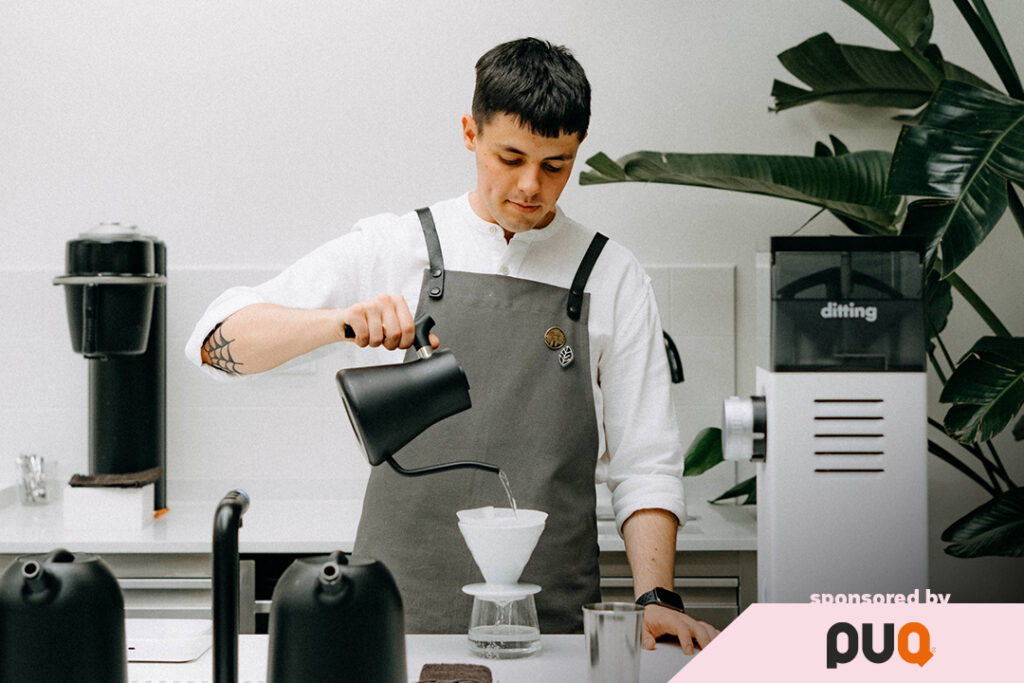
Volodymyr, what is your first memory with coffee?
I guess it’s back in Ukraine, with my friend Maks, we were drinking over-roasted, burnt coffee from a fully automatic machine. Back then, I told him, “Maybe I wanna try to work as a barista one day”.
What inspired you to pursue a career in the coffee industry, and how did you get started?
Before my first trial shift, I went deep into everything I could find online about coffee. What fascinated me immediately was the complexity of the product, how many variables, people, and decisions are hidden behind a single cup. A bit later, visiting my first coffee festivals in the Czech Republic and then World of Coffee in Athens changed something for me.
For the first time, I didn’t just enjoy coffee, I felt that I wanted to be part of this community. I wanted to be among the people on stage, sharing ideas and pushing quality forward. I started working in coffee while studying at Prague Business School. My first job was at Rest Café in Prague, where we served coffee from Father’s Coffee Roastery in Ostrava.
One important moment for me was receiving a book from my first employer, Adam — Velká kniha o kávě by Petra Veselá. Every detail felt overwhelming, but at the same time deeply inspiring. It showed me how much there is to learn, and that motivated me even more.
Before coffee, I studied international studies and diplomacy at business school.
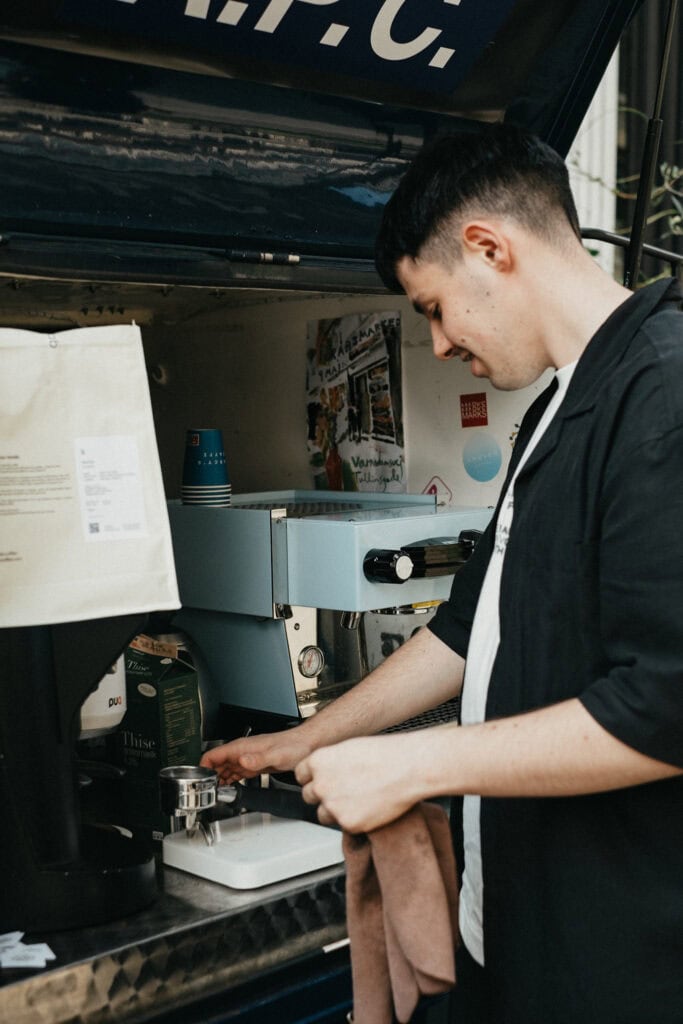
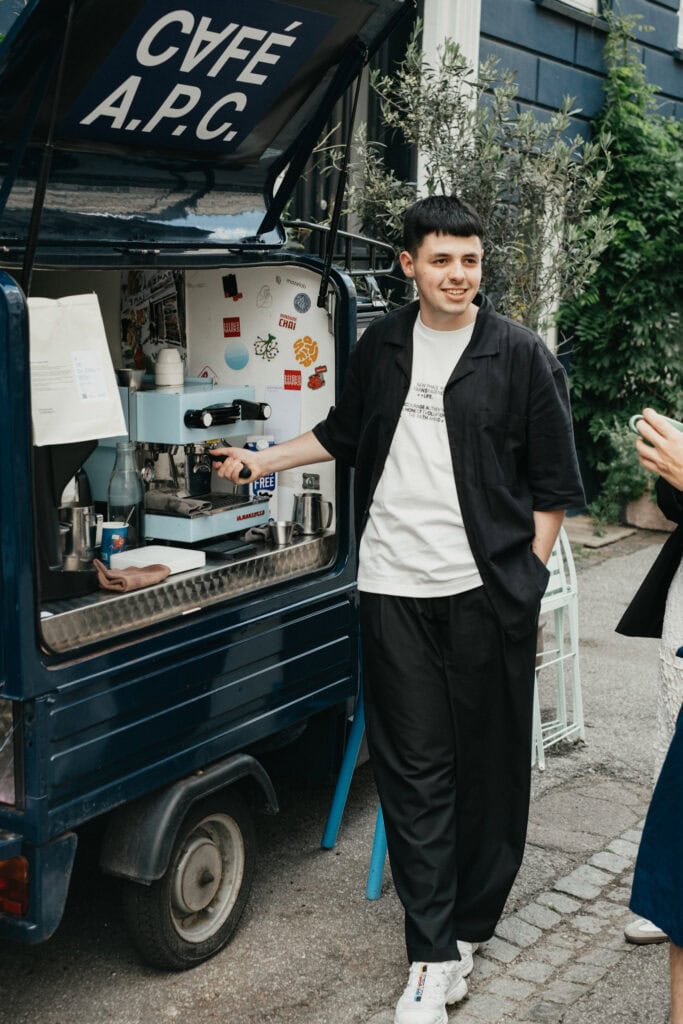
Tell us a bit about the place you work at. What is your role there?
I work at Mazelab in Prague. It is a relatively new roastery that focuses on the uniqueness and diversity of every coffee bean. Here I had a lot of opportunities to grow, to learn, to try and to share incredible, unique coffees and deliver tasting experiences from all of them.
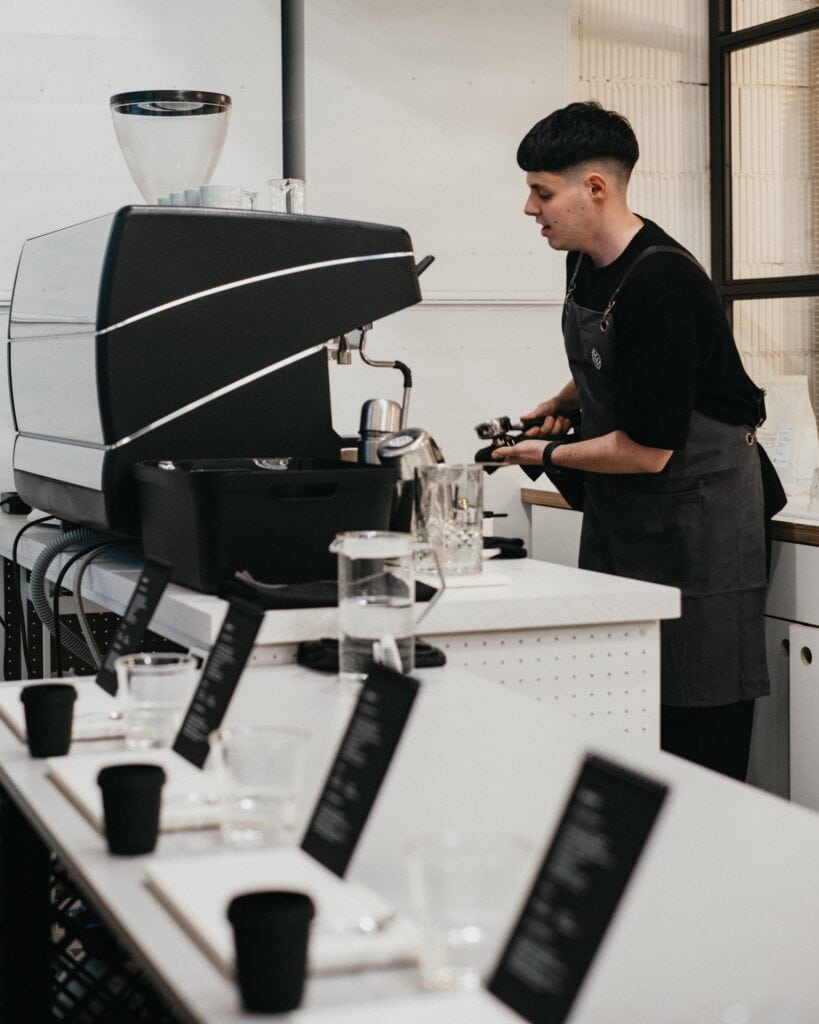
I am a barista trainer, and I do quality control. So my role is to teach people all over the shops, coffee courses, sensory workshops, cuppings, controlling quality all over coffee shops, and communicate with baristas to create the best tasting experience of each and every coffee bean. Also, I work as a barista at Mazelab Tasting Studio. I hope to see you there!
What kind of experience do you want your guests to have when they visit you at the cafe?
I want them to be able to fully dive in tasting experience I give, to focus on the moment, on the cup in front of them. I want to share every stage that this coffee went through. I really want my guests to feel comfortable around me, create a friendly atmosphere and try to truly understand what each customer expects from their visit, whether it’s a deep dive into some exceptional coffees or just a daily dessert-like milk beverage. And with all that, I still want to be myself behind the bar.
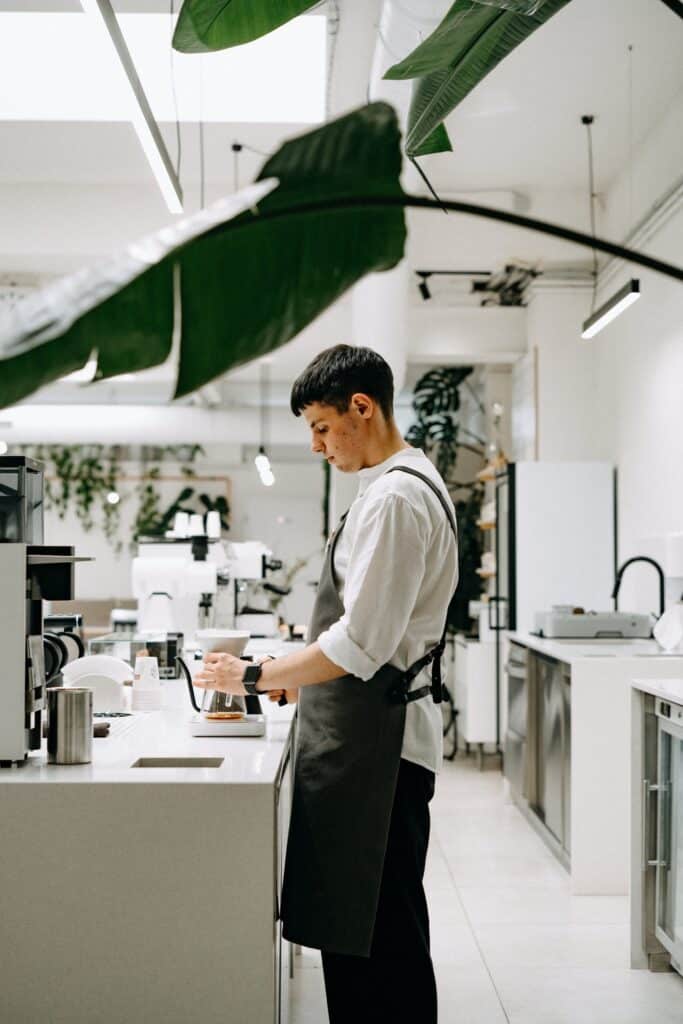
What is your favourite part of the day in your cafe, and why?
It’s the first hour, it’s my time when I quietly dial in the coffees. No music, no lights, no phone, just me and coffee. I enjoy the moment I find a sweet spot, balanced and complex cups, the moment I feel excitement and joy. Smelling the aromas, describing the brews.
How do you stay motivated and inspired to keep improving your coffee-making skills?
It actually feels natural, as a fast-moving industry, I do not see a different way to be a part of it. I feel like I have to improve every single day, so I can deliver better and better quality tasting experiences. I have to study every stage every coffee bean goes through, so I can understand how to work with it. I think there is always something to learn, a lot of different approaches, different sides of view, I am trying to understand many of them, rather than focusing on just one way to be.
What are the current trends in cafes in your region?
Post-mineralisation of every filter coffee, I think, water mineralisation is something new for people here.
Are there any trends you promote yourself and would like to see more often in other places?
Not a trend, but I highly recommend studying bean structure, what affects it and how it affects extraction/roasting. It helps baristas and roasters make decisions that are based on facts rather than trends. So I really promote deep studies, articles, research, no shortcuts.
You have some amazing achievements in championships. Can you tell us more about them?
I started competing straight from my first year in coffee; it also felt like a natural way to progress in this industry. So if anyone pushed me into this, I always said yes. I always felt scared, but I always went for it. I guess I always understood that when I felt scared, I had the most progress.
Latte art competitions felt like a gateway into the world of competitions, and winning the National round felt crazy. Barista championship is my new challenge and way to improve. So I just keep pushing, trying to evolve every day, exploring everything I can, and talking to as many people as I can.
How did it feel to compete on the World Stage?
I could not believe my eyes when I was standing on stage with all the champions. Then competing, I felt so calm during my presentation time, I knew I could deliver what I wanted, I also knew where I stand, so I did not even expect myself to be in the top 20 latte artists in the world. But then I was, and I really felt surprised, but highly motivated to come back to the world stage. I feel like now I understand that winning the National round at any competition is just the beginning of a much bigger story.
What, in your opinion, is the most important thing to have in mind when you start to compete in coffee championships?
Understanding why you are doing that, what is the point of it? I really have to answer this question myself many times; this way, I have much more motivation and energy to compete year after year. The next one is that you have to read the rules. This one is so important, it fits the time I competed in barista competitions. I just did not bring napkins, because of that, I was 2 points away from the top podium.
If there were one piece of knowledge about coffee you’d like everyone to know, what would that be?
Coffee flavour is not accidental. Every taste you experience is the outcome of choices: growing, processing, roasting, and brewing.
You create a lot of content around coffee. What would you like to achieve with your online presence?
I would love to share my approach to brewing with more people. I would love to meet more people from the coffee community through that. And maybe, maybe one day I will inspire someone to pursue a career in specialty coffee. During my career, there have always been people who motivate me, my girlfriend, friends, colleagues, maybe some people are not as lucky as I am, so I could be the one for someone.

What are some common misconceptions about our industry that you’ve encountered, and how do you address them?
Inside the industry, a common misconception is that progress means constant innovation. Sometimes progress means understanding fundamentals better and doing fewer things more intentionally. So many times I was trying to overcomplicate things.
Where in Prague do you find your best inspiration?
Anywhere near Vltava, during any season, having a walk with my girlfriend, Lesya, feels so calm, and in this kind of calm state of mind, I feel most inspired.
What coffee challenges are you looking forward to?
I guess the biggest challenge for now is the next competition. I will be competing in the Czech Barista Championship in April. So cheer for me!

Quick Fire Questions for Volodymyr Petrina:
Filter coffee or espresso-based?
Filter coffee.
Milk coffee or black coffee?
Black.
The most underrated coffee drink?
Pour over.
The most underrated coffee brewer?
The cupping bowl.
How do you make coffee at home?
Pour over.
No.1 café in Europe that every coffee geek should visit?
What’s your dream place to have a coffee tour?
Paris! I really like Motors, Tanat and Substance, I love how different they are!