
Kami Zicháčková’s path into specialty coffee was anything but planned. A hospitality job in Ireland for the language, a latte art moment that stopped her in her tracks, years of self-teaching through Instagram videos and sheer obsession, and then a decision to move to Barcelona in search of a community serious enough to match her ambition. Within two years of entering specialty coffee, she won the Czech Latte Art Championship and competed on the World Stage, having signed up for the nationals just seven weeks before the competition after a stranger at a coffee event finally talked her into it.
What makes Kami’s story worth telling is not the speed of her rise but the honesty with which she talks about it. She is open about fear, about self-doubt, about the perfectionism that nearly got in the way of enjoying the whole thing. She will tell you that the biggest pressure at a competition comes from yourself, and that the only way through it is to remember why you started. For Kami, that has always been simple: she just loves coffee, and she loves the people who gather around it.
At 30, she is based in Barcelona and building her own career around workshops, coaching, and collaboration, with more competition stages ahead. More focused and grounded, following the path she is carving for herself.
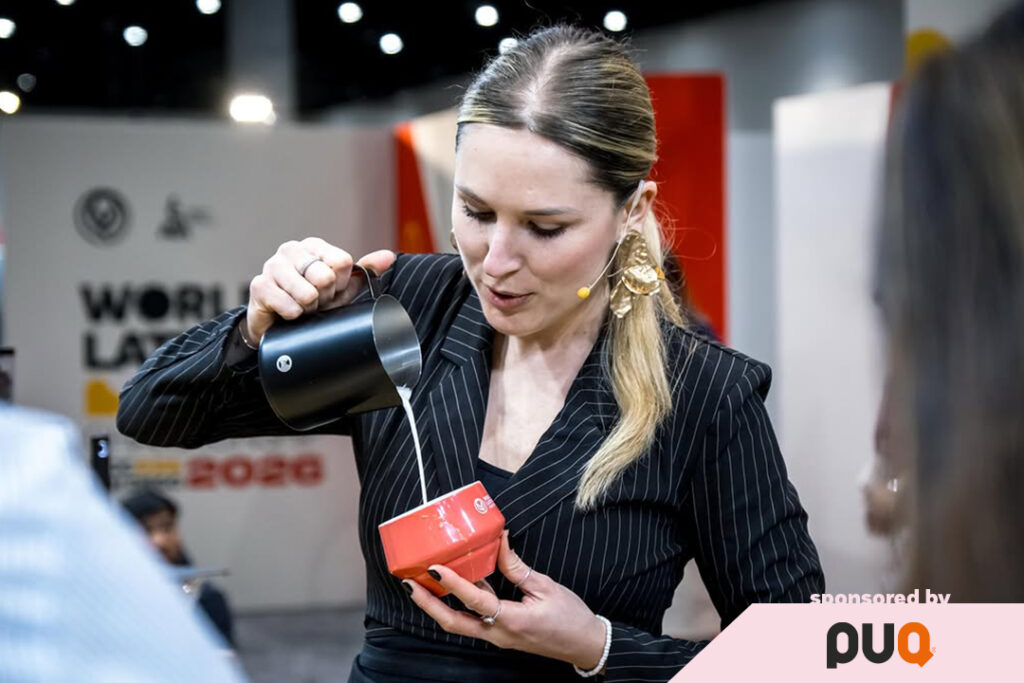
Kami, what is your first memory with coffee?
My first memory of coffee dates back to my childhood, when I was exactly 3 years old. I used to live in a small village, and we had a big family, so visitors were coming to our house all the time. As a child, I realised that all the adults were always drinking something black or with milk, which I wasn’t allowed to have! Coffee! I was a very open child, so from then on, anytime I heard the doorbell ring, I ran to open the door, no matter if it was a postman or a neighbour, and my question to everyone was the same: Hi, would you like to get a coffee?!
What inspired you to pursue a career in the coffee industry, and how did you get started?
There is a phrase in the Czech language to get to something like a blind man to a violin, and that’s exactly how I stumbled into my coffee path. I was studying at a university in the Czech Republic, but I already knew that straight after graduation, I wanted to leave the country and travel.
And that’s literally what I did. I moved to Ireland, and obviously, my English wasn’t that good back then; the Irish accent especially felt like it was from a different universe! So, the easiest option was to start working in hospitality. First, I was in the kitchen, serving starters and washing dishes.
After a while, they decided I was ready to serve customers, so they put me behind the bar. In the restaurant where I worked, there was also a coffee machine, but since nobody had any real experience, all the waitresses used to make the coffee. They decided to teach me some basics, and that’s when I realised that latte art, especially, was love at first cup.
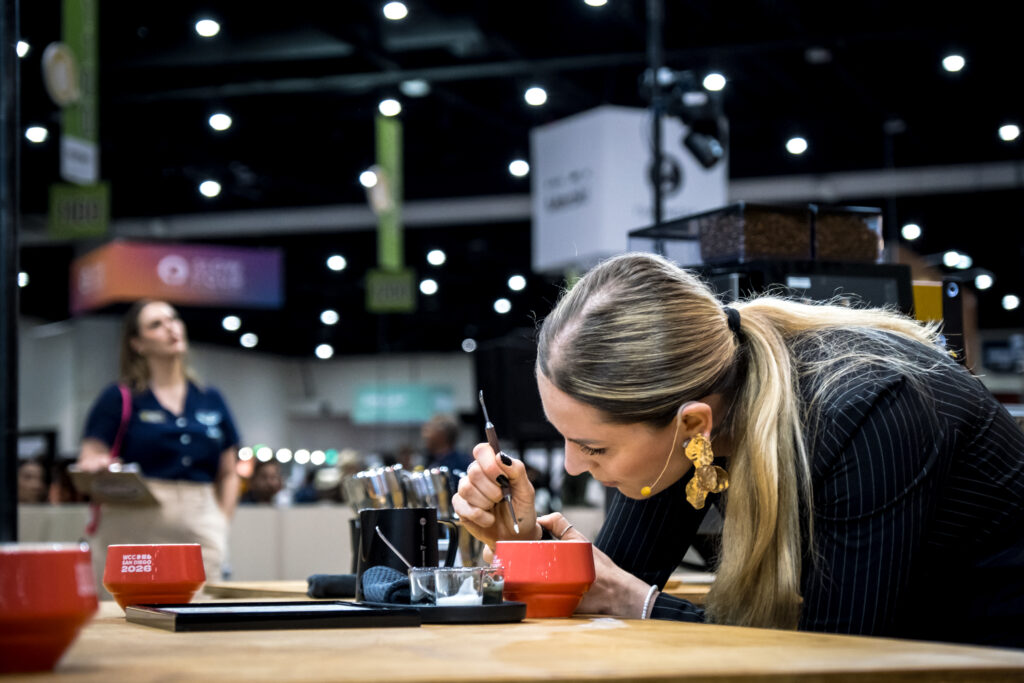
Can you walk us through your coffee career?
My first experience with coffee was in Ireland. I was working there for a while, but afterwards moved to Mallorca. In Mallorca, I didn’t always work in coffee places, but I felt like coffee was something I wanted to stick with. I found a job at a brunch place where I worked as a barista for one year, but my bosses’ main interest definitely wasn’t coffee, and I wanted to learn.
At that time, I had no clue what specialty coffee was, but I started visiting coffee places around and realised that the quality and care were completely different. I applied for a job, but nobody wanted to hire me as I didn’t have any experience. So I decided to do some barista courses, and then after a few months, I finally got the chance to start working in a specialty coffee place. I was hungry for knowledge. I started educating myself more, trying new methods at work, and also sharing experiences with my colleagues and people from the coffee industry.
But after one year, I knew that there was nothing else I could learn there and no better place in Mallorca where I could grow. I was considering my opportunities, and Barcelona felt like a great option for my next coffee growth, as the coffee community is huge over here.
Tell us a bit about your current work and projects.
Recently, I have been working as a barista just part-time until I can work fully by myself. My main interests and focus are workshops, courses, coaching, presenting, and collaborating on coffee events and festivals. Right now, I am focusing on building my own brand to be able to work only for myself or on projects with other amazing baristas.
Your path took you from the Czech Republic, Ireland and Mallorca to Barcelona. What has each place given you, and what has the life of a moving, searching person taught you about yourself?
Every place I used to live was different. Different lifestyles, cultures, climates, habits, and people. In the beginning, it was always the same. You are in a new place, and everything feels perfect, because even though you have to figure out many things like work permits, bank accounts, and other paperwork, you are still enjoying the magic of the place.
Exploring, meeting new people, and constantly feeling like you are on holiday. Imagine sitting in a typical Irish bar with live music, having a pint of Guinness and enjoying the atmosphere, or exploring the unbelievable nature over there, which always took my breath away with how beautiful it was. Or the gorgeous beaches in Mallorca, early morning paddleboarding, boat trips, yoga sessions right next to the sea, and symphony concerts in the middle of magical squares in small villages. Doesn’t it all sound like a dream? But of course, it’s not always perfect and easy. You are still in a different country, and the only person you can 100% rely on is yourself. It made me personally much stronger and taught me a lot about responsibility and independence. Without all that courage, I would never be where I am now.
The biggest lesson I’ve learned about myself is that it’s not the place that brings you happiness. I had times when I didn’t feel happy in my life, and I thought that if I just moved to a different place, I would find my happiness again. But it doesn’t work like that. We could change places every month, but if we are not happy inside, nothing outside of us can change it.
You’ve worked in coffee in different countries. How has each coffee culture shaped your eye? How are these places different coffee-wise?
Each of these places played a huge role in shaping how I see the coffee world today, especially because my own journey evolved with every move. In Ireland, it was my very first experience with coffee. At that time, I didn’t know much about the industry, so for me, it was mostly about learning the basics of the daily workflow and experiencing a high-volume, fast-paced coffee environment.
The real turning point came when I moved to Mallorca. That was where I discovered specialty coffee, but it was also where I started noticing a big contrast between profit and real passion. Of course, there were amazing, high-quality cafes on the island doing an incredible job with pure love for the craft. But unfortunately, some places presented themselves as specialty coffee shops simply because they bought their coffee from good, well-known roasters. They used these famous brands for marketing and even got listed on local specialty coffee guides, so people went there with high expectations, only to leave disappointed. They had good coffee on the shelf, but nobody behind the bar who actually understood it or had any real experience with it.
It hurts the coffee culture overall when you see people who do it with love and passion trying to share true quality, while next to them are others who only care about quantity and money at the expense of quality. Witnessing this motivated me even more to educate myself independently, because I wanted to understand the real substance behind the product.
Finally, Barcelona represents the growth and community I was looking for. Because the coffee community here is so massive, it’s much easier to find people who share the same genuine passion and dedication. My experience from Mallorca taught me to look past just the famous brand on the grinder and focus on the actual quality, the craft, and the community behind the bar.
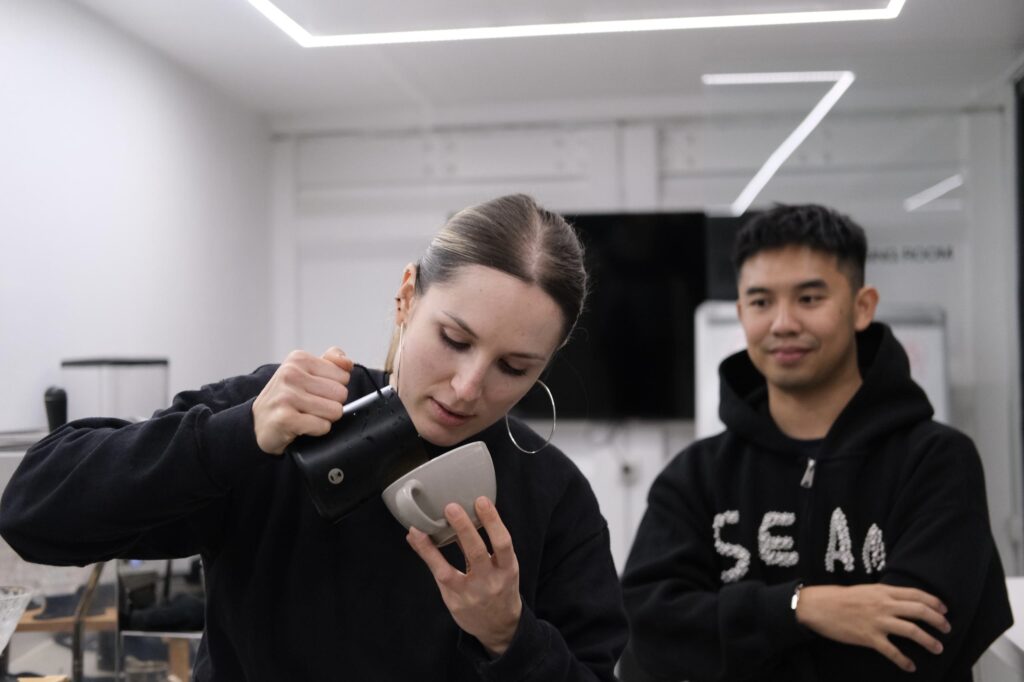
How do you stay motivated and inspired to keep improving your coffee-making skills?
For me, whether it’s coffee or any other industry, everything is constantly evolving, and we can never just stay in one place if we want to grow. New techniques, equipment, and methods come out all the time, so there is always something new to learn and improve, which keeps me motivated.
Also, of course, I am deeply motivated by my recent success in latte art. Winning the National Championship in the Czech Republic was a huge milestone for me, and getting the chance to represent my country and stand on the world stage actually pushed me to work on myself even more. It proved to me that hard work pays off, and it inspires me to keep improving my skills every single day.
What are some common misconceptions about our industry that you’ve encountered, and how do you address them?
Something I face almost every day at work is people questioning me about the strength and amount of caffeine in an espresso. Since we always have two options for our customers to try different types of espresso beans, we offer one with a more traditional profile and process, and another option that is more exotic and experimentally processed. After I describe the difference, a very common question is: “Which one is stronger? I want the one with more caffeine.” I always try to give them a short explanation to understand more, and anytime I see that a customer is genuinely interested, I love to take a moment to educate them and share something new.
My goal is to enrich their experience so they can see that there is so much more behind coffee than just a quick dose of energy. I want them to appreciate the taste, the origin, and the craft. When you manage to change someone’s perspective, and they start enjoying coffee for its actual flavour, it is one of the most rewarding parts of my job.
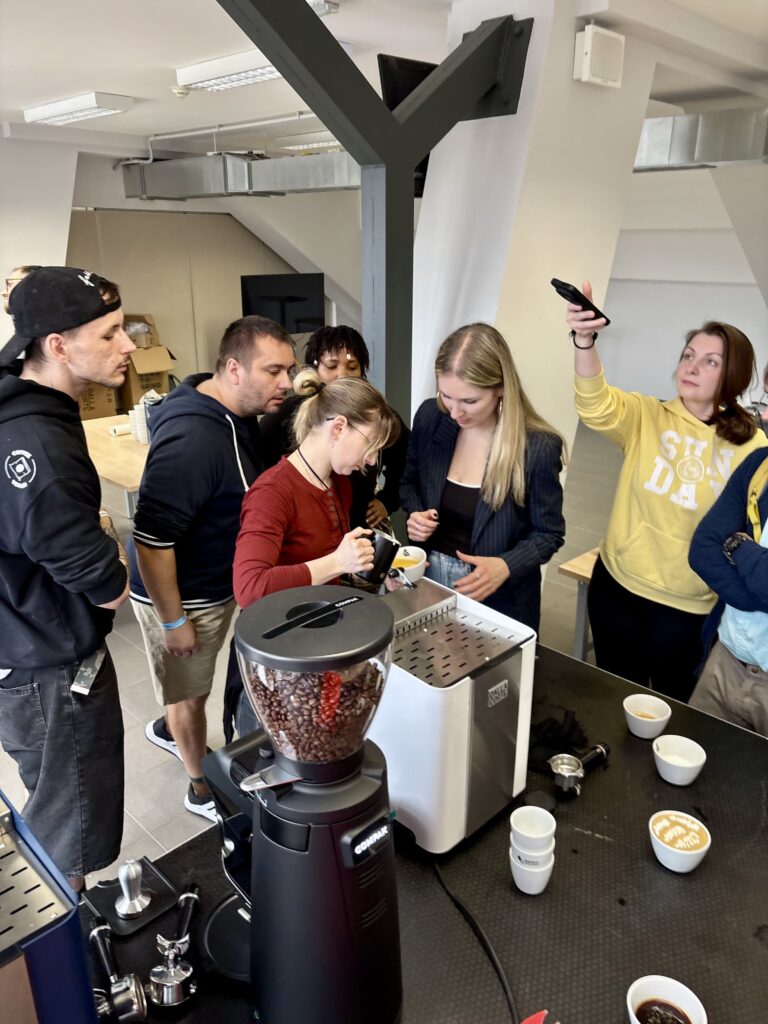
You largely taught yourself latte art by watching Instagram videos, practising alone, driven by instinct and obsession. What does self-teaching give you that formal training can’t, and what does it demand of you that’s much harder?
Mainly, I would say that self-teaching gave me a lot of patience. I’ve never taken any latte art course before, so I’ve been learning everything by myself, which I now wouldn’t say is the best way. Of course, the progress is much slower, but I’ve also learned a lot of bad habits which my coaches changed immediately, though some of them I am unfortunately keeping until now, and it’s much more difficult to change them.
The truth is that before, I had no idea about 80% of the techniques, as I was mainly practising basic latte art, so I hadn’t even been thinking about the technical part or what lies behind it. Basically, I just saw a design and my goal was to make it visually as similar as possible, but totally ignoring technical parts like contrast, milk foam quality, and others, so then when I started practising with the coaches, I felt like I’d never done any latte art before… haha!
You said fear held you back from competing for a long time – there was always an “aber”, always a reason to wait. What finally made the fear smaller than the dream?
I was slowly taking steps forward. That was actually the main reason why I decided to move to Barcelona, as I felt it would give me more opportunities and options, but I wanted to wait at least another year and then? Maybe? Everything changed when I went to the Coffee Awards in November to support my friend in his competition.
It was also the first time I saw a competition like that in person. I was super excited, but I felt even more nervous than the competitors, as I was imagining myself on the stage instead of them. I met a lot of interesting people and luckily also Niklas, who was competing there and who finally pushed me to sign up for the Czech nationals in 7 weeks and became one of my coaches.
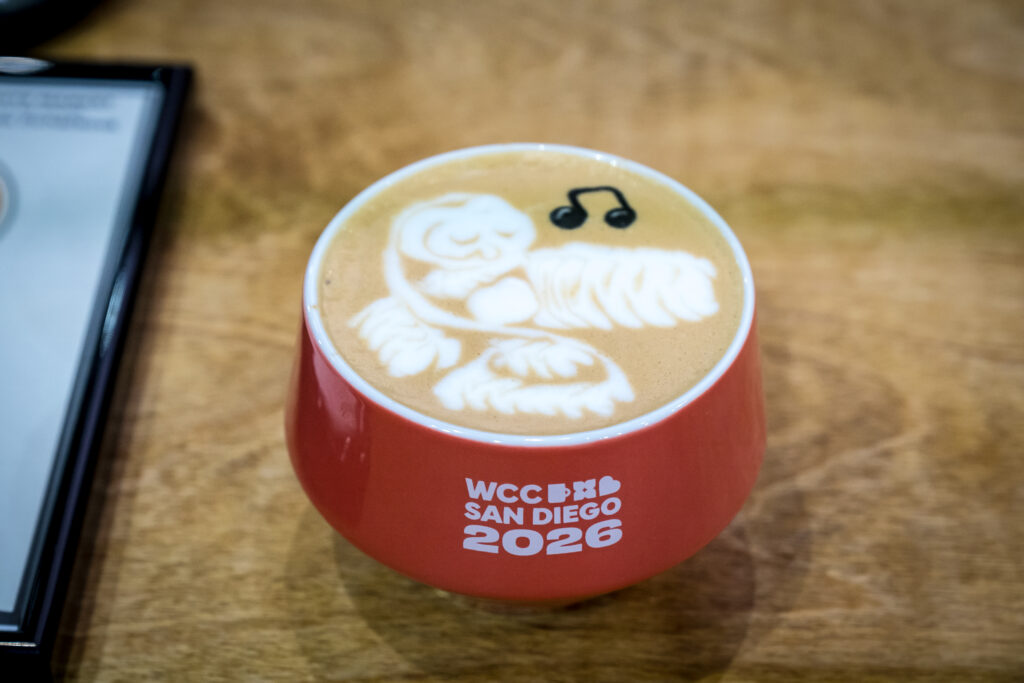
You went to the championship stage just a few months after starting to get into latte art, and you won. How did that feel, and how did you adapt your preparations and mindset to the World Stage?
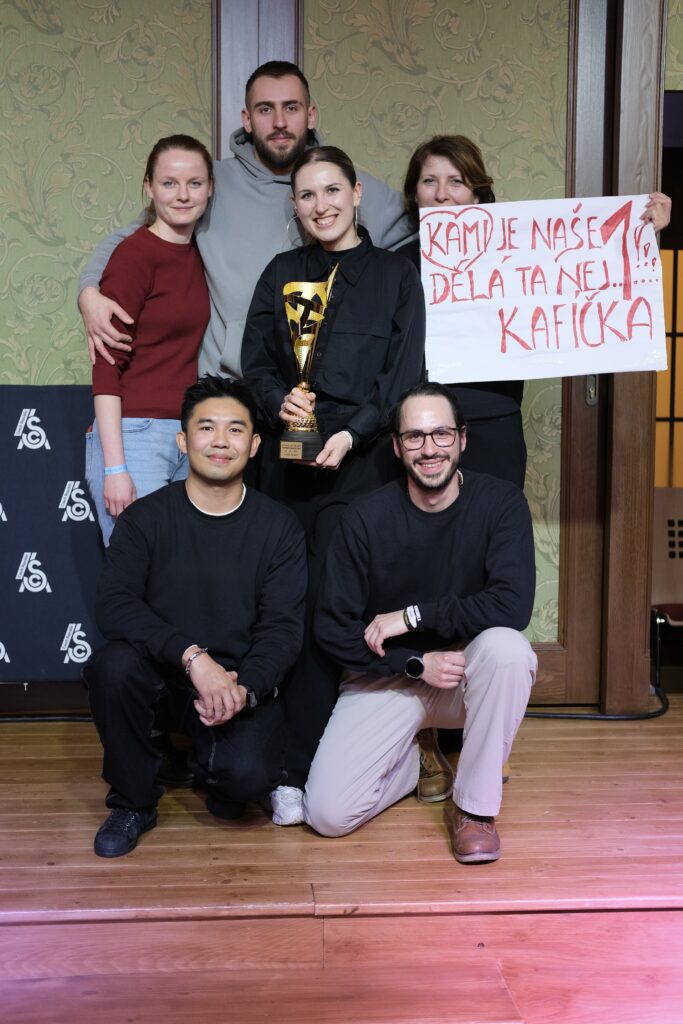
Honestly, everything happened so quickly that I haven’t even had time to process it all until now! I am super grateful for the last few months, and I can truly say that my life turned around completely. When I started the training, there was no progress at the beginning for a while as I needed to learn all the basic techniques. I was scared it was impossible in such a short time, but my motivation, discipline, and trust in my coaches, Rex and Niklas, were much stronger than my doubts. I was enjoying the process, and even though it was very difficult to combine it with work and other responsibilities, if you want something, you will find a way.
When we arrived in the Czech Republic, I knew I had done everything I could, and I was ready. Well, I thought that! But I was also nervous, as I’ve never done any competition before, and honestly, I am not really a person who likes to be the centre of attention, haha, which is quite impossible if you choose this journey. The first day of the competition didn’t go very well, but thankfully, it was enough to get to the finals, and what happened next, you already know. It was an absolutely amazing feeling, standing there on the stage and hearing my name. I was so proud and grateful, and it showed me that if we truly want something, we can get it!
After the Czech nationals, I took a short break with my family and then started training every day for the Worlds. I am not gonna lie. This time was even harder. As I had only two months, there were many things to sort out besides training, and it was all very stressful. I think the hardest part was the expectations, mainly from myself, but also from others. When I went to the Czech nationals, nobody knew me, so even though I felt some pressure, it was nothing compared to the Worlds.
Of course, I wanted to represent my country the best I could, and as I am a perfectionist, I wanted everything to be perfect! I was comparing myself with the best latte artists in the world and putting myself down, as I forgot the most important thing. To do it for myself because I love it, and to go there to enjoy it! It took me a while to figure it out, but finally, I did! Sometimes we are aiming for something so hard that we forget the main reason why we started!
How did it feel to compete on the World Stage?
It’s something absolutely incredible and difficult to express in words. One day, you are watching videos of all these amazing people competing there; the next day, you are standing right next to them, supporting each other. It’s a big responsibility, but also a beautiful experience which shows you that all the hard work you did was worth it. On stage, it was only 8 minutes, but probably the most important 8 minutes of my entire life, and I can say I enjoyed them fully, and I am looking forward to the next time!
What, in your opinion, is the most important thing to have in mind when you start to compete in coffee championships?
I think that the most important thing is to go there with the mindset that you want to enjoy it no matter what, and that the main person you are doing it for is you! Because in the end, it is all really stressful, and I think I will speak for a lot of competitors when I say that the biggest pressure is the one from ourselves. So, we should never forget the reason why we started this journey. Primarily, it is all about passion and something we love, and it should always feel like that. Not like something we have to do! It should be our choice, not an obligation!
If there were one piece of knowledge about coffee you’d like everyone to know, what would that be?
I would definitely want everyone to know that specialty coffee is actually a fruit, and it has its own naturally sweet and complex flavour profile. A lot of people are used to automatically adding sugar or lots of milk into their coffee without even tasting it first, mostly because they are used to bitter, low-quality commercial coffee. But when specialty coffee is sourced, roasted, and prepared properly, it doesn’t need any sugar at all to taste amazing. I always love to see the surprised look on people’s faces when they try it black for the first time and realise how naturally sweet and full of flavour it can be.
What are your passions and hobbies apart from coffee?
My biggest hobby, which is probably obvious from my lifestyle, is travelling. I love to explore new places, their culture, and their food. I love meeting new people, listening to their life stories, and sharing them over good food. Besides travelling, I also really love sports and nutrition, reading books, singing, and trying new things and adventures.
Where in Barcelona do you find your best inspiration?
I absolutely love viewpoints. For me, there is something magical about looking at the city from above. Anytime I feel overwhelmed or stuck, I just find a place with a beautiful view where I can watch the streets and buildings from a distance. Up there, everything becomes quiet, the stress goes away, and I can finally clear my mind. Looking down at the city always reminds me of how many possibilities are out there, and it gives me the perfect inspiration to keep moving forward.
What coffee challenges are you looking forward to? Any new projects or collaborations?
Of course, I want to keep competing in Latte Art, which will be my main focus for now. I’ll be preparing for the next nationals and also visiting some latte art throwdowns along the way. About the projects, it would be as I mentioned before, concentrating on latte art workshops or courses, and hopefully in the future, personal coaching. I can truly say that another positive thing about competing is meeting interesting people from the same industry who you can share your passion with and together work on something beautiful!

Quick Fire Questions for Kami Zicháčková:
Filter coffee or espresso-based?
Filter coffee.
Milk coffee or black coffee?
Black.
The most underrated coffee drink?
Espresso Tonic.
The most underrated coffee brewer?
French Press.
How do you make coffee at home?
V60.
No.1 café in Europe that every coffee geek should visit?
Brew Lab, Dublin
What’s your dream place to have a coffee tour?
Definitely London. It’s where all European coffee trends start. The cafes there are unreal, and there are a lot of experimental bars. Honestly, just watching the barista’s technique and clean workflow is always super inspiring and makes you want to level up.