
Jaideep Sidhu found coffee the way a lot of good things happen: sideways, through an unexpected conversation. A podcast interview in Brussels in 2020 turned into a barista job, which turned into a move to Wide Awake Coffee, which turned into a career he had not planned but cannot imagine leaving. Six years later, he is managing both café locations for the roastery, competing at world level, and still finding ways to be surprised by what a well-brewed cup can do.
Originally from Chandigarh, India, Jaideep runs the Wide Awake cafés with the kind of warmth that tells you he genuinely means it. Some days that looks like being behind the bar. Other days it is setting creative direction, tasting with the team, or turning the shop floor into what he calls a playground mixed with radical attention to detail. He finds inspiration in fashion stores and window displays, in people-watching at other cafés, and in the belief that the coffee experience starts and ends at the door, not at the first and last sip.
There is something deeply unhurried and cosy about the way Jaideep talks about coffee, even when the subject is competition pressure or brewing precision. In the story, he talks about storytelling at the bar, what a visit to origin does to your sense of responsibility, and why the price of a good cup of coffee is still, somehow, not high enough.
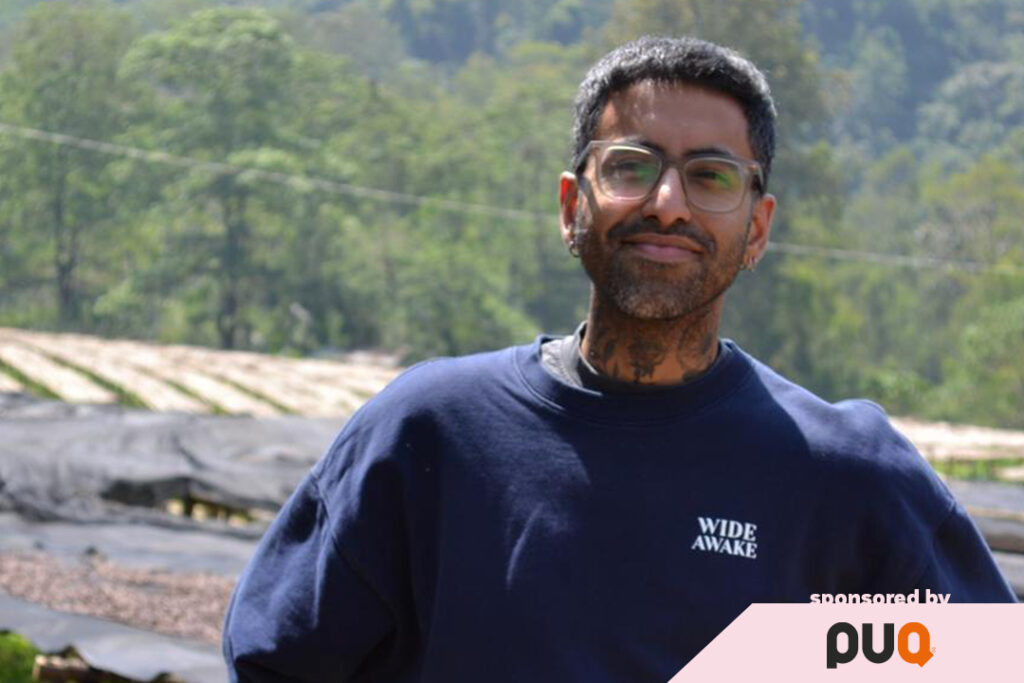
Jaideep, what is your first memory with coffee?
I remember being accustomed to coffee as a functional addition to life; it still made me curious, but nothing out of the ordinary. Back then, I would use a Bialetti and foam my milk with a French press to master budget cappuccinos. Then my first specialty coffee was introduced to me by a close friend, a naturally processed coffee from Honduras. I couldn’t believe what I was tasting was just coffee, and that made me curious to try more. The rest is history.
What inspired you to work in the coffee industry, and how did you get started?
I always had a fantasy of working in coffee, and COVID made a lot of us pivot in life. I was hosting my own podcast in 2020, and I interviewed the owner of my favourite coffee place at the time in Brussels. I left the conversation feeling even more inspired about coffee, and afterwards I asked him if they needed a new barista. Thankfully, the owner agreed to hire and train me.
A couple of years in, I felt like I wanted to learn and do more, and being in a roastery felt like the right next move. I then moved on to Wide Awake Coffee, where we got our coffee for the café. This was the last nudge for me to decide that coffee was going to be my career of choice. It didn’t really matter at first what I did, as long as specialty coffee was around.
Before that, I was working in product management and marketing at an international youth organisation. I went back to studying during COVID and found coffee while looking for a part-time job, which then became a career choice.
Tell us a bit about the place you work at. What is your role there?
I work at Wide Awake Coffee in Brussels, a contemporary coffee roastery on a mission to source, roast, and brew outstanding coffee, with care for quality, people, and process. We also run two coffee bars in the city, where that same mission translates into great hospitality, consistency, and coffee quality. We’re a diverse, passionate team of coffee professionals who want to get better every day, and honestly, that’s my favourite part: the people I get to work with daily.
I work as retail manager, overseeing both shops in Brussels. Some days that means still being behind the bar; other days it’s setting creative direction for the cafés or working alongside some of the best baristas I know. Between all of it, I get to do the kind of work that pushes me to make great coffee every single day.
What kind of experience do you want your customers to have when they visit you at the cafe?
When people visit us, we want them to have an easy, effortless journey into specialty coffee, regardless of their experience level. Our guests should be able to discover different terroirs, stories, and the complexity of coffee alongside us. The baristas and the bar take centre stage in both shops, almost like theatre. Familiarity matters too; we want people to feel comfortable with specialty coffee, because at the end of the day, we represent our industry.
Everything is designed to be intuitive, while keeping hospitality and coffee at the heart of it. Our staff are there to help you feel at ease as you choose how to spend your time with us. The shops themselves are built to spark curiosity and let the coffee speak for itself.
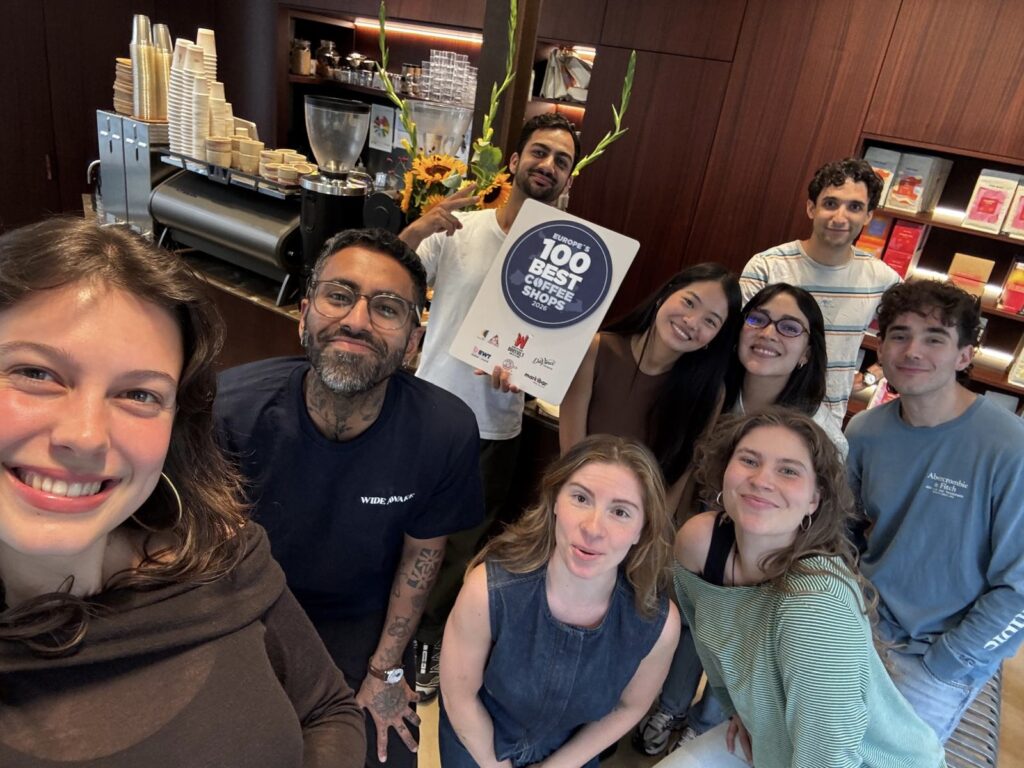
What is your favourite part of the day at work, and why?
My favourite moments always centre around time at the bars with our team, tasting and discussing coffee and hospitality. We experiment, learn, and debate daily about how to tackle key challenges and raise our standards further to keep improving. Some days, work genuinely feels like a playground mixed with radical attention to detail. When you have a team with hospitality and care in their hearts, nothing else matters.
How do you stay motivated and inspired to keep improving your coffee-making skills?
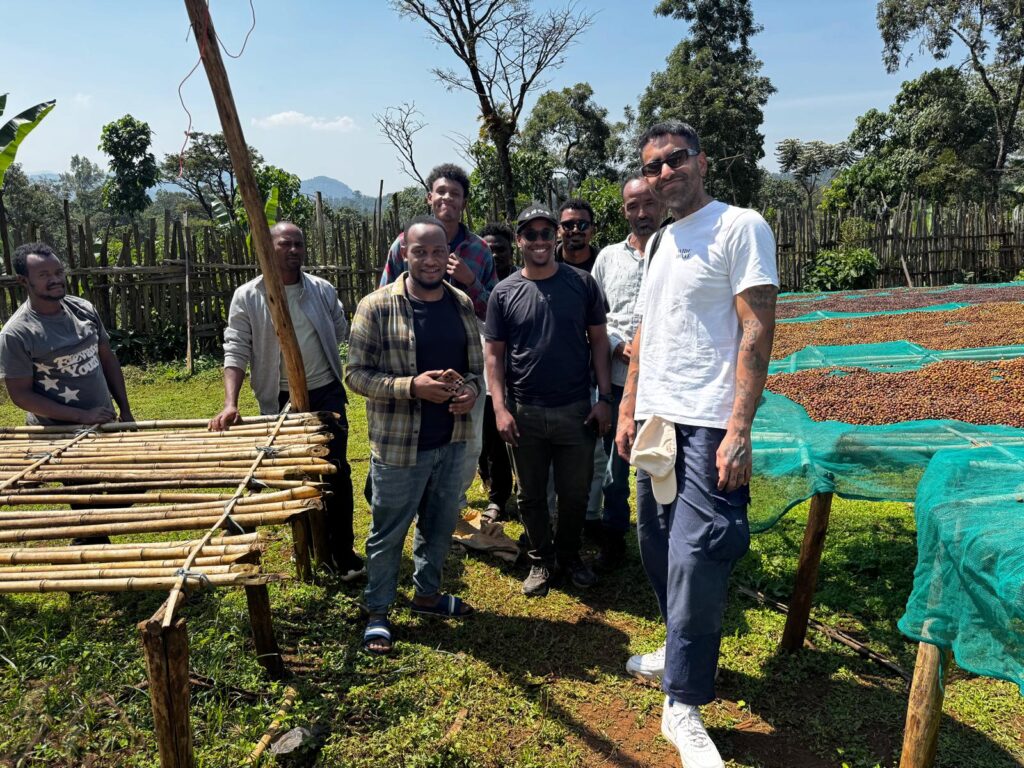
Coffee has just become my life. I can discuss and taste coffee for hours, days, and months and still feel like I haven’t done enough. But to be concrete, after visiting origin, you just feel a responsibility to do better in order to do justice to the work done by the producers behind each coffee.
What are some common misconceptions about our industry that you’ve encountered, and how do you address them?
I think as an industry we still haven’t gotten used to explaining the context of coffee prices. Customers often fail to see the chain behind it: a producer paid well above commodity price, careful processing, freight, roasting waste, and a barista who trained for months to extract it properly. We need to be able to better onboard our staff and further explain to customers why coffee prices are where they are and how it’s still not enough.
What are the current trends in cafes in your region? Are there any trends you promote yourself and would like to see more often in other places?
Curiosity around water knowledge is growing. That’s exciting, as it’s been 4+ years since I became passionate about water in coffee. I think we need to better understand what water is doing to our coffee, as we all know it makes up 98 percent of the final cup.
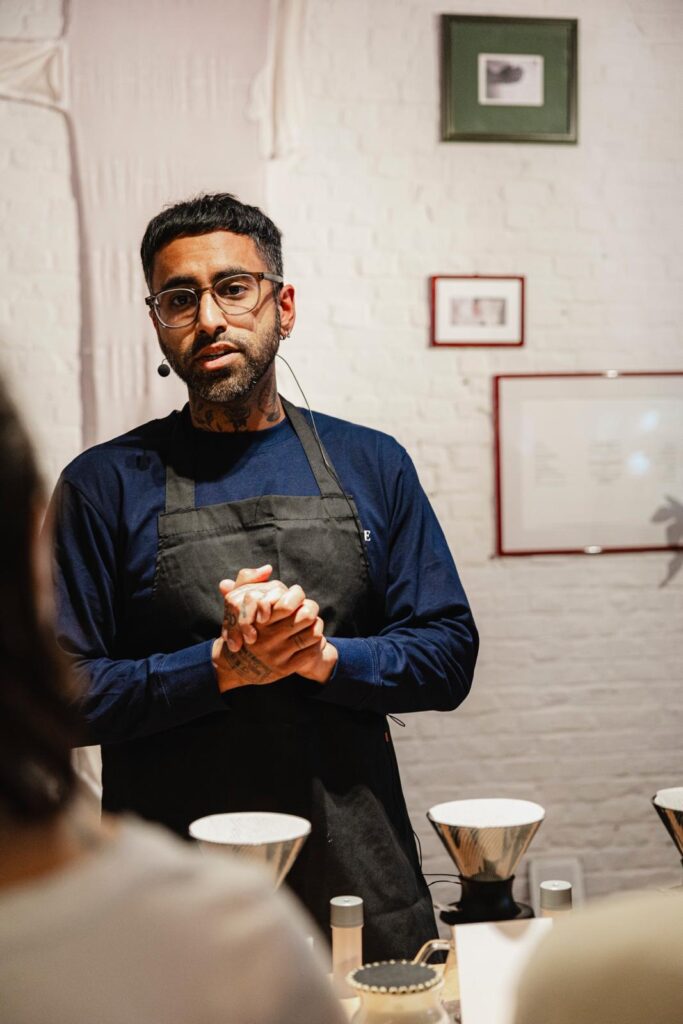
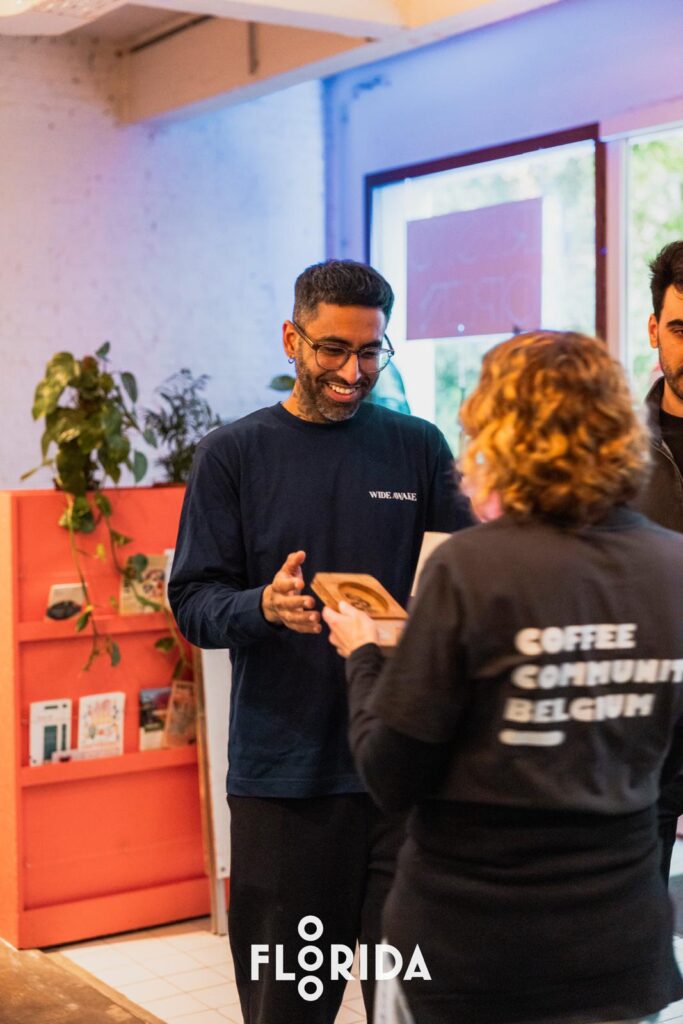
You have some amazing achievements in championships. Can you tell us more about them?
The Team at Wide Awake and I are obsessed with competing. We have a genuine interest in growing as coffee professionals. I have always competed since I was a child, in sports, academics, and more. The idea of having a clear goal, a strategy, and a great team gives you a great project to work on together, with a learning experience as an assured outcome. Why wouldn’t you want that?
How did it feel to compete on the World Stage? Especially that you had a very short time to prepare.
Honoured. I come from a humble background, and being able to represent so many different people and communities was important to me. Paired with the fact that we hosted World of Coffee in Brussels, it was a roller coaster with little to no sleep. This really added to the challenge, as we were dreaming of a WoC in Brussels to host everybody in our city. Combined with being on the world stage, I had to double down on all my efforts, 360. Overall, I am happy and grateful but not satisfied, so it’s back to the drawing board for me.
What was the main message you wanted to send during your World Finals performance? What kind of impact do you want your presentation to have?
Being able to put radical attention on brewing. We live in a time where we have access to some of the best coffees in the world, yet I go to so many cafes where the coffee has potential but could have shined much more if it had only been brewed better.
Secondly, storytelling. We all know customer service needs to be fast, but with great storytelling and expectation-setting, let’s take the time to really showcase proper coffee experiences. You’d be surprised that a customer who’s annoyed about waiting 10 minutes for their filter brew would be happy, even excited, to wait that same 10 minutes if the barista had simply informed them of the wait time before they ordered. The coffee experience starts and ends at the door of the shop, not at the first and last sip.
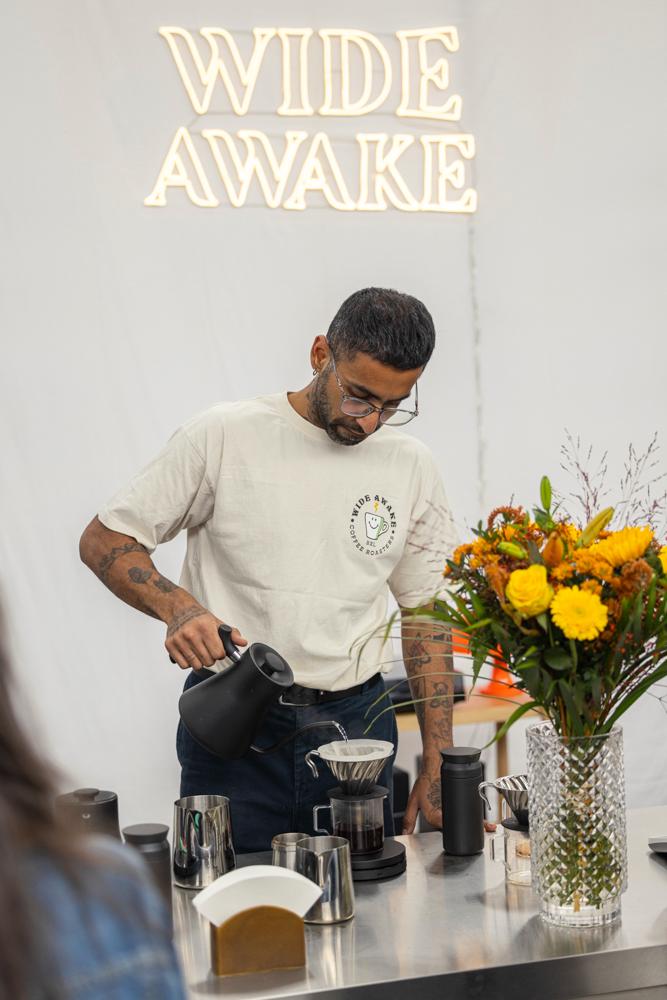
What, in your opinion, is the most important thing to have in mind when you start to compete in coffee championships?
Real work needs to be put in. You need to go in with an open mind and be ready to hustle. You will have to unlearn and relearn, and you need a great team next to you that shares the same vision. It gets challenging and sometimes unclear, but we have to remember that the Olympics were never meant to be easy. A certain amount of discipline and determination is needed, but the result on the other side is heaps of growth.
What are the next championships you’d like to compete in?
I want to keep competing in the Brewers Cup. I have a lot of learnings that I want to implement and take forward. It’s a very challenging yet super fun adventure to take on. Alongside the team, we used to love competing in the Roast Masters, arguably one of the best competitions in coffee, where you really have to master everything. It’s a pity that you see the competition less and less. We were discussing doing Coffee Masters in London, but no decision has been made on that yet. Some people on our team are also competing in Cup Tasters, and I am shadow training with them to just get better.
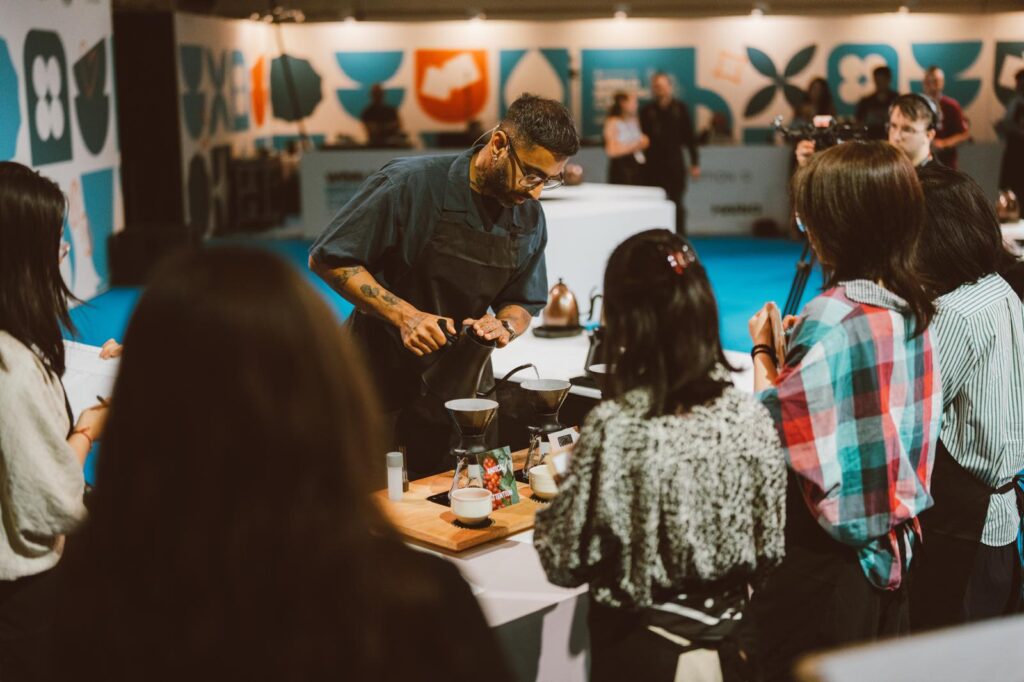
If there were one piece of knowledge about coffee you’d like everyone to know, what would that be?
The biggest fear while drinking coffee is bitterness. Every time I brew, that is my ultimate goal to avoid. Fast extractions help us get clarity, both in filter and espresso. For filter, I go with a shorter ratio, around 1:14 to 1:15, with a fast brew often under 2 minutes, compared to the more typical 1:16 to 1:17.
For espresso, fast brews with a longer ratio, around 1:2.5 to 1:3, compared to the more standard 1:2, often between 15-25 seconds. Either way, the goal is the same: no harshness in the final brew.
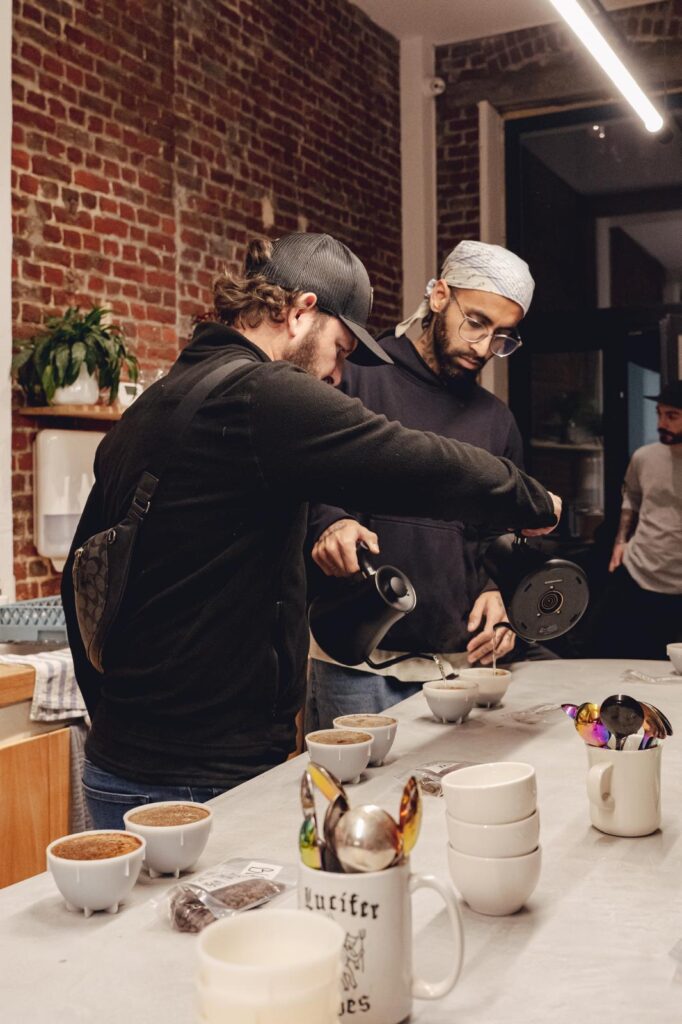
What are your passions and hobbies apart from coffee?
I absolutely love cooking, and I am also a fashion enthusiast. I occasionally DJ. I have always thought of myself as a creative person who loves doing loads of things. This doesn’t always make it easy to really master a certain skill, so I aim to prioritize and focus. What’s great is that these other passions fill me up with energy and inspiration that I bring back and apply to coffee.
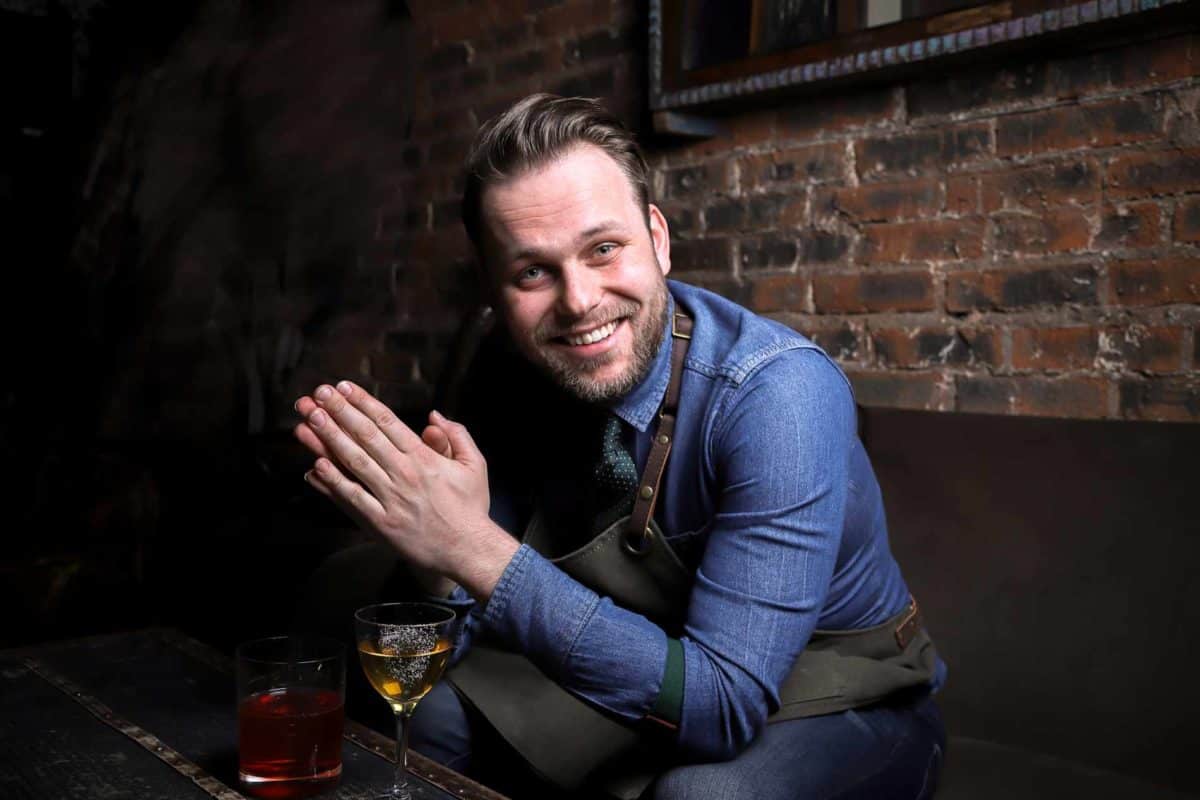
Where in your city do you find your best inspiration?
For inspiration, I always find myself drawn to fashion and retail. I love window shopping and checking out old and new stores. It’s a good reminder that coffee isn’t just about the coffee; it’s a whole package. The details are what tell the story, letting our guests know what kind of care goes into each cup. Interior design especially pulls me in; I visit a lot of different stores and projects just to see how spaces are put together and keep an eye on what is new and exciting.
You’ll also find me people-watching in different coffee shops: what they pay attention to, what matters to them while ordering, and what they like and dislike. It’s important for me to be on the ground, to better understand what customer experience and expectations around specialty coffee actually look like in Brussels.
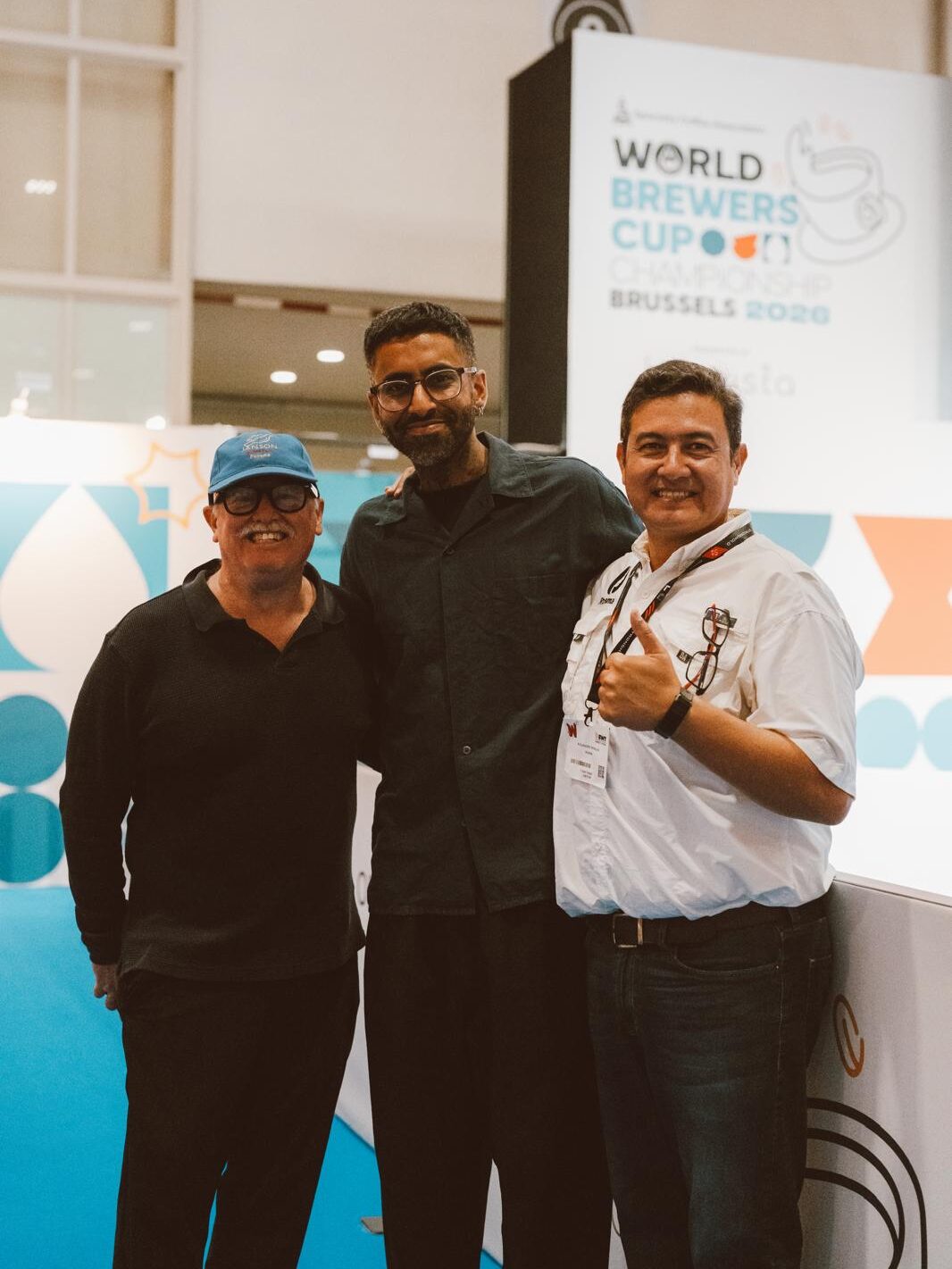
What coffee challenges are you looking forward to? Any new projects or collaborations?
There are a few things in the works; some are surprises while for others I can definitely share the excitement. Firstly, on a personal level, I am now preparing to do the Q-grader course. This is an important milestone for me to keep growing as a coffee professional. I am also starting to prepare for the Brewers Cup, finding inspiration and making a plan of action.
As Wide Awake, we are constantly running new projects and improvements. Currently, we are working on upgrading our offering in the shops. We recently partnered with a new tea brand from Amsterdam to showcase the highest quality teas paired with our coffee. We’re working on new ways to present our competition-level coffees that can tell the coffees’ story better and improve the overall customer experience. We also started our collaboration with Sibarist after WoC to further improve our in-house filter and batch brews. Of course, coffee releases are super exciting, and we are just now releasing our first-ever naturally processed coffee from Kenya that the whole team is super stoked about. For the rest I cannot spill too much tea!

Quick Fire Questions for Jaideep:
Filter coffee or espresso-based?
Filter coffee.
Milk coffee or black coffee?
Milky.
The most underrated coffee drink?
Espresso on ice (lightly steamed).
The most underrated coffee brewer?
French press.
How do you make coffee at home?
Hario V60.
Favourite piece of barista equipment?
Grinders.
What’s your favourite city to have a specialty coffee tour outside of “your city”, why?
Copenhagen, just feels like the perfect place for speciality coffee and pastries!