
In 2007, Petr Holata took a part-time job at Cukrárna Alchymista in Prague for 53 Czech crowns an hour. He is still there. Nineteen years, a lifepartner Patricie, children, a brief interlude studying martial arts in China, coffee caterings on film sets at 3 AM in 4°C weather, and a career as one of the most beloved emcees on the Czech and international coffee competition scene later, and he is still behind the same counter, still making 100 to 400 shots a week just to keep in shape, still loving every single one of them!
Alchymista is not a typical specialty café. It has a hidden courtyard garden, a coffee museum next door, various animals, a retro yet funky interior that feels like it was assembled over decades because it was, and a menu that has always been driven by genuine curiosity rather than trend-chasing. Petr runs it together with his wife Patricie, whose daughter inherited the place from her mother, the artist Kateřina Ebelová, who founded it nearly thirty years ago. He will tell you they do not own the café so much as borrow it from their children. He will also tell you that simple things are sometimes the best, that wholesome service matters, and that a fresh glass of water with your coffee should never be optional.
Off stage, he plays Magic: The Gathering, swings kettlebells, has a vinyl collection the size of a small library, and finds inspiration in old buildings and unique parks. On stage, whether at Barista Roku or the World Brewers Cup, he is the person who makes nervous competitors laugh, mispronounces nothing, and reminds everyone in the room why they fell in love with coffee in the first place. We are very glad he stumbled upon and then never left Alchymista!
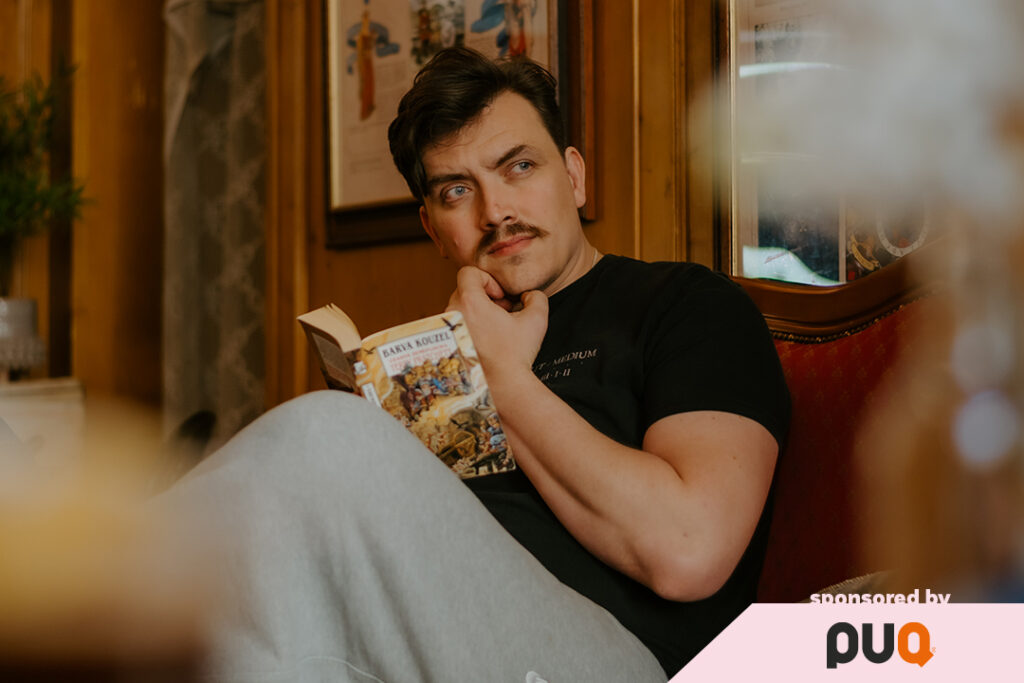
Petr, what is your first memory with coffee?
The aroma. When I started back in 2007, I first encountered freshly roasted beans. And I was able to enjoy different sensations in the cup and also in the coffee bean container. The smell on my hands after the first whole day behind the machine. Loved it!
What inspired you to pursue a career in the coffee industry, and how did you get started? What did you do before coffee?
I was just looking for a part-time job since I started living on my own. My classmate worked at Alchymista. The wage was ridiculously low, 53 CZK/hour to be specific. Which was really bad even for 2007!
But I loved that feeling of being present in the moment while behind the counter. The power you have in your hands to make the customer’s visit the best part of their day or even their week. The possibility I had in every step of making the coffee. The chain from farms to cup. The relationships I’ve built along the way made me stay.
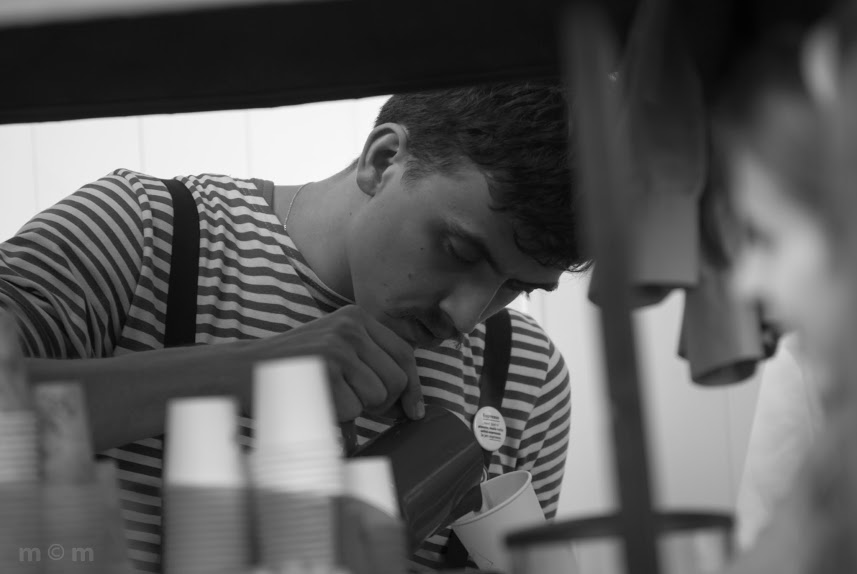
…or on the competition stage with a microphone!
Can you walk us through your career? 🙂
Tl;dr: I started working at Cukrárna Alchymista at 2007 and never left.
For some time I was running a small café at Funkční trénink, called Strongcafé. It was the most punk and beautiful space. You could lie down on the floor and listen to vinyls, drink espresso and protein shakes after the training. That is also the place when me and Aleš from ECT first met, before ECT even started!
But Strongcafé did not make any sense financially, and I also did not want to run several different spaces, so I decided to focus more on Alchymista and close it. I have worked with Jarda Slámečka from Candycane and Stanislav Hampl from Kavárna Čekárna on a food talk show – Meleme. We had like 10 episodes, and it was a fun thing to make. The first one was in 2014, still out here in the internet wilderness. It had Espresso Tonic!
In 2016 I finished my University programme, then I took a 6-month-long vacation in China, visiting Shaolin and Taiji schools to experience the life of the true martial artists. I came back, started living at Letná with Patricie and focused fully on Alchymista, kids and our family. At the end of 2019, I joined the Czech SCA chapter to help connect and inform baristas and cafés about competitions and give back to the community. I have been part of the Czech chapter since then.
In 2017, we started going to the first Zero-waste Farmers´ market at Heřmaňák; it is super local and really small, but it is close to our customers and friends. And we use glasses instead of paper cups, so I love it. I am there almost every Saturday. And by that time, I started doing coffee caterings for movies. That’s a really nice side hustle, and I got to meet a lot of wonderful people. I’ve always been around theatre since I was a kid thanks to my dad, so actors, directors, extras, grips, lights, and gaffers are close to me. Sometimes it is hard, and you have to be on set 22:00 to 03:00, but I feel like a Superman saving people’s lives with caffeine at 4°C. Also, I am the one who is driving, setting up the coffee stand and actually making coffee. And because of that, when the production calls me last minute, I can be at the spot in three hours, fully operational, ready to serve. And this kind of flexibility is super important for the movie industry.
I know a lot of coffee people in the industry want to be somewhere other than behind an espresso machine or at the service. But I like my place. I do not want to roast coffee or own several venues. I want to be in the moment, with my guests. Just as it was on the first day I was at Alchymista. Currently, I make 100-400 shots weekly just to keep in shape, still loving every single one of them.
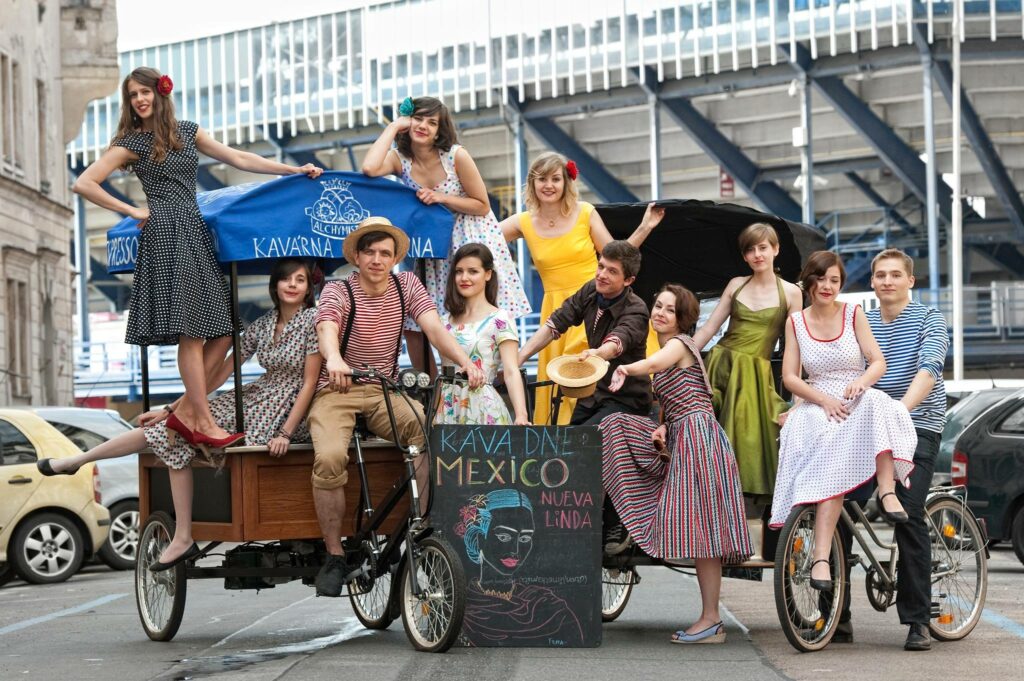
Cukrárna Alchymista was founded almost 30 years ago by the artist Kateřina Ebelová, and you now run it together with her daughter Patricie, your wife. What does it feel like to be the steward of something someone else built with such personal vision, and how do you honour that while also making it your own?
I have learned a lot of things the hard way. For a long time, my hands were tied, or I thought so. Also, I believed to be the smartest person on the planet and that everything was either my way or not fulfilling its potential. My view was: The bar is small. The fridge should be different. We want an open kitchen. But the Genius Loci and our internal believe that it is better to repair than throw away; that you should honour what you already have and learn how to work with that, both in material and spiritual meaning, is what keeps us alive and well. Day after day. Upkeep, repairs, love and respect. Heritage & tradition.
I always say that we do not actually own the café; we borrowed it from our children, and we just keep an eye on it for them, before they are ready to take over.
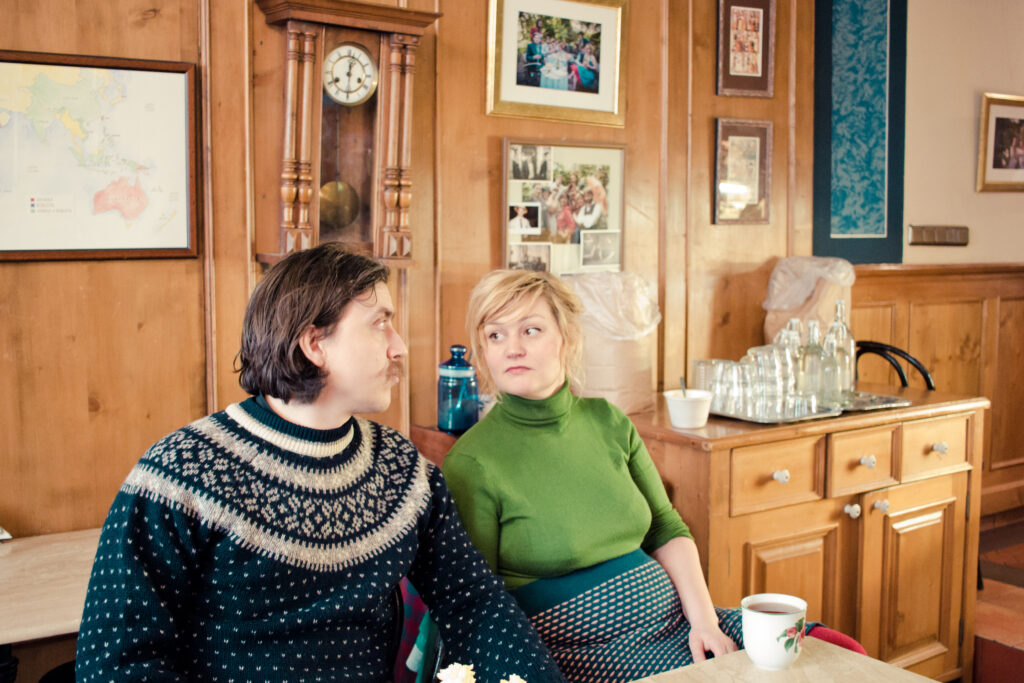
Alchymista has never stopped exploring taste – coffee, cakes and drinks. That’s a rare kind of institutional curiosity. How do you keep a legacy café genuinely alive rather than just comfortable?
Alchymista is a live concept. It is a family-run business. One of a kind. There is no handbook, no manual. People coming to work with us shape our team and the menu. We see something, and we want to explore it. We always keep some weird things on our menu. Sometimes it sticks around for a few years. Sometimes it is just one week, and we get bored of its intensity.
Coffee is great, and it is changing every time for us. One day you have super sweet Peru. The next day it is Ethiopia, so fruity, you will feel like it’s 2014. And sometimes you just realise you like proper Brazil. I love the world of tastes and aromas. I love learning new things. I also like to stop and smell the roses.
My wife and I are both creative and chaotic, but we are trying to control our ideas. I am blown away by the combinations Patricie can think of, and I am trying my best to make them happen. It is a never-ending journey of inspiration, visiting flea markets to pick up the right vessels and plates, and hours of trying different volumes and concentrations. But sometimes we just stick with the basics. Simple things are sometimes the best. It is very easy to jump on some trend that will eat itself in a few years. Like Matcha, UBE, Aerocinos – you name it. We are always exploring, but we rarely stop at one place for a long time.
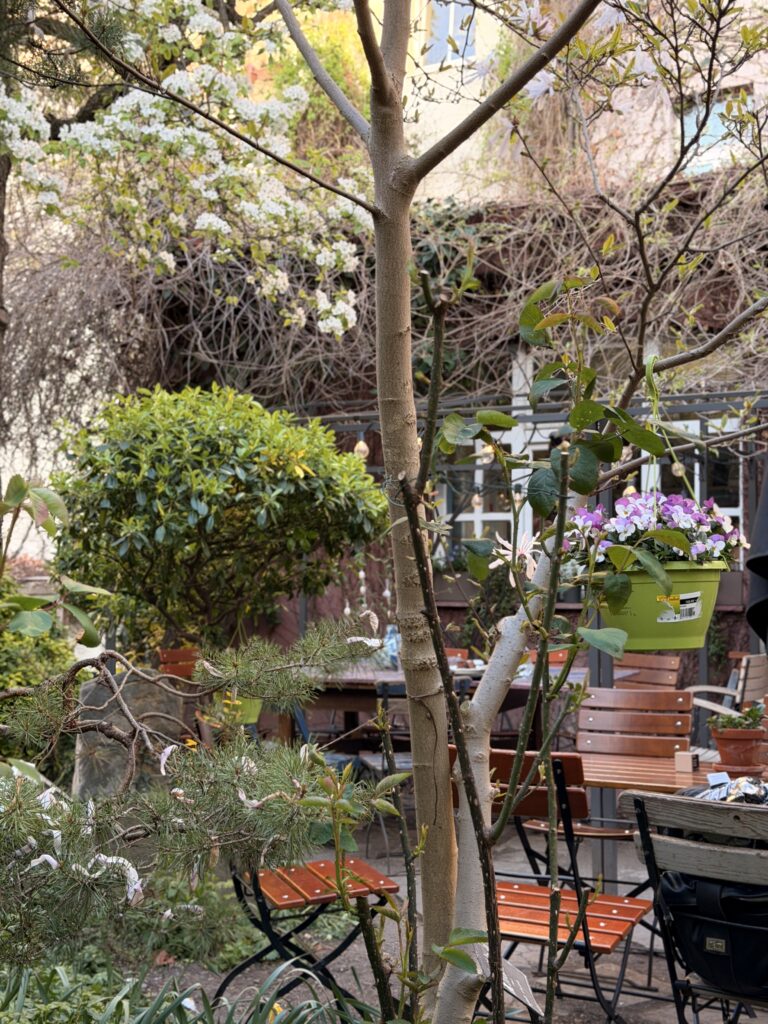
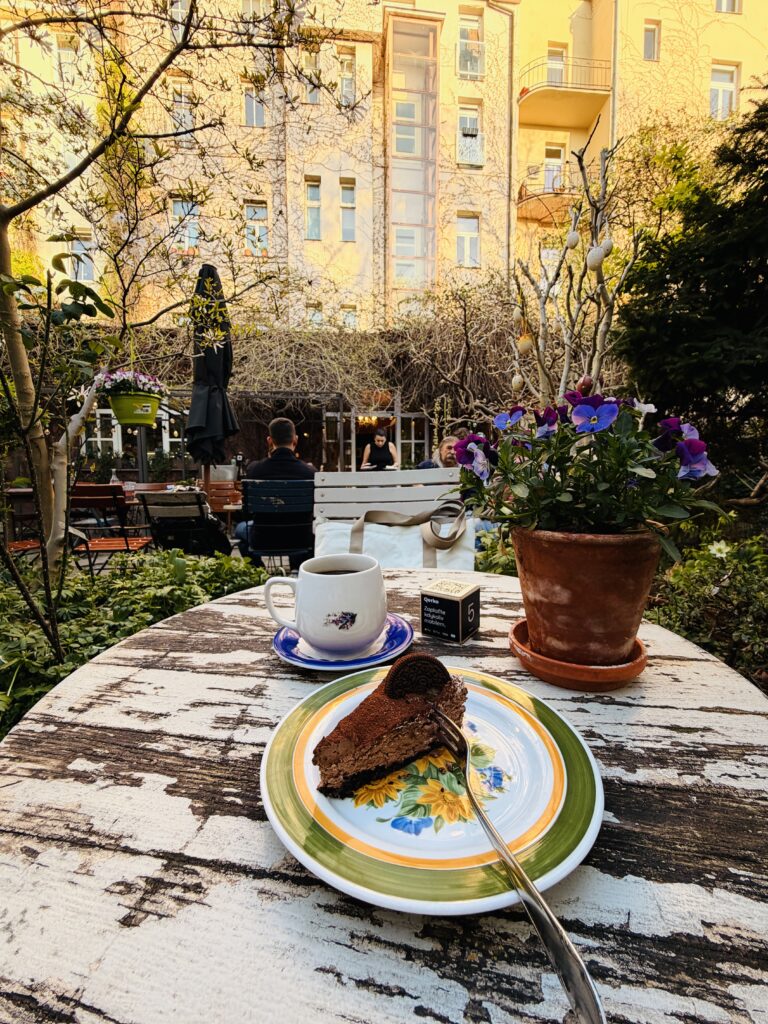
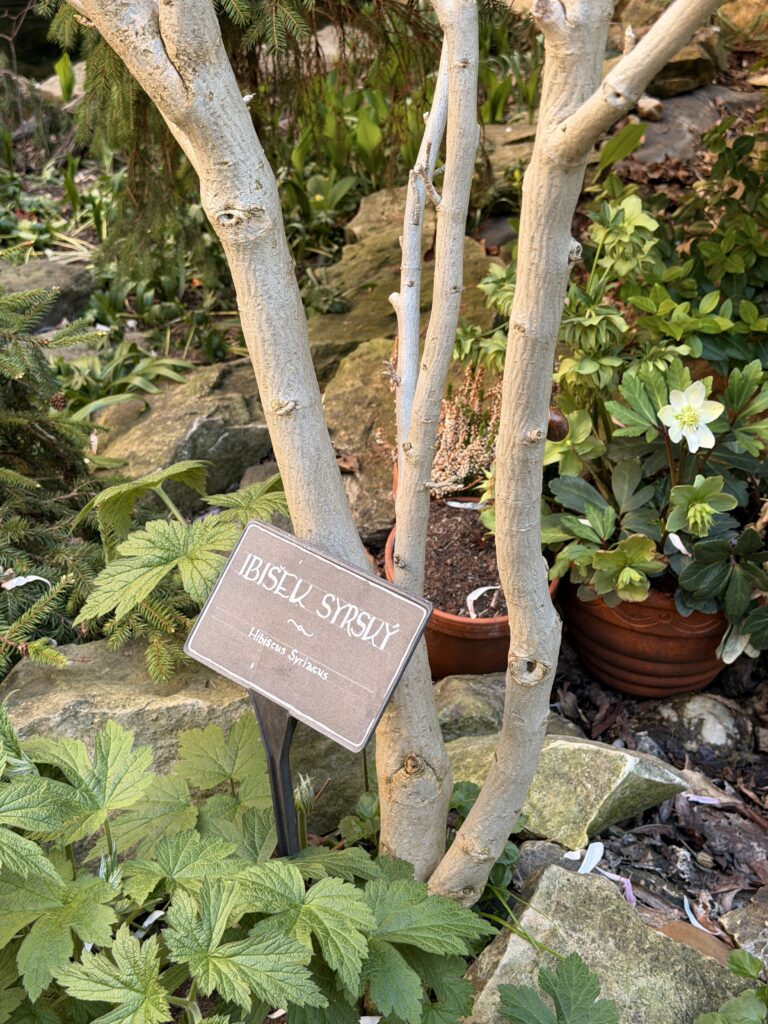
The place has a hidden, lively courtyard garden, a coffee museum next door, and a quirky yet super comfy retro interior. Most specialty cafés are built around minimalism. Alchymista is built around richness and history. What does that environment do to how people experience the coffee?
I want our place to be warm and welcoming. The customers should be taken care of, and hospitality is our main topic. We should be able to read them and know how they like their coffee. I like full service. I like fresh water with my coffee that I do not have to take straight from the tap into the glass that’s been standing on the counter for ages. I want my nice spoon to be able to mix my espresso. I want to be taken away by details and character. And I am trying to run the café; I would enjoy myself as a guest.
What kind of experience do you want your guests to have when they visit your place?
Magical. Pleasant. I want them to be happier after their visit. I want them to remember the place and the drinks they had. To slow down their busy life and read a book, pet a cat, look around. Boost their mood and start their day.
What is your favourite part of the day in your cafe, and why?
Mornings. There is no rush for us. Café is calm. I have all the time in the world to dial in, and I can do the drink again from scratch if I am not happy with it. I can talk to the customers and start my day and theirs alike. Like really talk to them, not just polite small talk nonsense. Neighbours, lost tourists, visitors of Sparta Stadium just looking to use the bathroom and discovering the most magical place and best coffee they had so far.
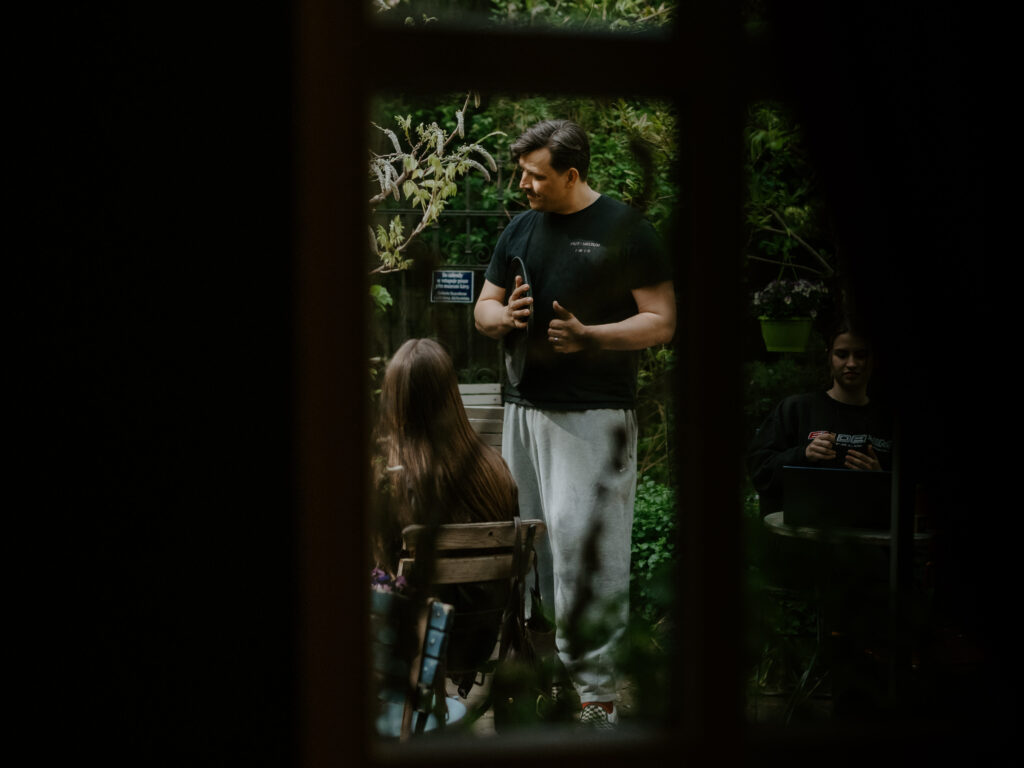
As Czech SCA coordinator, you were part of shaping the specialty coffee scene in your country. What does that role actually involve – and what’s the gap between what people think the SCA does and what it really does?
What people think: SCA Chapters have power and money. What we do have is a lot of work and no free time. We are trying to change that and to actually make it profitable, because I think that is good when people are paid for their work. I think SCA should connect more and should provide chapters with enough resources so the chapters are able to travel across the country and do cuppings, lectures and networking. To get to know their community. That is my dream; that is what I would like to do. Come to every single café in the Czech Republic and hand them tickets to Barista Roku – our main event.
What’s the biggest challenge facing the Czech specialty coffee scene right now that the industry isn’t talking about loudly enough?
Franchising. Making more and more speciality coffee shops take away the speciality. There is a limited number of great baristas. There is a limited number of good baristas. We are opening coffee shops on every damn corner, and they are just mediocre. Speciality coffee is used more as a marketing phrase than an actual statement.
What are some common misconceptions about our industry that you’ve encountered?
That we work with coffee. We work with people. Coffee is just a way to connect.
What are the current trends in cafes in your region? Are there any trends you promote yourself and would like to see more often in other places?
Small batch brew. Tasting combos. I want to taste a milk beverage, espresso and filter. But I do not want to drink that much coffee in one sitting. 50ml of filter is more than enough for me. We have it on the menu, but this trend has not appeared anywhere else, as far as I know.
The trend I have noticed, and I have been promoting for a long time, is better care and focus on decaf. When you go to the café and order an oat decaf flat white, you are not drink-shamed. And usually the shots are nice and not 7 seconds undrinkable weak nonsense, as they used to be a few years ago.
If there were one piece of knowledge about coffee you’d like everyone to know, what would that be?
There is more to coffee than just coffee. Always learn, and never become too comfortable; every now and then go back a few steps and review. Do not forget your basics. The coffee industry is super complex.
You emceed the World Brewers Cup in Athens in 2023. What goes through your mind in the moments before you walk out in front of that crowd at such an important event?
I was nervous as hell, made a joke with Bart Deprez that did not land, told myself: ok, it can’t get any worse, and then I just went with the flow. It was great. I made sure I knew every single judge and competitor and how to pronounce their names properly. I can improvise, but improvisation comes from great preparation.
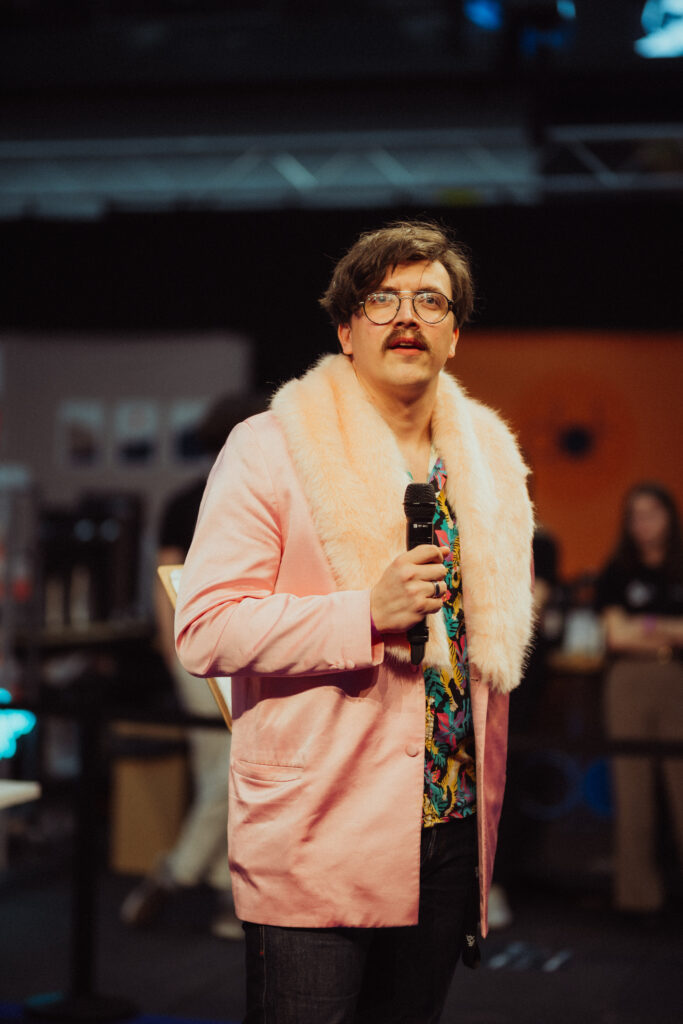
Photo by David Sklenar.
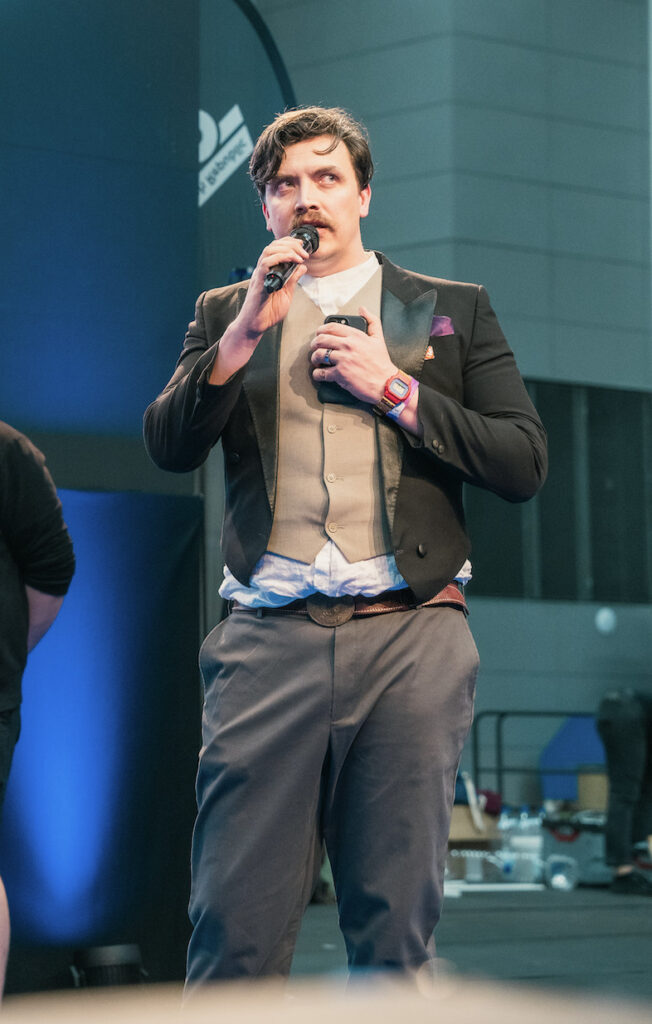
Photo by Martin Plíva.
You also emcee national events. What is it about being the emcee that makes you come back to the stage in this role?
The community. The thrill. The jokes. THE EMOTIONS! The energy. I love being the part of it. I love when people are doing their best. Maximum effort. I love giving back to the coffee world. And I am no competition material, I love being there. Doing interviews and making competitors calm and comfortable. I love presenting the world I love to bystanders and common people in the audience.
What are your passions and hobbies apart from coffee?
Music. Magic: The Gathering. Kettlebells. Movies. Boardgames.
In this order. I was a barista in 2010, so of course I have a huge vinyl collection.
Where in Prague do you find your best inspiration?
Parks. Old buildings. The people around me. There was a spot called Milada that I really loved, but it closed several years back, and I haven’t found anything like it. But if I am being honest, I find my inspiration while travelling to different countries and different cities.
What coffee challenges are you looking forward to? Any new projects or collaborations?
Every season has its own challenges, and we are currently changing our coffee mug supplier. After 28 years, we will be refreshing our design and collaborating with Group Benedikt. And I have one coffee project that is still behind closed garage doors, but (fingers crossed) it should see the light of day in the next year. I want to focus more on SCA as Kristián Kříž is doing a lot of work, and we have a nice momentum to promote specialty coffee even more.

Quick Fire Questions for Petr:
Filter coffee or espresso-based?
Espresso.
How do you make coffee at home?
With love!
The most underrated coffee drink?
Freddo cappuccino.
The most underrated coffee brewer?
French Press.
No.1 café in Europe that every coffee geek should visit?
Kávový klub at Farmářský trh na Kulaťáku with Adam Dvořák behind the espresso machine. One of the OGs.
What’s your favourite city to have a specialty coffee tour, and why?
Brno – so many great cafés!