
Junior Vargas Otero was born on a coffee farm in Cusco, Peru. Today, he lives in Vienna and carries that origin story into every stage he steps on. With 15 years in the industry, he bridges farm and café with a clear mission: create real value at origin.
He is an Authorized SCA Trainer, Q Grader, soon-to-be Q Grader Instructor, and a five-time Austrian Barista Champion! Junior has competed more than 20 times, represented Austria at the World Barista Championship four times, reached two semifinals, and is now preparing for Panama WBC 2026. Alongside competition, he works with Victoria Arduino Austria as a brand ambassador and educator, training baristas, coaching competitors, and consulting entrepreneurs who want to build stronger coffee businesses.
What defines Junior is purpose. He competes not for trophies, but to build impact beyond the stage. He speaks openly about adding value through processing innovation, education, and transparency. His long-term vision is bold: to create a coffee academy campus in Peru that connects knowledge, producers, and the global coffee community. For him, coffee is complex, demanding, and deeply human – and that is exactly why he stays in the game.
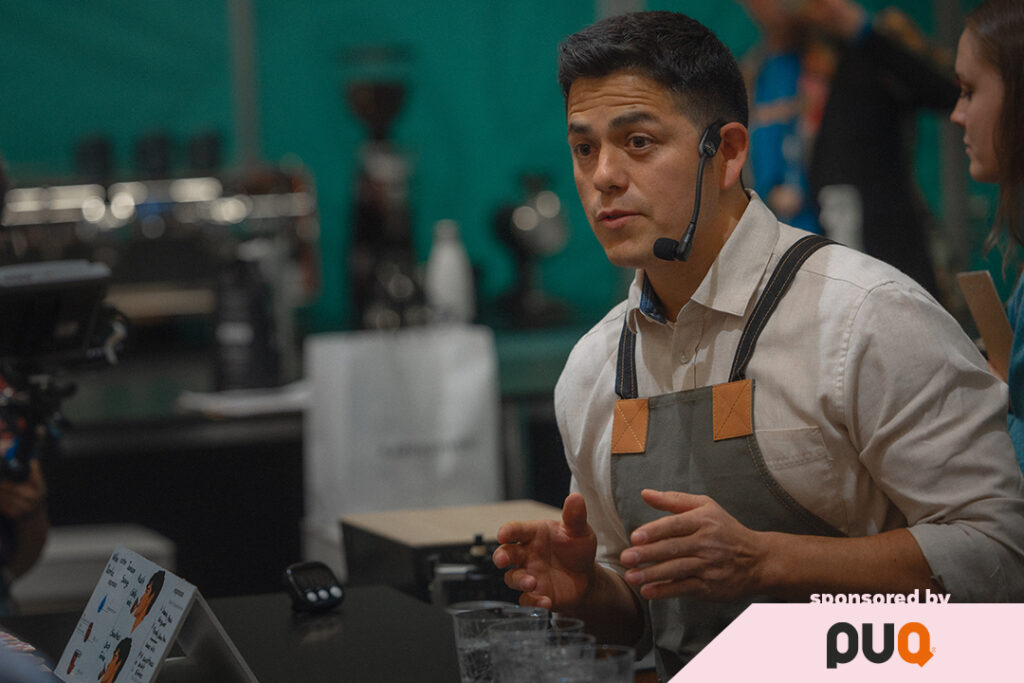
Junior, what is your first memory with coffee?
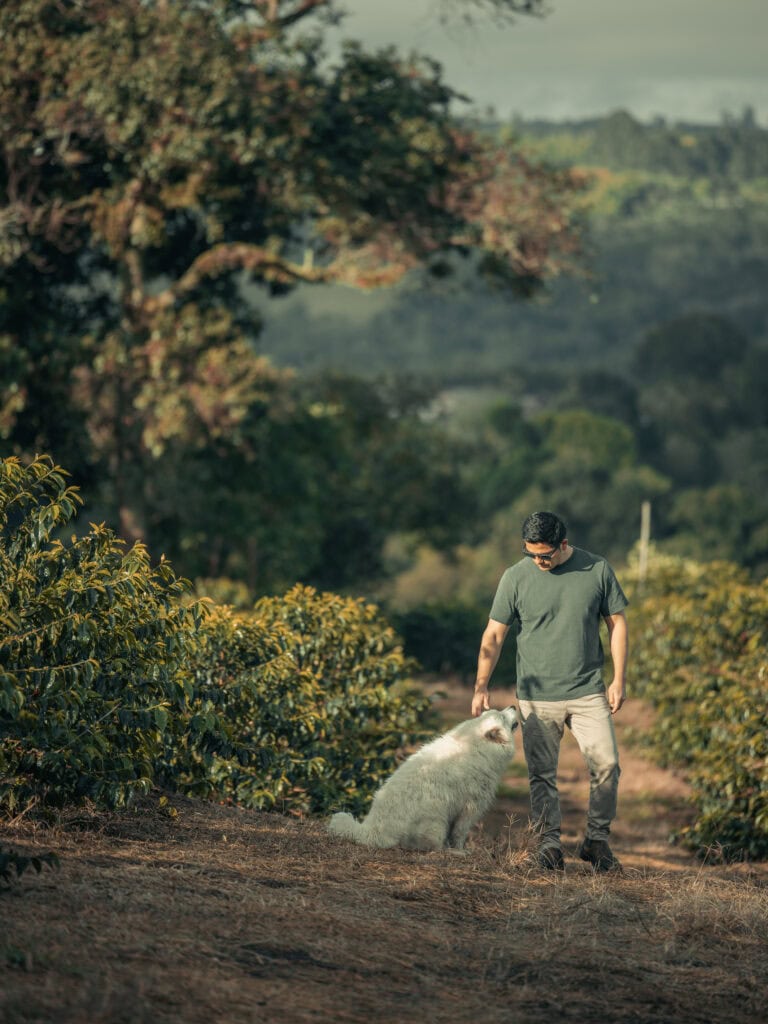
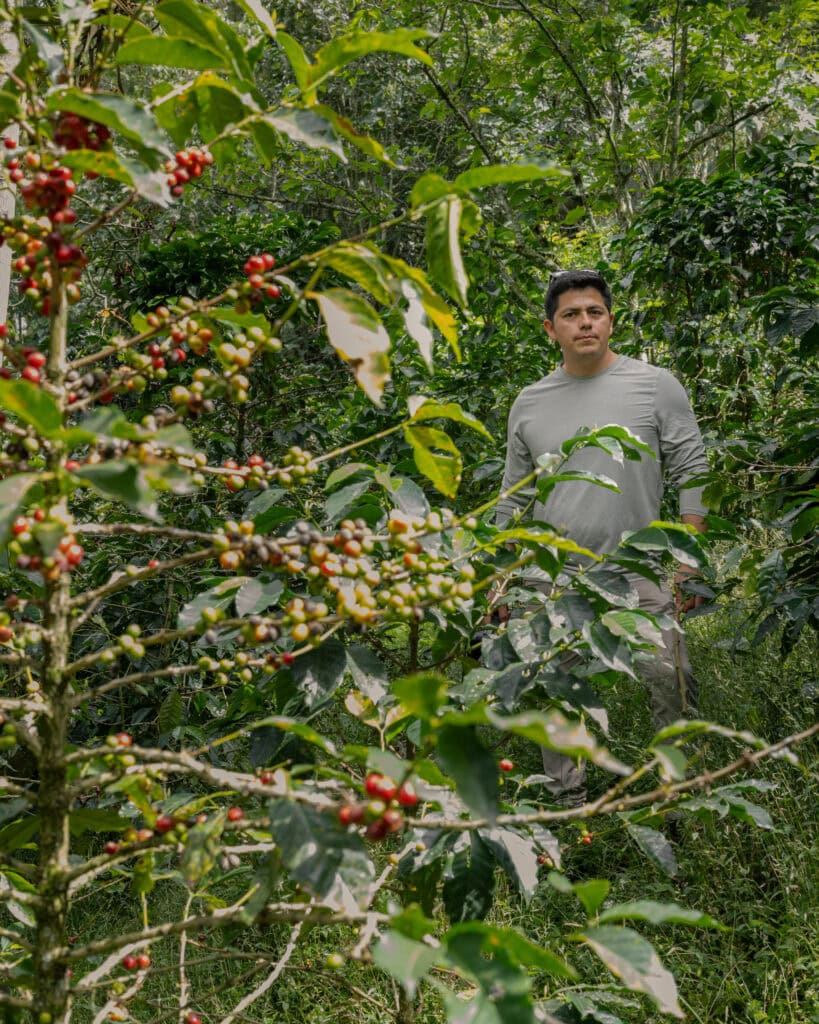
I was born on a coffee farm, and my earliest memory of coffee is climbing a big old tree to harvest, before coffee was ever a drink to me.
What inspired you to pursue a career in the coffee industry, and how did you get started?
I began my career in hospitality and the food & beverage industry, working in hotels, restaurants, bars, and cafés around the world. These experiences shaped my understanding of service, quality, and business, but my connection to coffee actually started much earlier.
I was born on a coffee farm, and some of my earliest memories are of climbing old coffee trees to harvest cherries. That connection never left me. Even while building my career in hospitality, coffee remained a constant passion.
Over time, that passion evolved into a clear purpose: to deepen my knowledge of coffee, create real value at origin, and help make coffee a more sustainable and viable business for producers. Pursuing coffee professionally didn’t feel like a career change it felt like coming back to where my story began.
Tell us a bit about your work and projects.
I am an Authorised SCA Trainer (AST) with a strong focus on education, competition, and community development. My work involves training baristas, coaching competitors, and consulting entrepreneurs who want to start or grow within the coffee industry. At the same time, I am part of the Victoria Arduino Austria team, where I work as a sales and brand ambassador, representing the brand through education, events, and competition.
My short- and long-term goals are to continue competing as a Barista, building enough experience and value to give back to coffee communities at origin. One of my main projects is to create a coffee academy campus in Peru, designed to share knowledge, provide education, and contribute to the development of the South and Central American coffee community.
What kind of experience do you want your customers to have when they try your coffee?
When customers try my coffee, I want them to experience a true “wow” effect. To create this unique and memorable experience, I focus on four main pillars that together provide a complete 360-degree journey: atmosphere, service, quality, and education.
From the moment they enter the space to the moment they leave, every detail is designed to engage their senses, make them feel welcome, and help them understand and appreciate what they are drinking. My goal is that they don’t just enjoy a great cup of coffee but that they leave inspired, curious, and talking about the experience long after they step out of the café.
What are the responsibilities/tasks that give you the most joy and satisfaction?
The responsibilities that give me the most joy and satisfaction are those where I can create impact through people. Training baristas, coaching competitors, and mentoring others are incredibly rewarding because I get to see growth happen in real time, not just in skills, but in confidence and mindset.
I also find deep satisfaction in education-driven moments: explaining a concept, connecting a cup of coffee back toits origin, or helping someone understand why something tastes the way it does. Whether it’s on a competition stage, in a training room, or during a simple conversation over coffee, knowing that I’ve helped someone see coffee differently is what motivates me the most.
How do you stay motivated and inspired to keep improving your coffee-making skills?
To be honest, staying motivated as a barista is not always easy. Waking up at 5 or 6 a.m. can work for a short period of time, but sustaining that rhythm over a lifetime career is challenging.
What keeps me motivated and inspired is competition, continuous learning, and constantly challenging myself. Competing pushes me out of my comfort zone, forces me to improve my skills, and helps me see coffee from new perspectives. Learning whether through training, travel, or exchanging knowledge with others keeps my curiosity alive.
All these experiences shape my coffee-making skills and remind me why I chose this path: to grow every day, both as a professional and as a person.
What are some common misconceptions about our industry that you’ve encountered, and how do you address them?
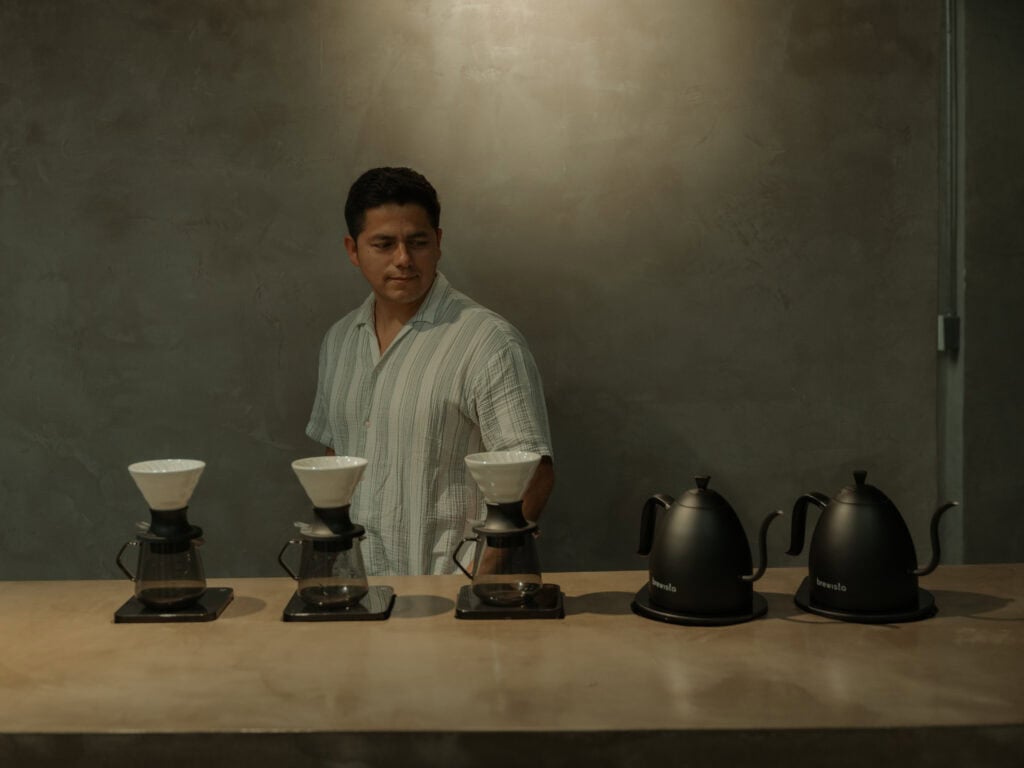
One common misconception is that infused, co-fermented, or inoculated coffees exist only to make coffee taste different or more “experimental”. In reality, these processes can be powerful tools to add value at the origin. When done intentionally and transparently, they allow producers to differentiate their coffees, access higher prices, and create more sustainable income streams.
I address this misconception through education, explaining the process, the purpose behind it, and how added value at origin can lead to stronger, more sustainable businesses for producers. Understanding why these coffees exist changes the conversation from trend-driven to impact-driven.
What are the current trends in cafes in your region? Are there any trends you promote yourself and would like to see more often in other places?
I’m not sure if I would call it a trend or simply a natural evolution of the coffee industry, but one clear movement I see is the decentralisation of roasting. About five years ago, I said that a new wave was coming: small roasting machines would become more accessible and easier to use, and end consumers would start buying green coffee by the kilo and roasting at home.
Today, we’re seeing that happen more and more. This shift creates a deeper connection between consumers and coffee, encouraging curiosity, education, and respect for the product. It moves people from being passive drinkers to active participants in the coffee journey.
This is a direction I personally support and would love to see more often in other places, not as a replacement for professional roasting, but as a way to build awareness, appreciation, and transparency across the coffee community.
You have some amazing achievements in championships. Can you tell us more about them?
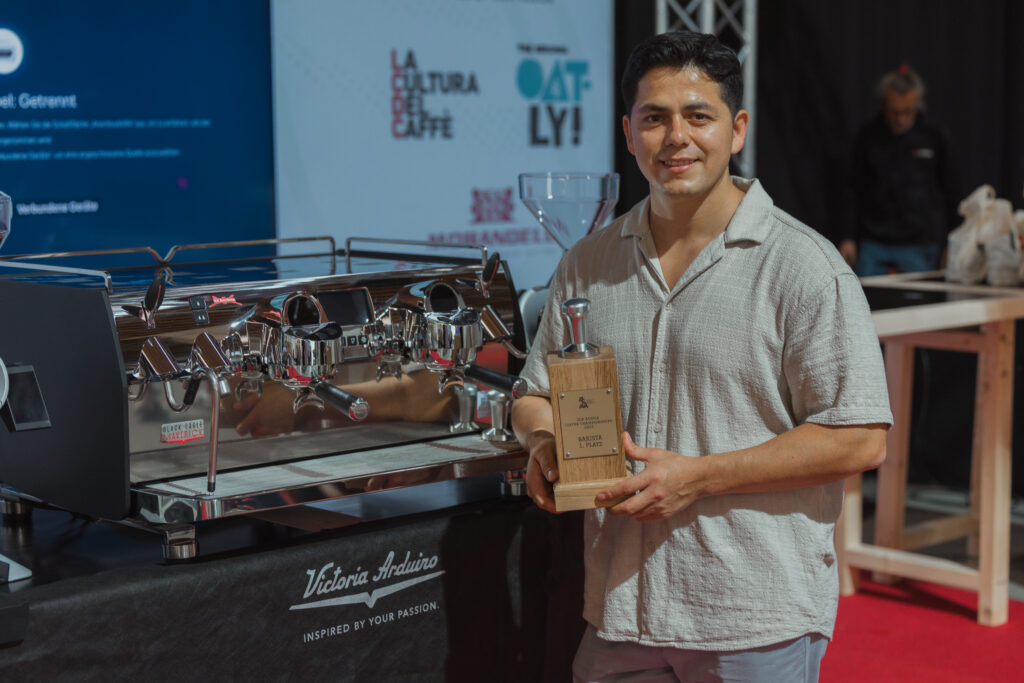
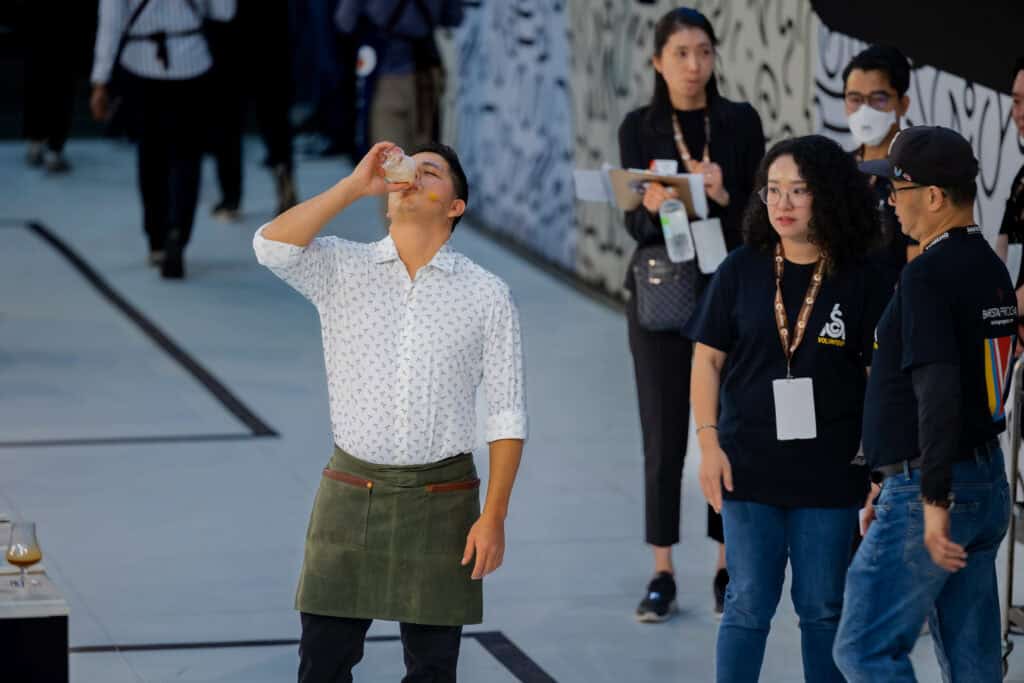
I have learned a lot about coffee throughout my career, but the biggest contribution to my personal and professional development has come through competition. I have been on the championship stage more than 20 times, experiencing both victories and losses. I have lost twice, won the Austrian Barista Championship five times, competed four times at the World Barista Championship, and reached the semifinals twice. And now, I am looking forward to competing in Panama in 2026, another opportunity to challenge myself.
Championships, for me, are like the Olympics of coffee. They require an intense combination of hard work, knowledge, passion, dedication, and consistency. Each phase of training, competing, and post-competition offers a different set of challenges and lessons.
In the end, regardless of the outcome, what truly keeps me motivated is my purpose: to create value for coffee at origin. Every competition shapes who I am, strengthens my skills, and pushes me to contribute more meaningfully to the coffee community.
How does it feel to compete on the World Stage so many times? 🙂 How did the experience change over the years?
I have been competing for the last ten years, and a lot has changed over that time: the rules, the scoring system, and what judges are looking for. After my first World Barista Championship, I had to reset my focus and clarify my purpose. I realised that the reason I compete is not just for titles or recognition, but to create value at origin. That has remained my guiding principle, no matter how much the competitions themselves evolve.
I’ve also come to understand that competitions are a process, a game with highs and lows. Sometimes you’re on top, sometimes at the bottom, but the key is to stay in the game, keep improving, and trust that when preparation, experience, and opportunity align, your moment will come. Competing on the world stage has taught me patience, resilience, and a deeper appreciation for the journey, not just the result.
What, in your opinion, is the most important thing to have in mind when you start to compete in coffee championships?
If you want to compete, the first thing you need is a clear purpose. Ask yourself why you are doing this. Competition demands time, money, discipline, sacrifice and a team work, and without a strong reason, it’s very easy to quit when things get hard.
Understand that competition is a process, not a result. Do your best every time you step on stage, but don’t attach your self-worth to the score. Wins and losses are part of the game learn from both, and keep showing up. Staying in the game is already a victory.
And finally, think beyond the trophy. Ask yourself what you would do if you won the World Barista Championship. That title carries huge value, but only if you use it with intention. If you don’t have a plan, the moment will pass quickly. A trophy is temporary, but impact is permanent. Compete not just to win, but to create something meaningful for the coffee community.
What are the next championships you’d like to compete in?
At the moment, I’m fully focused on developing my concept for the World Barista Championship Panama 2026, which will be my 5th time competing on the world stage. My goal is to challenge myself, stay present in the process, and give 100% at every stage from preparation to performance.

At the same time, I’m preparing to compete for the first time at the Austrian Brewers Cup. My motivation to enter this category goes beyond winning or titles. It’s about expanding my skills, gaining new perspectives, and maximising the value I can bring back to my purpose and the wider coffee community.
If there were one piece of knowledge about coffee you’d like everyone to know, what would that be?
If there is one piece of knowledge I’d like everyone to understand about coffee, it’s that coffee is a complex product. The more you study it, the more you realise that being “just” a barista or a roaster is not enough to fully understand it.
Every cup of coffee is the result of many connected elements from the origin, processing, roasting, and extraction. What you taste in the cup is not accidental; it’s the outcome of decisions made at every stage of the coffee’s journey. Understanding those connections creates respect for the product, for the people behind it, and for the craft itself.
What are your passions and hobbies apart from coffee?
Outside of coffee, one of my biggest passions is photography and videography, which I developed and refined during the pandemic. What started as a hobby quickly became a creative outlet and a powerful complement to my love for coffee and travel.
Through photography and video, I’m able to document stories, capture moments at origin and on the competition stage, and create meaningful coffee content to share with the community. It allows me to express coffee beyond the cup and connect with people in a more visual and emotional way.
Where in your city do you find your best inspiration?
I find my best inspiration watching a sunrise or sunset by the sea, and when I’m back home, walking through downtown Vienna. Simply being in the city motivates me. I love art, and Vienna feels like a handmade city to me, where every corner, street, and building tells a story.
Walking through Vienna gives me inspiration and perspective. It reminds me that craftsmanship matters and strongly influences how I approach my work.
What coffee challenges are you looking forward to? Any new projects or collaborations?
Beyond championships, I’m actively working on projects focused on education, origin connection, and knowledge sharing, especially with the long-term vision of creating a coffee campus in Peru. I’m also open to collaborations with people and brands that share the same values: intention, transparency, and a real desire to create value for the coffee community from baristas to producers.

Quick Fire Questions for Junior Vargas Otero:
Filter coffee or espresso-based?
Filter coffee, but if it’s a competition espresso, it will be espresso!
Milk coffee or black coffee?
Black coffee, but I of course love the competition milk.
Hobbies besides coffee?
Photography.
How do you make coffee at home?
Filter coffee.
Favourite piece of barista equipment?
Hand grinder
No.1 café in Europe that every coffee geek should visit?
Laboratorium, Cluj-Napoca, Romania