
Junchao Huang did not set out to become a coffee professional. Trained as an architectural designer, he arrived in the industry through a detour he had not planned: a desire to spend time doing something he genuinely loved before settling into a career.
His path into the industry moved quickly. In his first year behind the bar, working as a barback with no espresso training, he entered the UK Brewers Cup and reached third place at the national finals. That result announced him as someone worth paying attention to. Since then, he has competed, judged, and coached at the same competition, while building a business that roasts its own coffee and sources its own green beans.
Four years later, he is the founder of Calico Coffee in London, a cafe and in-house roastery near Waterloo Station that has quietly become a meeting point for coffee people passing through the city from all around the world. At 28, Junchao is still close enough to the beginning of his journey to remember what drew him in: the openness of the specialty coffee community, the pleasure of a well-made pour-over, and the satisfaction of connecting a customer to the producer who grew their cup. Calico, which recently marked its first year, is his attempt to hold all of that in one place.
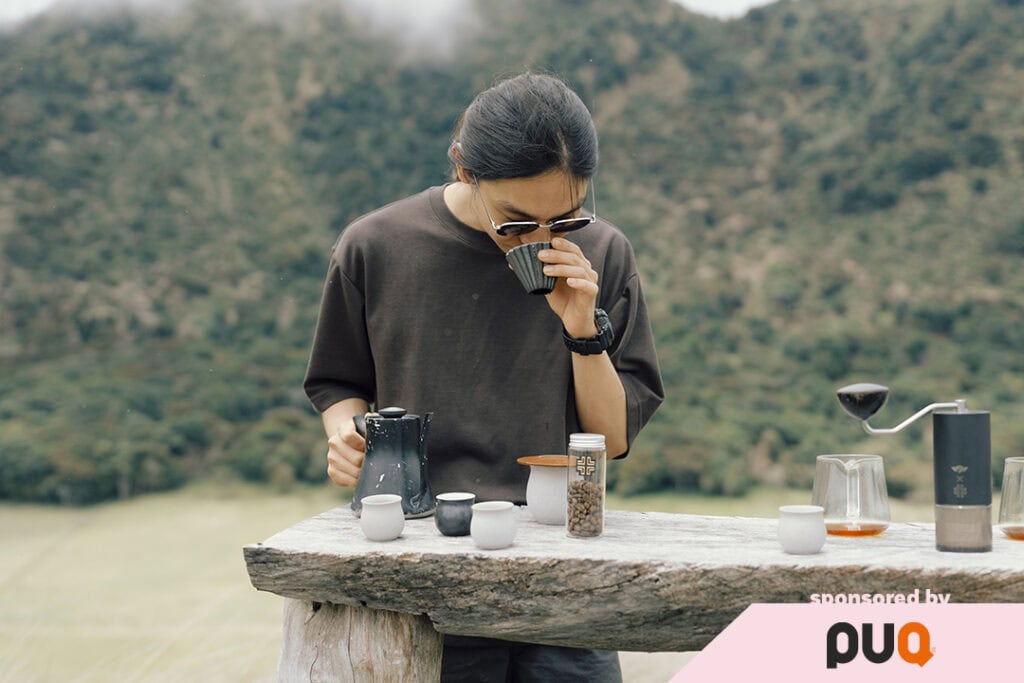
Junchao, what is your first memory with coffee?
Can I say Starbucks? It was 9 years ago. I started drinking black coffee at my university. The coffee was dark, bitter.
What inspired you to pursue a career in the coffee industry, and how did you get started? What did you do before coffee?
My background is in architectural design. Before entering the coffee industry, I studied design and originally planned to work in that field. I have always been a big black coffee drinker, and pour-over coffee quickly became my favourite part of coffee culture. I started brewing at home, bought my own grinder, and subscribed to coffee from roasteries across Europe.
After graduating, I wanted to spend some time doing something I truly loved before entering the design industry. That was how my coffee journey began. My first role was as a barback because I didn’t know how to make latte art or even how to use an espresso machine. My role models were the people working behind the bar. They showed me what qualities and character make a great barista.
Because coffee had already become my passion, I decided to sign up for the UK Brewers Cup. In my very first year in coffee, which was also the only year I was eligible to compete, I won first place in the South heats and later achieved third place in the national finals. What touched me the most was the specialty coffee community. Everyone is incredibly friendly, open, and willing to share their experience and knowledge. People genuinely support each other and help each other grow.
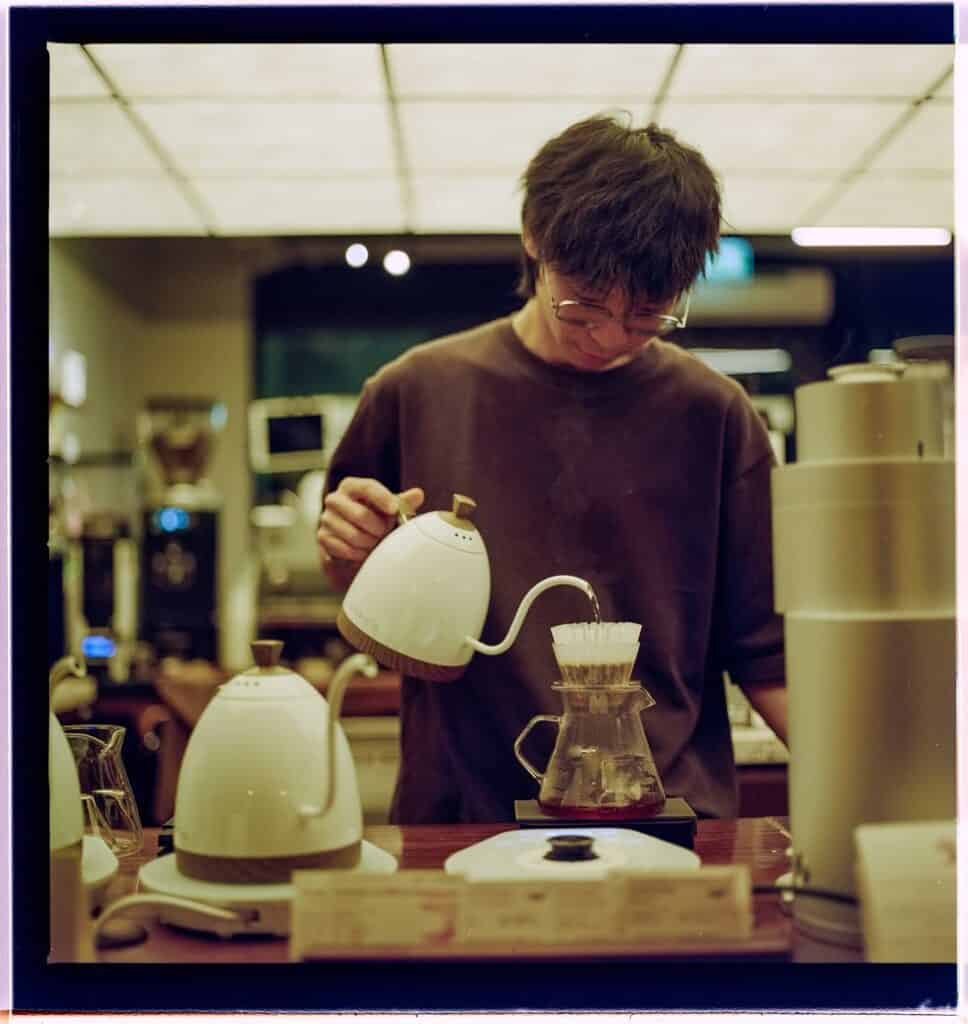
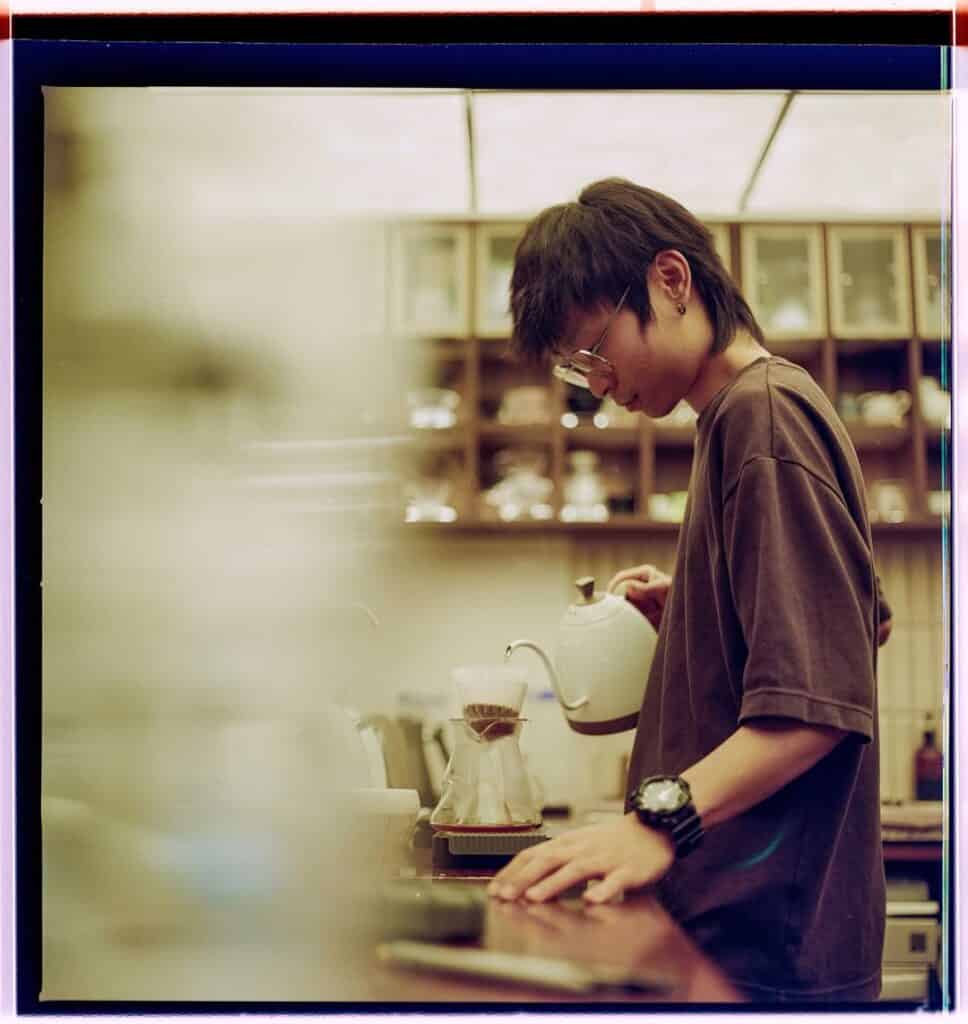
Tell us a bit about your place, Calico Coffee.
In the beginning, I envisioned Calico as a community-based coffee shop. However, because we are located near Waterloo Station, we have welcomed coffee professionals and enthusiasts from all over the world. I truly appreciate how the shop has naturally grown into an international meeting point for the coffee community.
The term calico refers to a plain, heavy fabric, similar to canvas or denim but thicker and more durable. Our brand concept originated from this idea of a simple white fabric, representing simplicity and purity. At the same time, it carries a rich texture and the potential to embrace endless possibilities.
Of course, calico is also a type of cat, which is why our logo features a cat holding a cup of coffee, a playful symbol that reflects both warmth and curiosity at the heart of our brand.
Calico just had its 1st Anniversary. Congratulations! How does that feel?
Yes, we made it! So difficult for new businesses and independent coffee shops. So much has happened, and time has passed so quickly. I’m deeply grateful that people enjoy not only our coffee but also the space we’ve created. Most importantly, our baristas believe in the same core value: simply making a good cup of coffee.
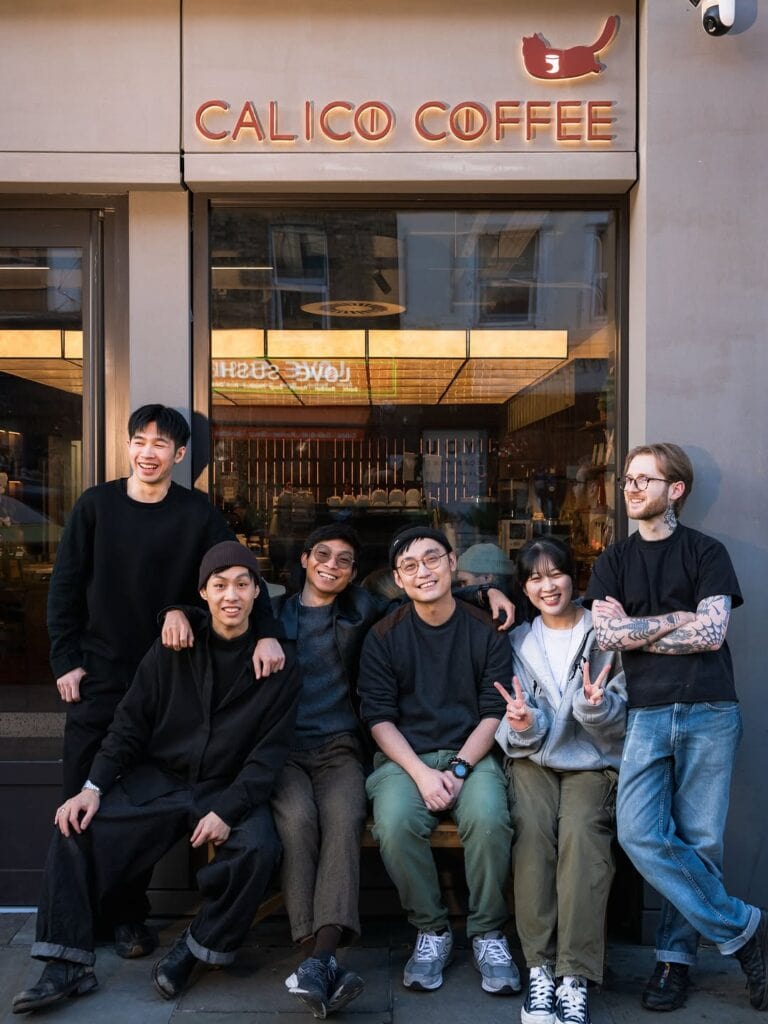
How did you change/evolve during that year, and how would you like it to continue to evolve?
I became a decision maker; my role is not only making coffee, but also taking care of our team and finances. Decide which styles of coffee we want to present to our customers, I start sourcing our own green, and build relationships with producers. Everything is new to me, more about learning, I will keep learning.
What kind of community do you hope to build around your cafe, and how do you plan to foster that sense of community?
At Calico Coffee, we hope to build a community that is curious, open-minded, and quality-driven. We want our cafe to be a space where both coffee professionals and everyday drinkers feel equally welcome.
Our pour-over bar’s design is a perfect example. It encourages conversation and interaction, allowing customers to engage directly with our baristas and learn more about the coffees we roast in-house. We also rotate guest roasters from around the world, which keeps our offering dynamic and gives our community something new to discover regularly.
For us, community is built through transparency, sharing, and genuine hospitality.
What is your favourite part of the day in your cafe, and why?
Sunny day, after rush hours, when the pace slows down, and we have more time to connect with customers at our pour-over bar. Sharing and conversations always make me feel happy, it could bridge customers to the origin or producer, and that is my original intention to build Calico.
How do you stay motivated and inspired to keep improving your coffee-making skills?
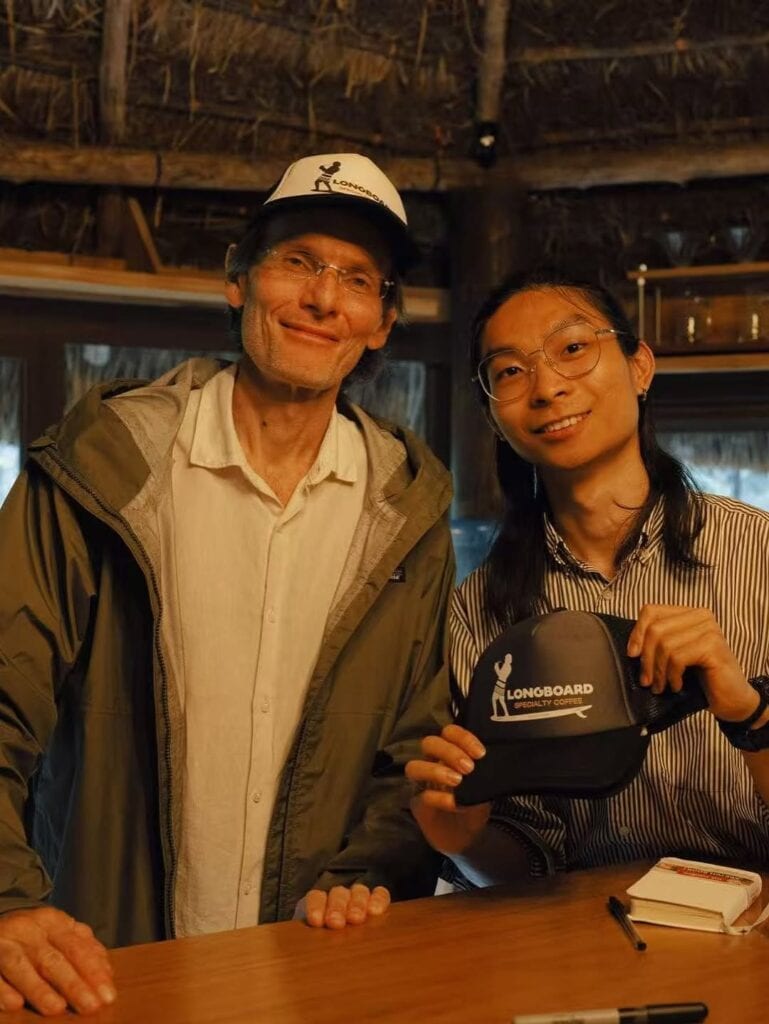
Staying motivated comes naturally because coffee is constantly evolving. We roast our own coffee. I also started learning to roast coffee with our roaster and regularly cup different origins, new harvest season green, and new varieties, which pushes me to refine both roasting and sensory techniques.
Competitions such as BrC have also shaped my mindset, teaching me discipline, precision, and storytelling. Only if I can get a ticket, I haven’t had a chance to compete since 2024. Continuous learning through travel to origins, collaboration with different roasters, and experimentation keeps me inspired.
What are some common misconceptions about our industry that you’ve encountered, and how do you address them?
A common misconception is that specialty coffee is simply about being expensive or overly complicated. In reality, it’s about transparency, traceability, and respect for producers. We address this by explaining flavour in an accessible way and focusing on hospitality rather than intimidation. Education should empower customers, not alienate them.
Another misconception is “specialty coffee is very acidic, and I don’t like acidity.” When customers say this, I often offer them to try our washed Panama geisha, and most of them will be surprised by how floral and good quality acidity can be.
What are the current trends in cafes in your region? Are there any trends you promote yourself and would like to see more often in other places?
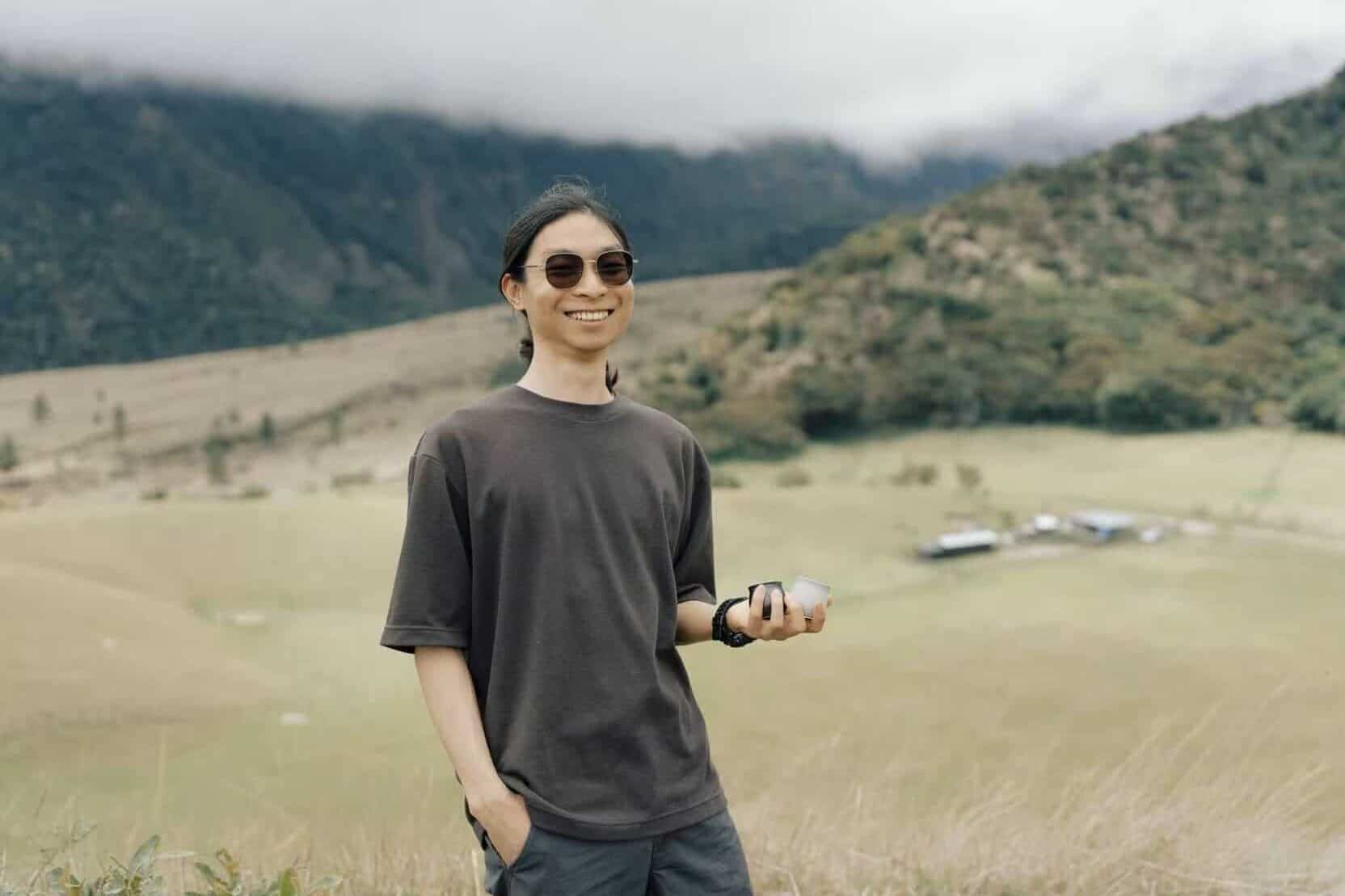
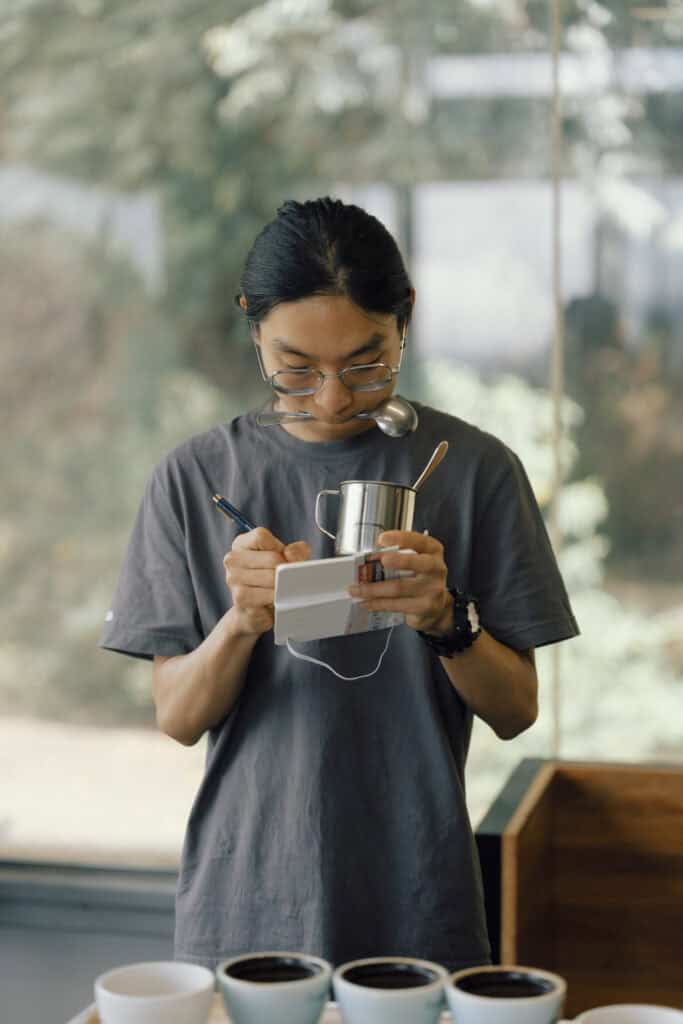
In London, there is a growing appreciation for lighter roasts, filter coffee, and more transparent sourcing. At Calico, we actively promote deeper engagement with pour-over brewing and direct trade, more engaging conversations between customers and producers.
We host cupping events and guest bar takeovers very often. I would love to see more cafes invest in education and slow coffee experiences rather than focusing purely on speed and volume.
What do you think is the most important quality for a barista to have, and why?
Curiosity. Technical skill can be trained, but genuine curiosity drives continuous improvement. A barista who constantly tastes, questions, and reflects will naturally grow far beyond someone who only follows routine.
If there were one piece of knowledge about coffee you’d like everyone to know, what would that be?
Coffee is an agricultural product before it is a beverage. Inconsistency is common; we should appreciate the producers’ hard work to ensure the quality. Understanding that coffee is shaped by climate, soil, and the work of producers changes how we value every cup.
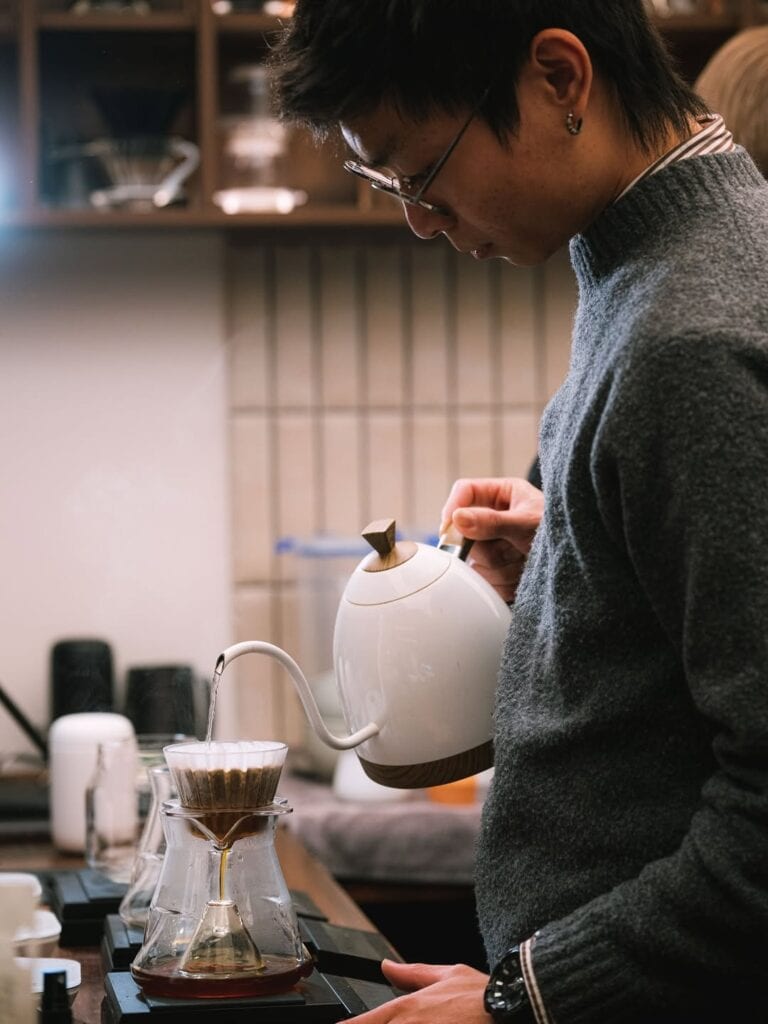
A barista who keeps tasting, questioning, and reflecting will always continue to grow.”
– Junchao. Photo by Makyo.
What are your passions and hobbies apart from coffee?
Sketching and design. When I visit different cities or coffee shops, I like to use my pen to draw the moment.
Where in London do you find your best inspiration?
I often find inspiration walking along different areas of London, like SouthBank near Waterloo or Battersea Park. The mix of movement and architecture creates a dynamic energy. Museums and independent shops also inspire me, especially when it comes to thinking about presentation and storytelling.
What coffee challenges are you looking forward to? Any new projects or collaborations?
I’m looking forward to pushing our roasting further and refining our green sourcing program. Building stronger direct relationships with producers is a long-term goal. I wish I could spend more time in origin with producers, and do my Q processing and Q grader in origin.
I’m also excited about future collaborations with guest roasters and possibly returning to competition in the coming years. Continuous evolution is part of Calico’s identity.

Quick Fire Questions for Junchao Huang:
Filter coffee or espresso-based?
Filter coffee.
Milk coffee or black coffee?
Black.
The most underrated coffee drink?
Dirty – it´s a milk-based coffee, very popular in Asia, but not many people know about it in Europe. It requires high-quality milk and special recipes for espresso.
The most underrated coffee brewer?
Orea Brewer. I know it’s very popular, but since I’m good friends with Horia, the designer of Orea, I’ve always been impressed by the depth of his brewing knowledge. The story behind the development process, including how he conducted the testing and prototyping, is really fascinating.
Favourite piece of barista equipment?
Orea brewers & espresso machines can make a cup of good coffee!
How do you make coffee at home?
Pour-over only.
No.1 café in Europe that every coffee geek should visit?
Honestly, I haven’t visited most of the famous European cafes yet. If I had the chance, I’d love to go to Tim Wendelboe in Oslo. He’s a role model for me because of his work directly with coffee producers and the way his cafe stays deeply connected to the local community. It’s not a flashy or “Instagrammable” spot; it’s a place built on real relationships and respect for coffee, and that’s something I really admire.
What’s your dream place to have a coffee tour?
Tokyo. It’s a beautiful city, and a mixed vibe with specialty coffee and old school craft coffee. Walking through small neighbourhoods, discovering tiny specialty coffee shops tucked into quiet streets, and seeing the care they put into every cup – it’s a mix of craftsmanship and culture that feels alive.