
Gabriel Brix started at Kaffeefabrik five years ago running a weekend market stand, selling bags of coffee to local regulars and learning to listen. One step led to the next, as steps tend to do when someone pays close attention, and today they are head barista, junior roaster, editor, and ✨ strategic project developer ✨ at the same Vienna roastery. With a silver trophy from the Austrian Brewers Cup on the shelf and a postgraduate certificate in coffee science from ZHAW on the wall. They did not plan any of it. They just kept saying yes to the next exciting challenge.
What makes Gabriel an original voice in specialty coffee is the combination of disciplines they bring to it. Politics student turned barista turned roaster turned writer, they are equally comfortable developing roast profiles for liberica and excelsa as they are writing about empirical evidence at coffee science conferences, or crafting label copy for a bag of beans they helped to profile, roast, and introduce to the rest of the team.
Their blog, Cuppen Club, which they describe as “caffeinated journaling and essaying,” exists because they were frustrated by how rarely coffee professionals share their actual thinking in public. They write the way they work: with precision, honesty, and a slight impatience with vagueness.
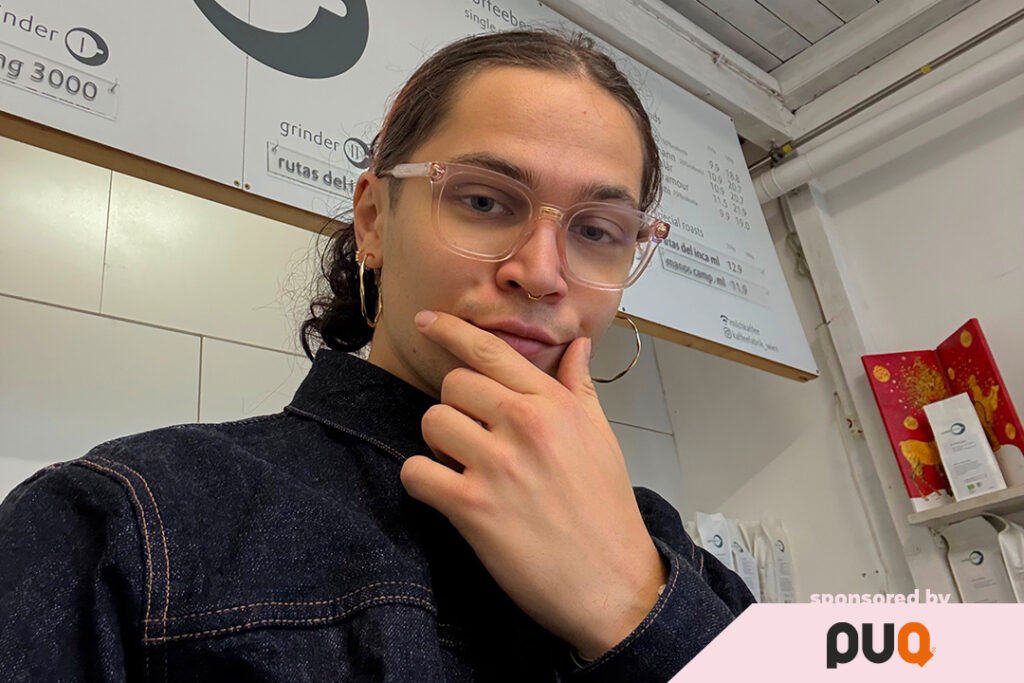
Gabriel, what is your first memory with coffee?
For my mom especially, quick coffee breaks throughout the day were a given when we were on vacation anywhere in Italy. As a child, I had apricot juice when my parents were sipping on their espresso and cappuccino.
What inspired you to pursue a career in the coffee industry, and how did you get started? What did you do before coffee?
I come from studying politics, which I only did because a friend had convinced me to enrol before I found my profound interest in social sciences. I started working at Kaffeefabrik just as a small job on the side. Same company, 5 years of always taking on the next challenge, and later, 5 years of finding my career in this beautiful craft. Sticking to what feels right and making the most of it is what got me here.
Can you walk us through your career?
I started working at our market stand that sells bags of coffee to loyal local customers every weekend. It taught me to listen to what customers want from their coffee. I took on more barista shifts, and I became head barista in a very egalitarian cafe team. This taught me that willingly taking on responsibilities and proposing improvements can hopefully make everyone’s lives a little easier.
I was looking for challenges outside of our small business, so I competed in Brewers Cup because Boki (aka Bojan from Echo Kaffee), a former, very well-respected coworker, believed in me. We had a chat about it on the day of my second anniversary at the company. Eleven months later, I took home a silver trophy, backed by a couple of very wise people but in an entirely self-organised and self-designed campaign.
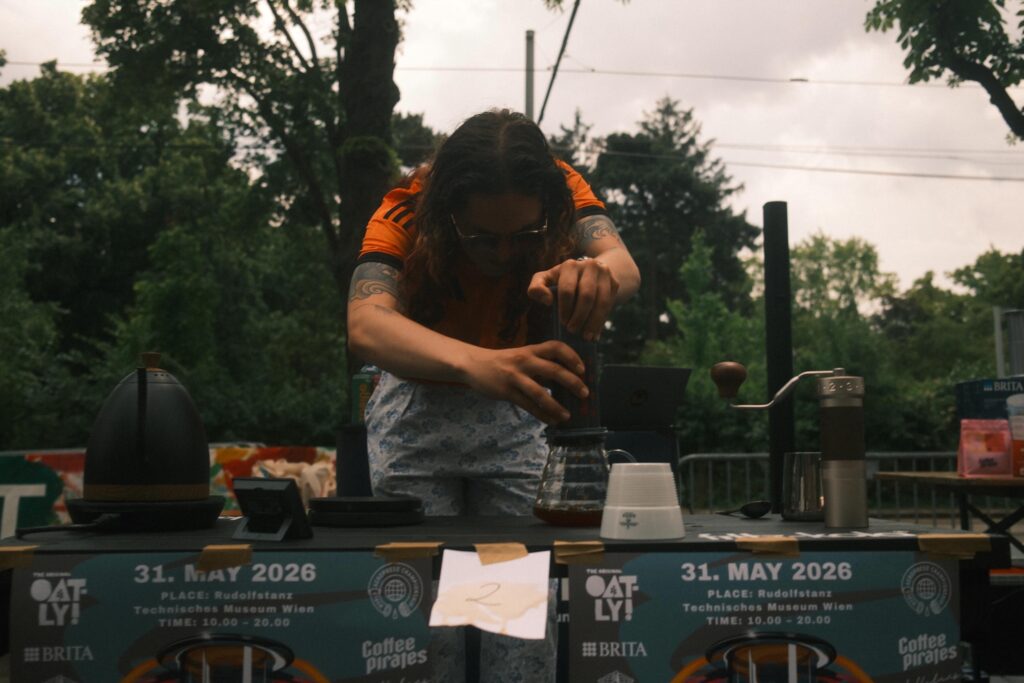
At the same time, I became bored of the anecdotal evidence a lot of specialty coffee folks base their work on. I studied what Samo Smrke, Sebastian Opitz, etc. had to say about empirical evidence regarding the genetics, botany, ecology, physics and chemistry of coffee at ZHAW. That led me to attend conferences like the CSES, also hosted by ZHAW, and the Canephorum.
As Kaffeefabrik owner & manager, Tobi has always trusted me to do the next step I started roasting this spring and based on my experience and education was allowed to delve into developing profiles early on. I can call myself proud and grateful to have created blends as well as single-origin roasts for robusta, conilon, all kinds of arabicas, excelsa and liberica in my first 6 months of roasting.
Tell us a bit about the place you work at. What are your roles there?
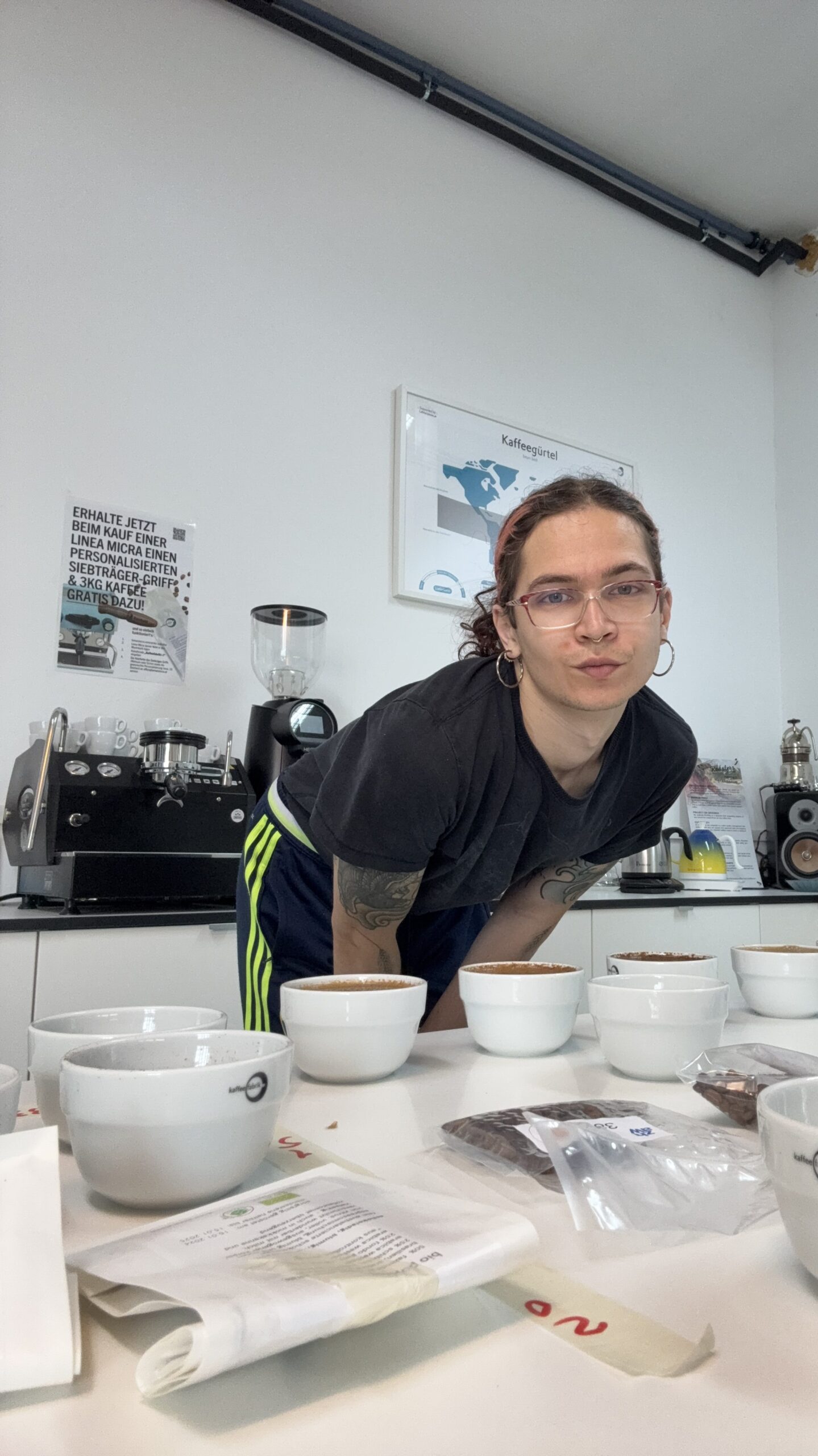
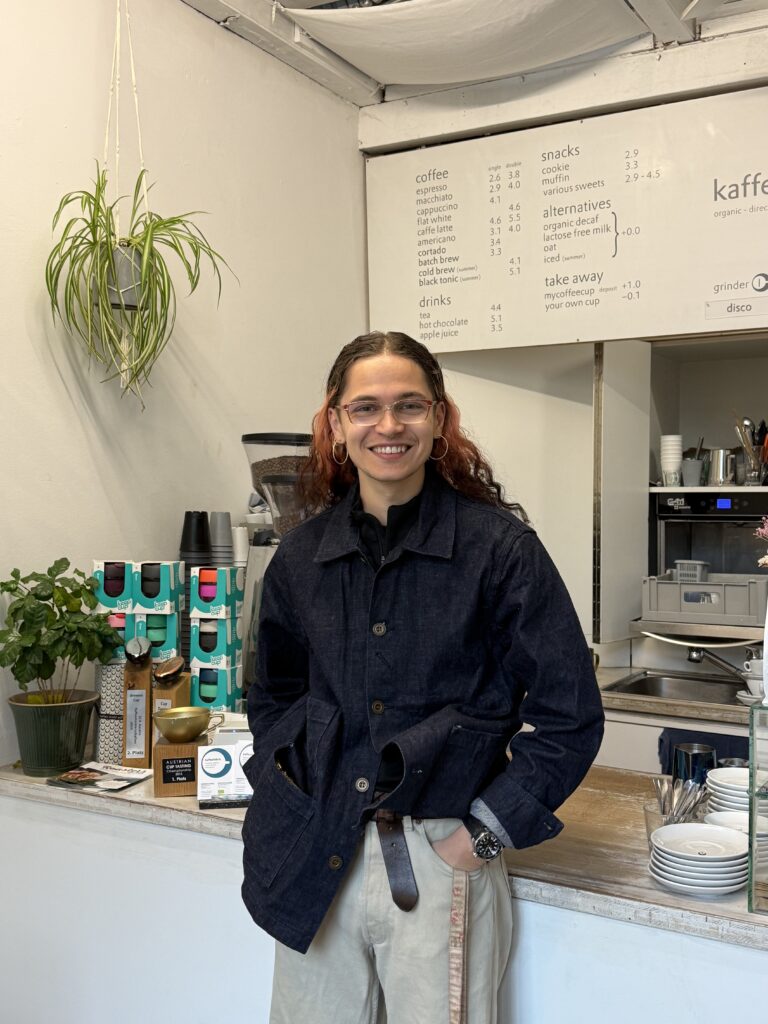
Kaffeefabrik is this ambitious place that would seem anything but ambitious. I am head barista at the smaller of our two neighborhood style coffee shops. We roast around 15 different roasts at any point in time that are solely sourced from our own imports through the co-op model of Roasters United. It’s the kind of business that puts the effort into maintaining, showcasing and growing this trade model rather than serving new trends.
I get to work in a lot of those areas as a junior roaster, head barista, editor for our communications and texts, as well as developer of more strategic projects. You will find me behind the bar explaining coffees in unexpected ways, but I also might have roasted the beans you end up buying, I wrote the label and I helped introduce the coffee to the rest of the team while always working on the next long-term project behind the scenes.
What kind of experience do you want your guests to have when they visit you at the cafe?
Whether arabica or robusta, dark or light roast, formal language or casual banter, informed questions or newfound curiosity – as long as you’re giving me the chance to do so, I will try to adapt to give you a nice experience.
That’s our goal and our attitude. Being confident in our own style but doing the work to meet almost anyone where they’re at should not be contradictory. We can’t match every personal preference, even with two different coffees in our grinders every week. The openness and versatility we show inspire customers to curiously break out of their tried and tested ways and trust us with showing them what else the coffee world has in store.
What is your favourite part of the day at work, and why?
I prefer to work early. Whether it is opening the cafe to a Hilary Hahn record or having the roasting facility to myself, blasting Neapolitan hip-hop before my coworkers get their stations set up for the day. To have some quiet time by myself is the best way to get some focused work done and then be up to speed for all the communication, coworking and constant adaptation that is at the core of each day working with coffee.
How do you stay motivated and inspired to keep improving your coffee-making skills?
Coffee itself is so vast, and even specialty ´nerds´ only take a very narrow view into perspective. I believe you should try to understand as many other people in coffee as possible since we work with a product that has such a socially and politically complex history, economics and culture. There will always be the motivation to catch up with other experts in their own field. Technical skills and knowledge are more of a link to other people and their work and ideas than they are a badge to show off.
What are some common misconceptions about our industry that you’ve encountered, and how do you address them?
A lot of misconceptions come from conflating preference with informed opinion. While categories and labels, taste notes and branding help customers establish and express their preferences, we professionals should share opinions and information in more nuanced ways. I always encourage customers to be confident in their preferences while also keeping an open mind to the countless possibilities in the world of coffee.
No coffee species, variety, origin, process or roast style is good or bad.
What are the current trends in cafes in your region? Are there any trends you promote yourself and would like to see more often in other places?
The coffee drinkers of Vienna are reliable and ´gemütliche´ people, meaning they look for comfort in the way they have their coffee. A recent shift has seen cortados become a major menu item as coffee quality has become much more important to customers. The Viennese boom of the cortado can be seen as a newer, specialty coffee adaptation of a similar beverage to the very classic ´Kleiner Brauner´. Several customers who had ordered the same style of coffee for 20 or 30 years switched to cortados once we encouraged them to try a drink that shows more unique coffee flavours compared to their regular cappuccinos or lattes.
You describe Cuppen Club as “caffeinated journaling and essaying”. What made you start writing publicly about coffee, especially in such a wonderfully intellectual way?
I started the blog looking to stay in touch with beloved family that was about to move to another continent. Since they changed their minds and stayed in Europe, a lot of coffee thoughts ended up there that I would’ve otherwise just annoyed my immediate coworkers with.
Most importantly though, we very rarely share these kinds of analyses and opinions with the public in our industry. I was a bit annoyed by how much you had to ask friendly industry people for their takes at some opening party while their expertise, thoughts and opinions were not made public in a structured and honest way that promotes further discussion.
What is happening in specialty coffee right now that needs someone asking that question out loud?
It’s not a question someone needs to ask, but it’s a need someone needs to fill. We need non-profit networks outside of a global SCA and outside of Best-Of-Lists that both see awards and product placement as the only way of promoting a coming together in this industry, as it works in the global north. I see a need for specialty coffee organisations that tackle education, social equity, economic transformations and more from a collectivist standpoint. When are we going to step up and start something?
You have some amazing achievements in championships. Can you tell us more about them?
I happened to be lucky with a lot of my decisions that helped me reach second place in the Austrian Brewers Cup. I had a clear intrinsic goal in mind of doing my absolute best in promoting my skills and the kind of coffee I wanted to showcase. And I was, and still am, shook that this could take me to my first silverware. I am a very sincere Cup Tasters competitor who has yet to score a 7 or 8 on stage, but I came out on top of a tough first round this year. This one I do for sports, even though my sensory organs don’t seem destined for gold.
You wrote one of the most detailed and honest competition prep reflections in coffee writing – tracking six months of preparation (spoiler alert) not only in bright colours. What made you want to document it that publicly and that honestly?
Because I could not find this kind of information before I competed. Austria has many great coffee people, but we also have people finishing outside of the top 3 for years and drawing attention to their very vague competition advice. We had people tapping into world champion networks against experienced baristas borrowing equipment.
SCA competitions are never going to be a level playing field due to the nature of the game, but we can at least be open and honest about the hard work and resources that go into it. I had a lot of resources available but also was willing to go to far ends to get where I wanted to get. I do not think we do future competitors, the reputation of our craft or ourselves any favour by saying we got to the top by means of fun, excitement, friendship and ingenuity and staying silent about the other 90% of the process.
You called yourself a “cocky first-time 2nd place finisher in brewers”. What does this 2nd place feel like, and what did it change about how you see competition?
This second place still takes my breath away. My aim was to do my absolute best and most structured work. I don’t work for fun; I work for validation from doing excellent work. After competing, I was very astounded that anyone would name fun as a reason for their repeat competitions, first of all. And secondly, all by myself I stood there in the living room of my rental apartment in Wels, in total awe of how far my style of work, my skills and my taste in coffee could take me. And I felt hugely proud on behalf of the roaster and brewer manufacturer that had not a single reason to trust me to showcase their product that well.

If there were one piece of knowledge about coffee you’d like everyone to know, what would that be?
Know what a species is in biology and know which coffee is from which species. I believe this is the starting point to understanding the plants, the variance in vintages, and frankly the peculiar state of coffee farming in 2026. The botany of the coffee plant is my personal key to showing customers the immense value of all that flavour ending up in your cup.
What are your passions and hobbies apart from coffee?
Eating, skiing, the opera and football. You will see food, mountainside brews, Donizetti arias and Forza Roma in my Instagram stories quite a lot. (This is not a job interview, but I guess these passions show that my love for living a good life, small everyday luxury, teamwork and a willingness to compete predate my professional interest in coffee.)
Where in Vienna do you find your best inspiration?
The opera. There are 50 people playing their instruments, 30 singers on stage as the choir, dozens creating a stage design and costumes, makeup, security. I’m not even counting the 4 soloists that headline the poster when I feel inspired by all those people working together to a) create art and b) tell stories about love and death, justice and conspiracy in terribly beautiful ways. If you catch me behind the bar, I am happy to recommend operas to see while in Vienna.
What coffee challenges are you looking forward to? Any new projects or collaborations?
When the time is right, I would like to host more of my charitable brew bar series where I try to give customers a chance to have a more in-depth experience, but also want to create a (financial) link to NGOs that do politically important work. Also, SCA Austria, please host a Cezve/Ibrik championship! We want it, and we need it. It’s a beautifully simple brewer, and I think it would inspire a lot of people in Austria who have spent their lives around Cezve/Ibrik coffee but never considered it for the specialty coffees they now love.

Quick Fire Questions for Gabriel Brix:
Filter coffee or espresso-based?
Filter or espresso, I don’t care as long as it’s black!
Milk coffee or black coffee?
Black.
The most underrated coffee drink?
Homemade espresso tonic.
The most underrated coffee brewer?
Cezve/ibrik for sure
How do you make coffee at home?
Pour-over or cezve/ibrik.
No.1 café in Europe that every coffee geek should visit?
Nordic Brew Lab in Stockholm.
What’s your favourite city to have a specialty coffee tour outside of “your city”, why?
Prague, because of its density of coffee shops, the beautiful city, Czech beer and Czech food!