
Erlend Andreas Wessel-Berg grew up around coffee long before he understood it. As a kid in Trondheim, it was a ritual he wanted to belong to, dipping sugar cubes into his parents’ cups to get involved. That early curiosity turned serious over time, helped by exposure to specialty coffee through his sister, and a part-time barista job that quickly became a calling.
Nine years into his career, Erlend is a part-time barista at Sellanraa Bok & Bar and one of Norway’s most accomplished competitors. He holds both the 2019 Norwegian Brewers Cup and 2025 Barista Championship titles, with multiple national podium finishes. Competing pushed him fast, from rookie mistakes on the World Stage to confidently representing Norway with a clear message: progress comes from small, daily improvements, not chasing shortcuts or ego.
What drives Erlend is responsibility. He believes all real value in coffee is created at origin, and that everything after should focus on respect, not showing off. Outside the bar, he studies astrophysics, cycles through forests and mountains near his home. Curious, grounded, and openly learning, he sees coffee as something to honour, challenge, and always enjoy!
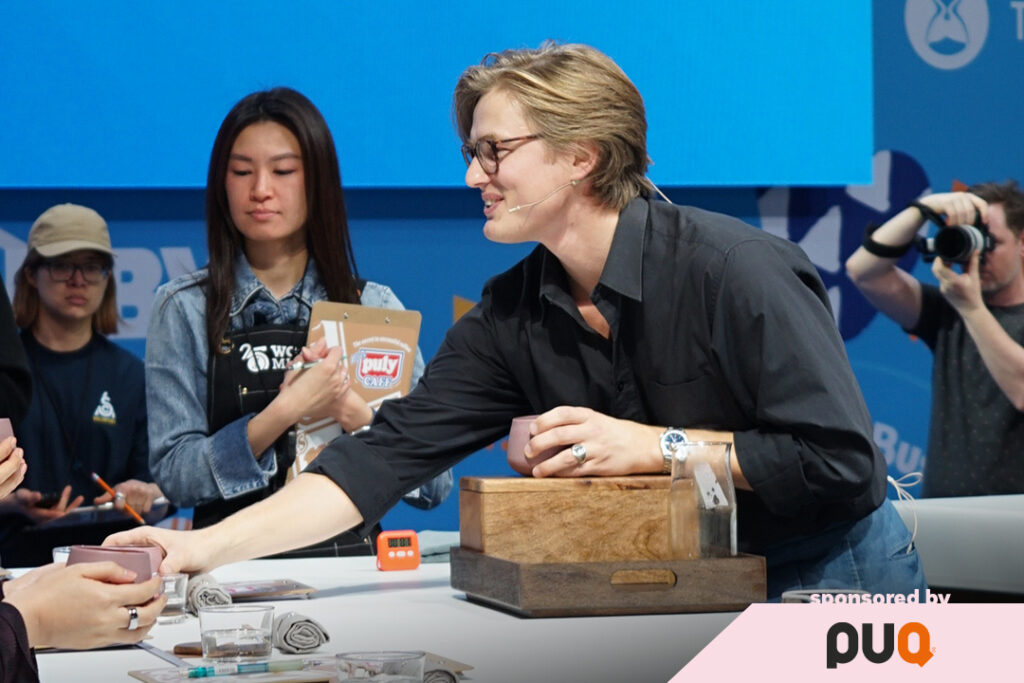
Erlend, what is your first memory with coffee?
I think it is from when I was in kindergarten, way before I learned anything about what coffee actually was. For me, it was just something the grown-ups drank, and I wanted to be part of it. So I took a sugar cube and dipped it in my parents’ cup to suck on it until it crumbled. I am not sure if I liked the taste of coffee or the sugar most, but I think that is where the addiction started.
What inspired you to pursue a career in the coffee industry, and how did you get started?
I always loved preparing and putting on the Moccamaster for my parents when I was younger. Back then, I counted scoops and measured water in lines. If I were to guess, I think the interest came from there. Later on, my older sister started working in a local coffee shop, so I got to experience a lot of specialty coffee early on. After high school, I took a part-time job as a barista alongside my studies. What started as a job quickly turned into something much more. The more I learned, the more my interest grew, and over time, coffee shifted from a side activity into something I knew I wanted to pursue seriously.
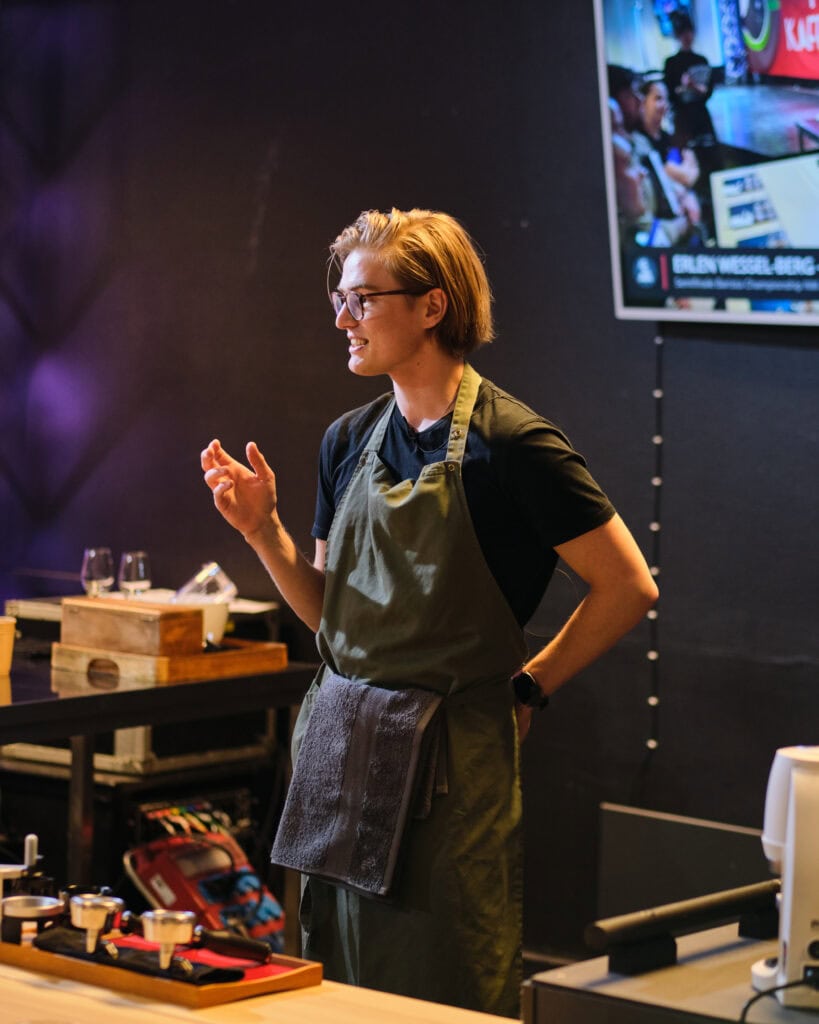
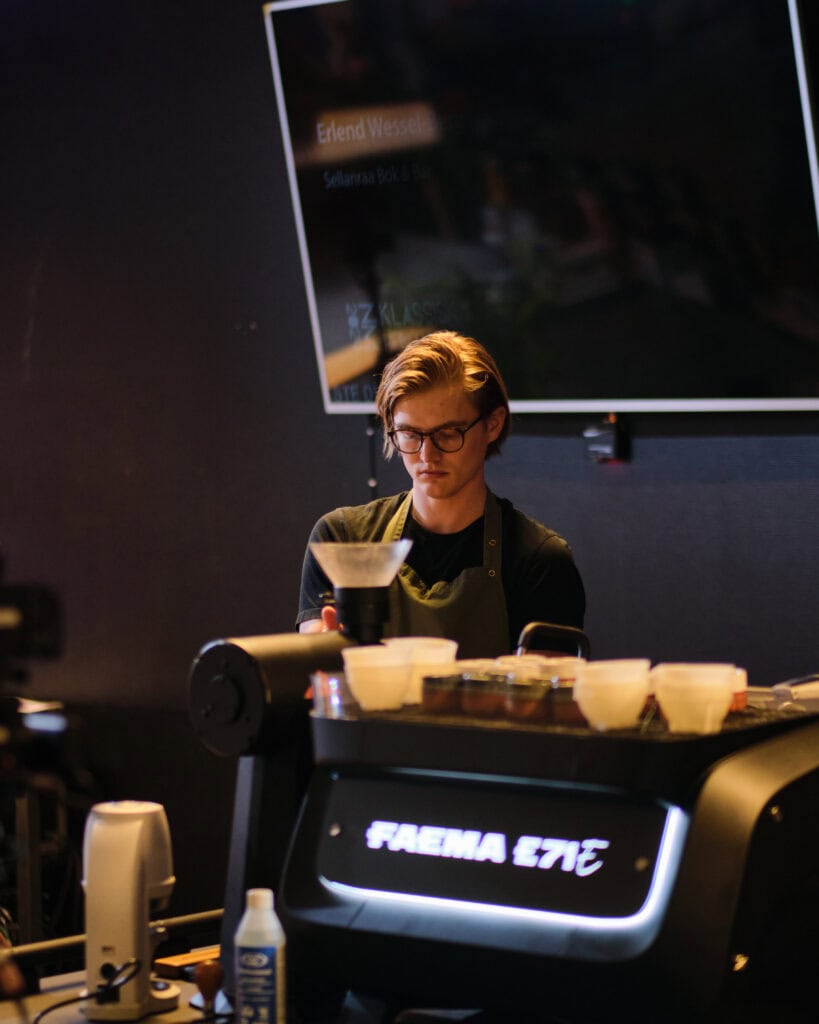
How do you stay motivated and inspired to keep improving your coffee-making skills?
There are so many amazing coffees out there, and I feel a strong responsibility to do them justice by brewing them as well as I possibly can. Behind every coffee is a producer who has put an enormous amount of work, care, and time into growing and processing it. For me, it feels wrong not to match that effort on my end. That sense of respect is what keeps me motivated.
What are some common misconceptions about our industry that you’ve encountered, and how do you address them?
One of the most common misconceptions is that people in the coffee industry are snobby. Almost all of my friends who aren’t in the industry are afraid to serve me coffee. I’ve lost count of how many times I’ve had to convince people that I genuinely enjoy all kinds of coffee, as long as it’s served with care and love. I want coffee culture to be welcoming rather than intimidating.
If there were one piece of knowledge about coffee you’d like everyone to know, what would that be?
If there’s one thing I wish everyone knew about coffee, it’s that all of the value is created at origin. Nothing we do after that makes the coffee better. Our job as roasters and baristas is simply to respect that work and do our very best not to make it taste worse. For me, coffee is not about ego, but about responsibility.
What are the current trends in cafes in your region? Are there any trends you promote yourself and would like to see more often in other places?
Like everywhere else, matcha is definitely trending in cafés right now. Beyond that, I’d say our scene is still quite basic in many ways. There’s nothing wrong with that, but it does mean that innovation tends to move slowly. One area where I see real potential is coffee mocktails. It’s something I try to actively promote, but we still have a long way to go.
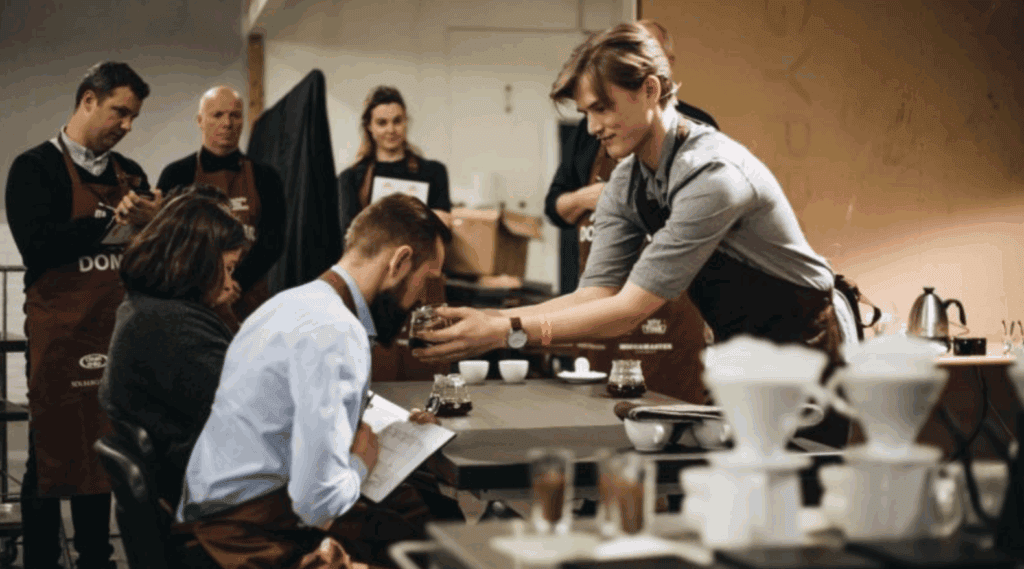
You have some amazing achievements in championships. Can you tell us more about them?
I won my second national Brewers Cup somewhat unexpectedly and then had only about a month to prepare for the World Championships in Boston. At that point, I was still fairly inexperienced, and I made a lot of rookie mistakes. That said, it was a good way to get more involved in the industry. Through competing, I met a lot of people whom I now consider friends, and it gave me a better understanding of where I stood and what I needed to work on. I’ve competed every year since, and each time I’ve learned more about both coffee and myself. This led to me winning the national Barista Championships last year, and I got to represent Norway at the World Stage.
How did it feel to represent Norway and compete on the World Stage?
I had a lot of fun! As soon as I started my routine, the nerves disappeared, and I couldn’t stop smiling. I had an amazing team around me, and they helped me ride that adrenaline for the rest of the weekend. There are, of course, months of preparation leading up to the World Barista Championship, so I was very happy that most things went the way they should. Overall, it was a great experience, even though I did hope for a higher ranking.
What was the main message you wanted to be heard from your WBC performance?
My theme was about becoming better than yesterday. What I wanted to communicate is that it’s not just about the end goal, but about the small improvements we make every single day. Over time, those small steps add up and make you a better barista. I think this is a healthier way to approach everything that we do in life, and it allows me to enjoy the journey more.
What are the next championships you’d like to compete in?
I am still going to do the Barista and Brewers Cup, it’s a good way to keep my skills sharp and to stay in touch with the innovation in the industry. At some point, I definitely want to try Coffee in Good Spirits as well, since I have heard it’s the most fun competition to do.
What, in your opinion, is the most important thing to have in mind when you start to compete in coffee championships?
Don’t make it too easy for yourself. If you challenge yourself with your routine and techniques, you will learn so much more than if you simply play it safe. It is also very important to ask for help from someone who knows more than you. Every coffee person I know is very eager to share their knowledge. Being open to guidance and new ideas can make a huge difference in your confidence and skills.
What are your passions and hobbies apart from coffee?
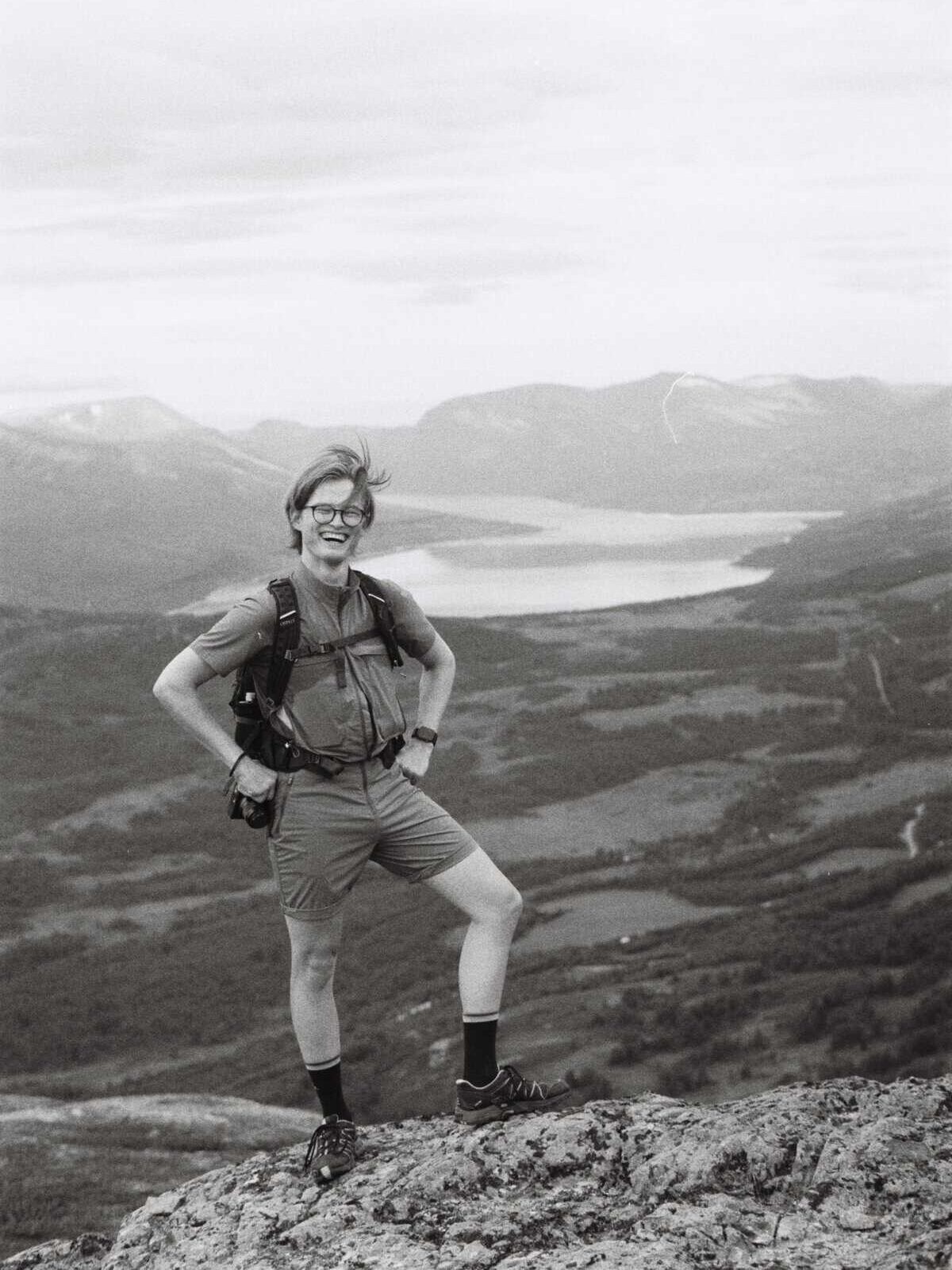
I love physics. While working as a barista, I have also pursued a Msc degree in physics, specifically astrophysics and theoretical physics. My dream job would be to combine this with coffee. Unfortunately, I haven’t found anything yet, but I am eagerly searching! I am also an avid amateur cyclist. Road, mountain, gravel, I do it all.
Where in your city do you find your best inspiration?
I live five minutes from the forest and mountains. I often go there to sit by a lake to wind down and relax. I spent a large part of my childhood there as well, so it keeps me grounded and calm. I usually bring coffee equipment so that I can brew a tasty coffee to enjoy. For me, coffee always tastes best in nature.

What coffee challenges are you looking forward to?
I am hoping to travel more to experience coffee culture in other countries. Norway is quite small, and people here can be set in their ways, so it’s exciting to see what’s happening elsewhere. I’ve noticed that coffee omakase is really taking off in Asia, and that’s something I’d love to be a part of, both to learn from it and to bring new ideas back home.

Quick Fire Questions for Erlend Wessel-Berg:
Filter coffee or espresso-based?
Espresso-based.
Milk coffee or black coffee?
Black.
The most underrated coffee drink?
Norwegian “kokekaffe” (some might know it as Cowboy coffee)
The most underrated coffee brewer?
The cupping bowl.
How do you make coffee at home?
Flat-bottom pourover.
No.1 café in Europe that every coffee geek should visit?
Papegøye in Oslo, I go there every chance I get. Hot tip: get a cookie!
What’s your dream place to have a coffee tour?
Amsterdam! So many good roasteries and shops.