
Esther-Hope Gibbs was about 10 years old when she first encountered coffee, not as a drink, but as a question. Learning about Fairtrade at school, she remembers wondering why ethical treatment was celebrated as an exception rather than demanded as a standard. That issue, sharp and uncomfortable and entirely her own, never went away. It became, in many ways, the blueprint for everything she has built since.
What makes Esther-Hope remarkable is not just the breadth of what she does, but the thread that runs through all of it. At 30, she has already spent 16 years in the industry, growing into a Q Instructor, SCA Authorised Trainer, Tea certifier, consultant, educator, and one of the most thoughtful voices currently working across the coffee supply chain. Her work touches producers in Uganda, survivors of modern slavery in the UK, young people with special educational needs in Kent, and the baristas she trains every week who leave her sessions not just with better technique, but with a deeper understanding of what the true cost of coffee is, not just money-wise.
She is cheeky, generous, openly neurodivergent, and completely uninterested in the narrow image the industry has sometimes built around itself. She will talk about water chemistry and human trafficking in the same breath, and somehow make both feel urgent and alive. Coffee, for Esther-Hope, has always been about people first. Everything else follows from there.
Esther-Hope, what is your first memory with coffee?
Funnily enough, my parents do not drink coffee. My mum is a complete tea addict and has about 20 cups a day, punctuating her routine, and my dad does not really drink hot drinks at all, apart from the occasional hot chocolate
So my first real memory of coffee is not actually drinking it, but learning about Fairtrade when I was around 10 or 11. I remember thinking: “Why is coffee celebrated for being Fairtrade when that should be the standard? Why is there not a label on exploitative coffee saying, Warning, this coffee exploited people?” Even at that age, that question stayed with me. I did not actually start drinking coffee until I began working in cafés as a teenager.
What inspired you to pursue a career in the coffee industry, and how did you get started? What did you do before coffee?
I started working in coffee when I was about 14, fitting weekend shifts around school. At first, as a pot wash in a local café, I worked hard, and eventually moved on to the coffee machine. I learned by watching more experienced staff closely, with absolutely no formal training at that point, so I am sure the coffee was awful. But I loved it. I loved the pace of café life, the energy of a busy shift, and the way coffee brought people together. It felt so much more meaningful to me than the retail jobs I had before.
Around the same time, I was also learning about human trafficking and labour exploitation, both globally and in the UK. I remember being struck by a question that would stay with me: “When someone escapes trafficking or is rescued, what do they put on their CV? How do they get back into work if they have never had the chance to build experience in a safe and supportive environment?” Those questions changed everything for me. From then on, I knew I wanted to create a café that could train survivors of modern slavery and human trafficking to become baristas, helping them rebuild confidence, gain skills, and move back into employment. Once that idea took hold, I really put my blinkers on.
I kept working in cafés while learning everything I could about trafficking and exploitation. When I was 18, I went to Cambodia and worked with an organisation on the Thai border that supported women who had been trafficked, including through café and business training. I later studied Anthropology to deepen my understanding of people and society, while working two café jobs and saving everything I could so I could spend summers working with other organisations. That included working with vulnerable women in San Francisco and with Fair Trade USA.
After graduating and moving back to Cardiff, I happened to meet Nick and Dai, who were in the process of building a coffee business that worked with survivors of modern slavery. I joined them in setting up Manumit Coffee Roasters. It really felt like a mix of fate, persistence, and saying yes to every opportunity that aligned with the vision I had been carrying for years.
Can you tell us about your work and all the projects you are involved in?
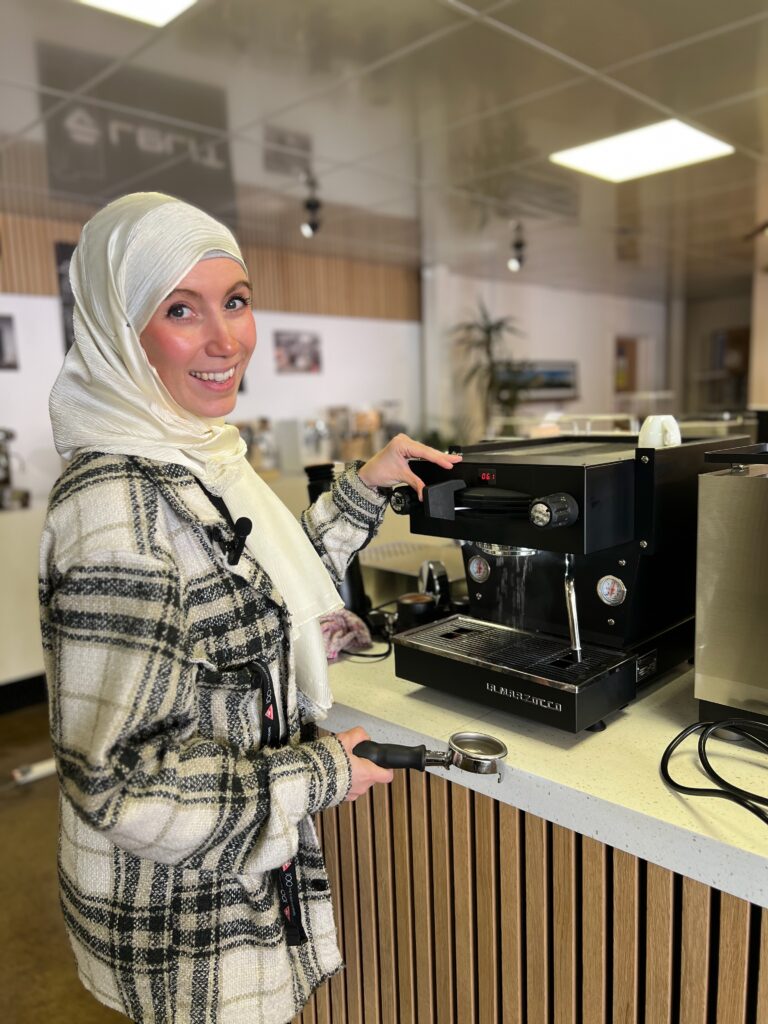
My work is wonderfully varied, which is one of the things I love most about coffee. It spans training, consultancy, social impact, business development, and closer collaboration with producers and origin projects. At Hope Espresso, I support cafés, roasteries, businesses, and social enterprises through coffee training, sensory education, quality control, roasting support, and wider consultancy, helping people build businesses that are both high quality and deeply purposeful.
I am also passionate about work that connects coffee with justice, inclusion, and opportunity, especially for people who have faced barriers to employment. That has shaped so much of my career and remains a big part of why I do what I do.
Another important part of my work is collaborating with producers and helping tell the stories behind the cup in a meaningful way. A real highlight was being part of Team Uganda with Ibrahim Kiganda for the World Barista Championship in 2025, which gave me the chance to be involved in celebrating Ugandan coffee at the highest level of competition.
Alongside all of that, I love teaching, mentoring, and helping people grow in confidence and skill. For me, coffee has never just been about the final drink. It is about people, connection, equity, and creating something that has real impact.
How did your 15 years of industry experience shape the way you built Hope Espresso from the ground up? Especially since you started it during the challenging times of the pandemic.
Hope Espresso started in the middle of real uncertainty. I had just moved into my first solo rental, resigned from Manumit, and had a full schedule of international training work ahead of me when the pandemic hit. I was in Poland and had to catch one of the last flights back to the UK before the borders closed. Then everything else was cancelled almost overnight, and I suddenly needed to find a way to make a living. I started calling roasteries and coffee businesses directly, offering training, holiday cover, quality control, profiling, and practical support wherever it was needed. What began as a way to survive quickly snowballed into something much bigger.
My years in coffee shaped that from the very beginning. They gave me the range, confidence, and resilience to build a business around my skills rather than around a physical space or major investment. I was able to start with very little beyond experience, knowledge, a car, and the determination to put myself out there. Six years on, I am incredibly grateful for how much that season stretched me, because it pushed me to grow in ways I never would have chosen for myself.
How did you arrive at education as the core of your work – was it a deliberate choice or something that evolved naturally from your experience?
I think it evolved naturally, but there was also a deliberate side to it. The more experience I gained, the more I realised that education was the part of coffee I kept coming back to. I loved helping people grow, but I also started to notice that a lot of the education I saw around me was not very accessible. It could feel quite fixed, led by the same kinds of voices, and not always inclusive or creative in the way it met people where they were. I wanted to offer something different: education that felt affordable, valuable, and genuinely tailored to the people in front of me.
Moreover, I had learned through experience how difficult it can be to build a business, especially a social enterprise, and how long it can take for excellence to catch up with ambition. I made plenty of mistakes myself, so it felt meaningful to turn those lessons into something useful for others. Whether I am helping someone build a business or find their path in coffee, I see education as a way of helping people move forward with more confidence and fewer unnecessary barriers.
How do you stay motivated and inspired to keep improving your coffee-making skills?
I think a big part of it is that I genuinely love learning. I want to keep growing, and coffee is an industry where there is always more depth, more nuance, and more to understand. A lot of that development happens naturally through the projects I take on, because different kinds of work keep stretching me in different ways and give me new reasons to sharpen my skills.
The other big part is innovation. I have never been happy just repeating what already exists or following the status quo for the sake of it. I am always interested in asking how things could be done better, more creatively, or more meaningfully. That keeps me motivated, because improvement is never just about refining technique; it is also about staying open, responsive, and imaginative. For example, my obsession for the last 18 months has been water in coffee, and that has opened up a whole new layer of learning and experimentation for me.
What are some key misconceptions about our industry that you’ve encountered, and how do you address them?
One major misconception is that coffee is more accessible and inclusive than it really is. In reality, there are still many barriers to entry, and often quite limited ideas about what a “coffee professional” looks like. That shapes who is welcomed, who is recognised, and who can progress. I try to challenge that through education, through the people and businesses I work with, and by helping create more inclusive pathways into the industry.
Another misconception is that specialty coffee alone will protect the future of coffee. Specialty coffee is important, but it represents only a very small part of the global market. Even if those coffees are bought at higher prices, our industry will not become truly sustainable unless the wider commercial market also changes. For me, real progress means championing businesses that are buying larger-volume coffees at prices that are genuinely profitable for producers, not just applauding those working only with top-scoring lots. If we want meaningful change, we have to think beyond specialty and care about the health of the entire coffee industry.
What are the current inclusivity & equality initiatives rocking in your region? Are there any ones that you promote yourself and would like to see more often in other places?
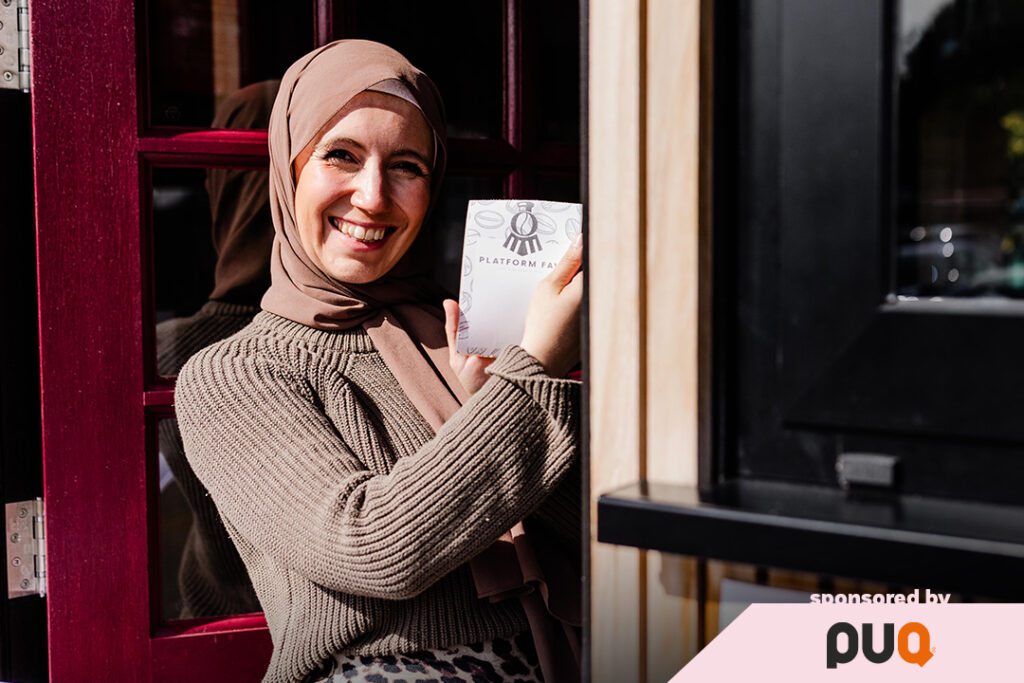
One project I am especially excited about is Five Acre Woods School, which has a Roastery and Cafe called FAWrient Express and Platform FAW, which is based within a SEN school in Kent, UK. It is a brilliant example of what inclusion can look like when it is built in from the ground up rather than treated as an afterthought.
The roastery and cafe create meaningful opportunities for young people with special educational needs to develop practical skills, confidence, and experience within coffee, while being supported in an environment that is designed with their needs in mind. For me, it is the kind of initiative that shows how coffee can be used not just as a product or profession, but as a tool for empowerment, learning, and a real long-term opportunity. (This project has actually been supported long-term by the Costa Foundation, and many of the students have gone on to do internships and secure jobs at Costa Cafes, so all of those ‘commercial’ caramel lattes have made this project possible!)
It is exactly the kind of work I would love to see more of in other places. Too often, inclusion in our industry is talked about in theory, but projects like this show what it looks like in practice. I would love to see more businesses, schools, and social enterprises working together to create accessible pathways into coffee for people who are often overlooked, and to recognise that excellence and inclusion should grow side by side.
How do you have honest conversations with clients or partners about ethical sourcing without it feeling preachy or alienating?
I think it helps to start with where people are. With new clients who are setting up coffee businesses, it is often easier because I can introduce ethical sourcing from the very beginning and explain the true cost of coffee before they have set their prices or built their buying habits. That means ethical sourcing is not presented as an added burden later on, but simply as part of what responsible business looks like from day one.
With existing clients, I find that most people genuinely do want to do the right thing. For me, the most effective approach is not to lecture them, but to connect them directly with producers, exporters, or groups I think they would align with. A video call can do far more than a long explanation from me, because it gives people the chance to talk openly, understand one another’s realities, and start imagining what a long-term partnership could look like. We really do not have many excuses anymore. With global communication, WhatsApp, and even tools like Google Translate, it is easier than ever to start building direct relationships across languages and borders. For me, ethical sourcing is not about sounding perfect; it is about creating honest, long-term partnerships between producers, roasters, and cafés that share values.
What structural changes would make the biggest difference in getting more diverse voices into specialty coffee?
I think one of the most important structural changes would be to radically rethink who we recognise as the experts in coffee. At the moment, specialty coffee often elevates voices from consuming countries, especially those with access to sponsorship, travel, and visibility, while the people in producing countries who grow, process, ferment, and manage coffee quality are still too rarely centred as the professionals they are. That creates a very narrow picture of authority in our industry.
I would love to see far more space given to producers and young coffee professionals at origin, not just to tell their stories, but to lead conversations, shape trends, and be recognised for their expertise. That is why I find the work Ibrahim Kiganda, the Uganda Barista Champion, and Mountain Harvest are doing so inspiring, because it is not just about producing coffee, it is about empowering young people in Uganda to see themselves as skilled coffee professionals with something valuable to contribute to the wider industry. For me, real diversity in specialty coffee is not just about who gets invited into the room in the West; it is about whose knowledge is valued globally.
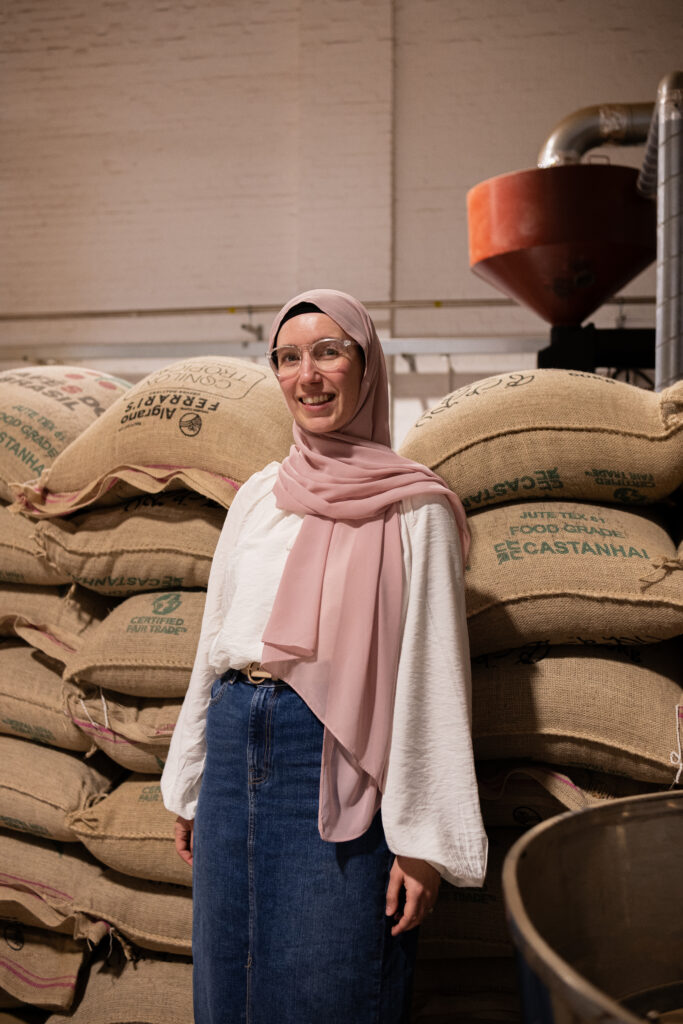
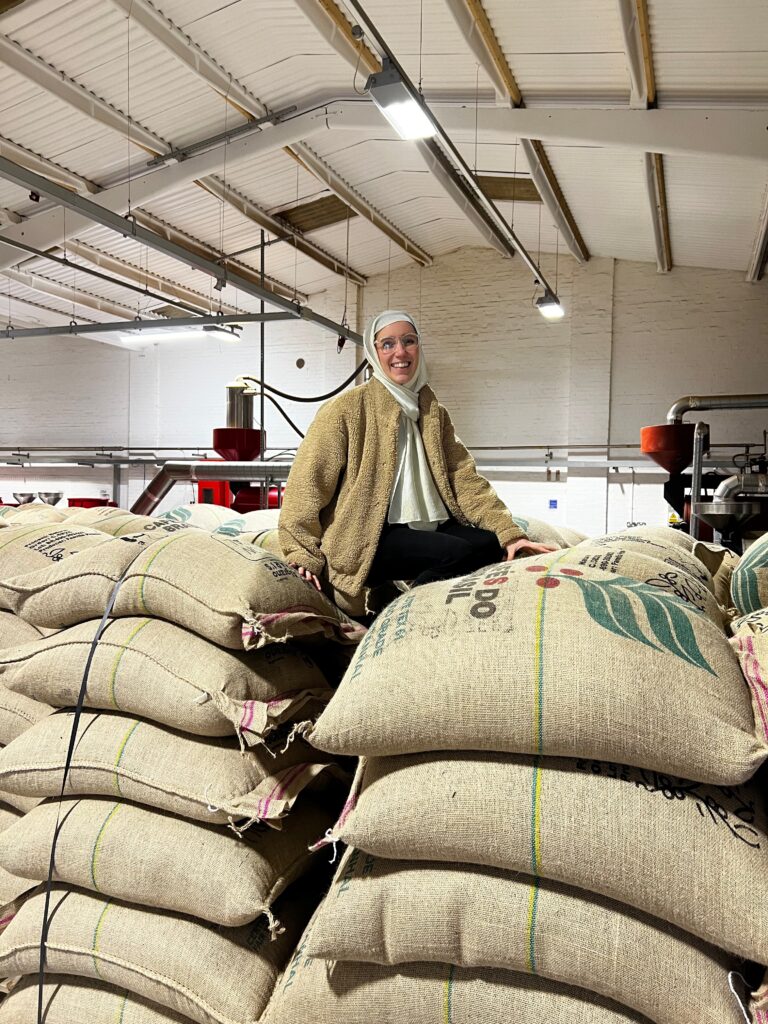
Can you tell us about the way you train & educate? How do you approach the training process, and what did you focus on?
My focus is always on meeting people where they are at and making training feel fun, inclusive, and never intimidating. I want people to feel encouraged, to grow in confidence, and to move past any imposter syndrome that might make them feel like there is no space for them in coffee. For me, great education is about helping people feel excited by learning and making progression feel possible, whatever stage they are at in their career.
Alongside the practical skills, I always try to introduce the bigger picture of coffee from the very beginning. Even with a baby barista, I will talk about the history of coffee, the supply chain, the coffee crisis, climate change, and the colonial roots of the industry. I think those conversations matter early because they help people understand that coffee is never just about what is happening on the bar. Whether someone goes on to influence the buying habits of the people around them, become head of coffee, or build a business of their own, I want them to carry that wider understanding with them from the start.
What responsibility do educators have in shaping the values – not just the skills – of the next generation of coffee professionals?
I think educators carry a huge responsibility, because we are not just teaching coffee skills, we are helping shape the culture and future of the industry. For me, that starts with not gatekeeping. Our ceilings should become their floors. We should share knowledge generously, connect people with our contacts, and create opportunities that help people go further than we did. We also should not shy away from teaching the history of coffee, because skills without context can only take someone so far. If people understand the deeper story of coffee, they are much more likely to make thoughtful decisions about the kind of industry they want to be part of.
It is also about making coffee more accessible in every sense: accessible in how we teach, in who feels welcome, and in who gets to progress. Coffee is about people first, so we should be modelling generosity, inclusion, and the importance of making space for others wherever we can. Alongside that, I think we need to teach innovation. Just because something has always been done a certain way does not mean it should continue that way. Educators should help people question old models, collaborate widely, stay curious, and keep learning. That is how we build a coffee industry that is more open, more honest, and more imaginative.
If there were one piece of knowledge about coffee you’d like everyone to know, what would that be?
How much hard work goes into a single cup of coffee, and what the true cost of producing that coffee really is. I think so many people still see coffee only as a drink or a daily habit, without fully realising how much labour, skill, risk, and coordination sit behind it long before it reaches the café or kitchen. From farming and picking to processing, drying, milling, exporting, roasting, and brewing, every cup carries an enormous amount of work.
For me, if more people understood that, they would think differently about value, price, and the choices we make as an industry. Coffee is often treated as though it should be cheap, but the reality is that it takes an extraordinary amount of effort to produce well. I would love more people to stop and ask not just what a coffee tastes like, but what it truly costs to get it here, and who was paid along the way.
How has your experience of ADHD shaped the way you learn and teach coffee, particularly as an SCA trainer?
ADHD has definitely shaped both how I learn and how I teach. I am not going to pretend my style is always neat and linear, and I know some people who do not naturally connect with the way I teach have described it as chaotic. But for me, it is driven by passion, deep focus, and a genuine excitement for learning. When something captures my attention, I hyperfocus, dive deeply into the research, and want to explore it from every angle, and that energy naturally comes through in the classroom.
It also means I try to create space for people to explore and find answers for themselves rather than just passively receiving information. I love building a learning environment that feels like a lab for experimentation, curiosity, and discovery. I think ADHD has made me a more creative and responsive educator, because I am always making connections, asking questions, and looking for ways to make learning feel alive. For the right students, that can be incredibly freeing, because it permits them to be curious, to experiment, and to engage with coffee in a deeper way.
How do you think the coffee industry, known for its fast pace and sensory intensity, can be more inclusive for neurodivergent professionals?
I think it starts with recognising that neurodivergent professionals do not need to be “fixed” to belong here. Coffee can absolutely be fast-paced, noisy, intense, and overstimulating, but that does not mean neurodivergent people are the problem. It means the industry needs to get better at creating environments, training styles, and leadership approaches that allow different kinds of people to thrive. That could look like clearer communication, more flexible ways of learning, better support structures, more thoughtful shift design, and less assumption that there is only one “right” way to be professional.
I also think we need to stop seeing differences only as difficulty. So many neurodivergent people bring huge strengths to coffee, whether that is pattern recognition, sensory sensitivity, creativity, hyperfocus, innovation, or a different way of solving problems. The goal should not just be making space for neurodivergent people to cope, but creating an industry that actually values what they bring. For me, inclusion means building coffee spaces where people do not have to mask who they are in order to succeed.
What advice would you give to a barista who feels like they don’t ´fit the mould´ of what a coffee professional looks like?
I would say there is no real mould for a coffee professional. Approximately 125 million people worldwide rely on coffee for their livelihood, including me, and we cannot fit that many people into one box. There is no single way a coffee professional should look.
A coffee professional might be a barista, a producer, a processor, a roaster, a brewer, an educator, a sales manager, an accountant, a customer service advisor, or someone managing fermentation at origin. The problem is that the industry has often been too narrow in who it chooses to platform, celebrate, and treat as an expert.
So my advice would be not to mistake difference for not belonging. Coffee needs more voices, more perspectives, and more people willing to challenge the narrow image the industry has created. You do not need to fit the ´mould´ to have value here. In fact, if you do not fit the mould, great. Break it.
What are your passions and hobbies apart from coffee?
Outside of coffee, I am pretty basic: I love my family, nice cars, cooking, travelling, and I am always on the hunt for the best bubble tea.
Where in your city do you find your best inspiration?
Honestly, probably around the dinner table with family and friends. That is where I feel most inspired: being able to connect properly with people, switch off from the technology and the constant noise of the online world, and just talk about life while sharing food.
I think some of the best ideas come in those moments, when people are relaxed, honest, and bouncing thoughts off each other naturally. Whether we are solving problems, telling stories, or just reflecting on what is going on in our lives, that kind of connection always leaves me feeling re-energised and inspired.
What coffee challenges are you looking forward to? Any new projects or collaborations?
There are a few projects I am really excited about at the moment. We have been working for a while with the Welsh Museum Collective as they redevelop their coffee strategy and move towards opening a roastery in the near future, which is a very special project to be part of. I am also working with a large commercial roastery on securing more directly traded coffee across an expanding supply chain, nearly 500 tonnes over the year, which feels like exactly the kind of scale where meaningful change can happen.
I am also really looking forward to building a new training plan under our new trademark, the British Coffee Innovation Centre. That feels like a bold and exciting next chapter, and one that reflects my passion for pushing boundaries in coffee education and industry development. Definitely watch this space.

Quick Fire Questions for Esther-Hope Gibbs:
Filter coffee or espresso-based?
Filter coffee.
Milk coffee or black coffee?
Black.
The most underrated coffee drink?
Pistachio Spanish Iced Latte with whipped cream (summer/holiday staple).
The most underrated coffee brewer?
Clever Dripper.
How do you make coffee at home?
Espresso machine – making a flat white every morning.
No.1 café in Europe that every coffee geek should visit?
Calico Coffee, London
What’s your dream place to have a coffee tour?
Doha, Qatar – oh my gosh, the innovation and experiences there are always on a next level!