
Driel did not go looking for coffee. He was a designer working in book production in Rio de Janeiro when a friend invited him to join a cultural café project, the kind of space that would host local artists alongside espresso. Long story short, that event led Driel to discover specialty coffee. Thirteen years later, he is Head of Coffee at Sense of Coffee in Lisbon, co-founder of community project The Coffee Bloc, and newly elected Events Coordinator for SCA Portugal.
What has driven Driel through all of the years is not ambition in the conventional sense but something closer to a deep belief that coffee is fundamentally about people. He watched a producer friend iterate on a single coffee, sample after sample, until it won Coffee of the Year. He has followed that wheel turning ever since, from farm to roaster to barista to the person smiling over their cup, and it still moves him.
Now based in Lisbon, he brings a distinctly Brasilian warmth to a coffee culture that is constantly evolving, keeping the espresso at one euro while building thoughtful experiences that turn even the quickest counter visit into discoveries!
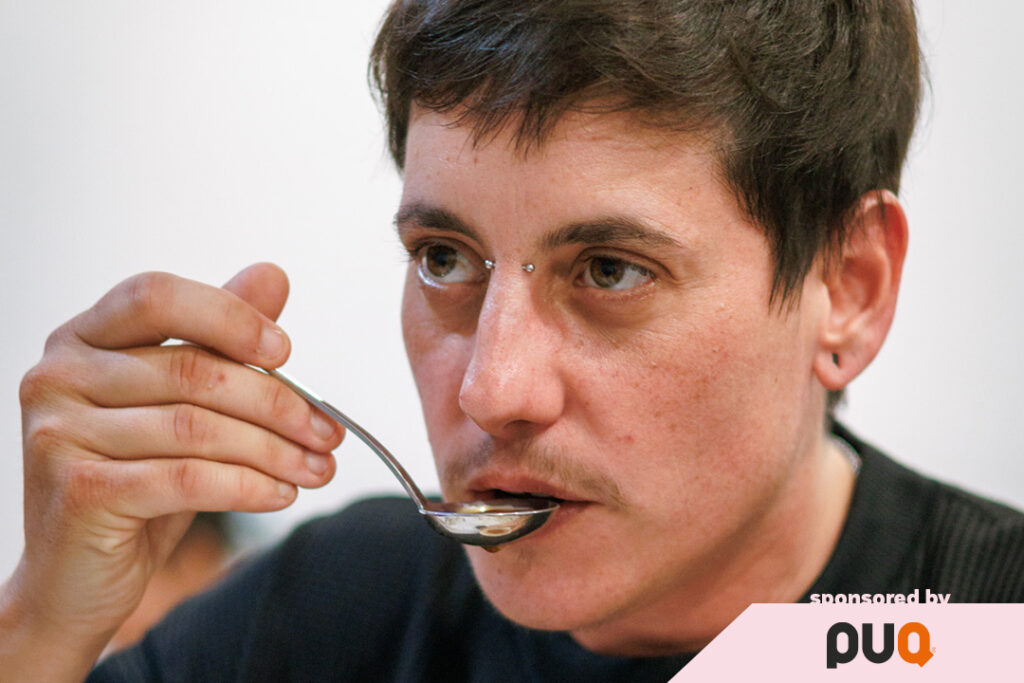
Driel, what is your first memory with coffee?
Coffee has been by my side since childhood. At school, I used to have my everyday coffee with milk instead of the orange juice they gave us (I am a big hater of it) for our morning snack.
But even before that, ever since I can remember, coffee was a ritual. After our family Sunday lunch, everyone would gather around the table for coffee, and I didn’t want to be left behind. They would give me a little bit of their filtered coffee with a splash of cold water and some sugar, and that was my ticket to sit with the grown-ups.
What inspired you, alongside your scientific career, to pursue one in the coffee industry, and how did you get started? What did you do before coffee?
I graduated as a designer, and I spent a few years working in book production. I really enjoyed it. But in 2013, while I was still in Rio de Janeiro, more precisely in Niterói, I was invited to be part of a cultural coffeeshop project, a space that would also host small performances by local artists. At that point, I knew absolutely nothing about coffee; I just drank it.
The original plan was actually to open the place with a home espresso machine. And then, before we even opened, the machine broke. We rushed to find the first coffee event happening nearby where we could learn a bit more about equipment and somehow ended up at Semana Internacional do Café, the biggest coffee event in Brasil. That was where we met Isabela Raposeiras from Coffee Lab (in São Paulo) and where I discovered the world of specialty coffee. A lot of doors opened after that.
I gradually left design behind. Coffee was already taking up more and more space in my everyday life. I started visiting roasteries and coffee farms, meeting producers and getting to know the people behind the coffee. I saw experienced coffee drinkers, with very strong ideas about what coffee should taste like, being surprised by lighter roasts with much more complexity and flavour in the cup.
I also had the chance to follow a coffee being developed by a producer who became a friend. With every new attempt, he would bring us a better sample than the one before. Eventually, that coffee won Coffee of the Year.
That experience shaped the way I see coffee to this day. The coffee world I know is made of people, and what still inspires me about doing what I do is seeing that whole wheel turn, from the producer, to the roaster, to the barista, and finally to the person drinking the cup and smiling.
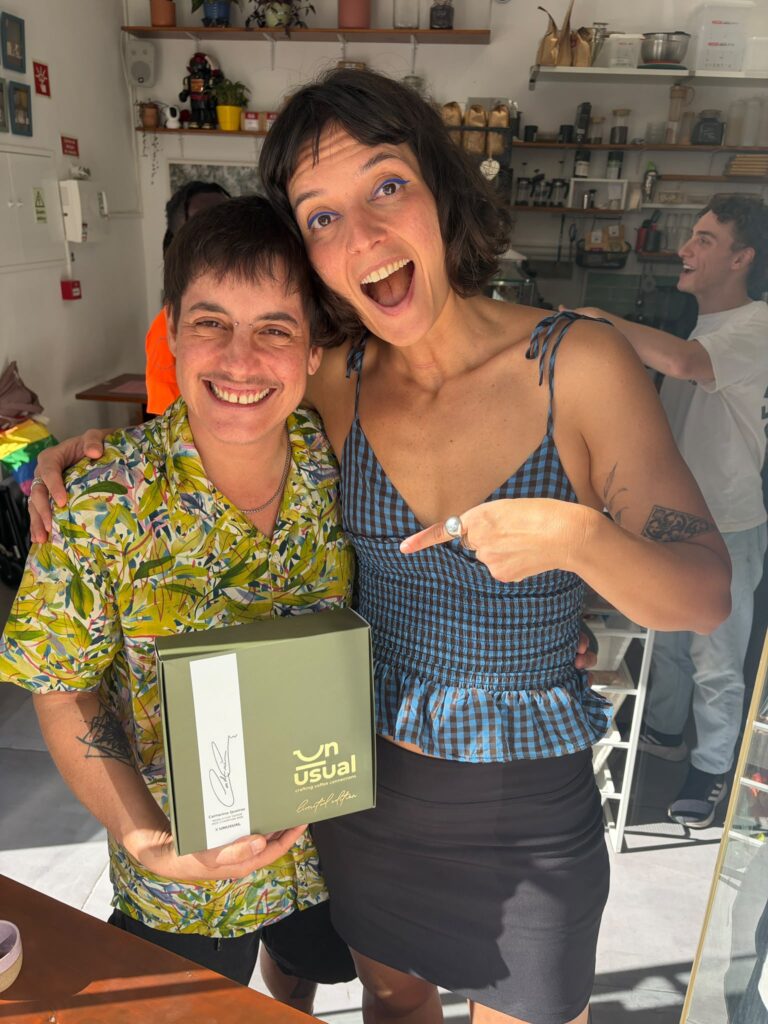
Can you walk us through your career?
After the first coffee shop, we ended up opening a second one, but at some point I realised I was spending more time running businesses than actually working with coffee. So in 2015, I joined a new project of a sourdough bread bakery, one of the first in Rio, and that was when I really established myself as a barista and consultant.
From there, I worked on a number of different projects, including Experimento Café, through which I ran courses, took part in local markets and events, and worked on bringing specialty coffee closer to people who had never experienced it before.
By 2020, even before the pandemic, the specialty coffee market in Rio de Janeiro had slowed down considerably, and I found myself needing to make a change. That was when I decided to move to Portugal.
When I arrived, I had the chance to work with coffees from all over the world and experience flavours I had never come across before. Getting second place in the first AeroPress Championship I competed in was also a great way to connect with the local coffee community. But I also quickly realised that things worked slightly differently here. Technique seemed to speak louder, and coffee was often treated more as a product. I would see bags of coffee that didn’t even mention the name of the farm where someone had spent the whole year, every single day, taking care of those plants and those beans.
I then started working with roasting, which was my goal at the time, at Buraca Roasters. It was an amazing experience and gave me the chance to understand even better how different coffees behave and to refine my sensory skills.
I continued working across different roles in coffee, as a barista and consultant, while becoming increasingly involved in the community. Eventually, I was invited to take on the role of Head of Coffee at Sense of Coffee, a coffee shop that was still very much at the beginning of its journey (it had only been open for about a year) but already had the ambition of becoming a reference for specialty coffee in Lisbon.
And here we are.
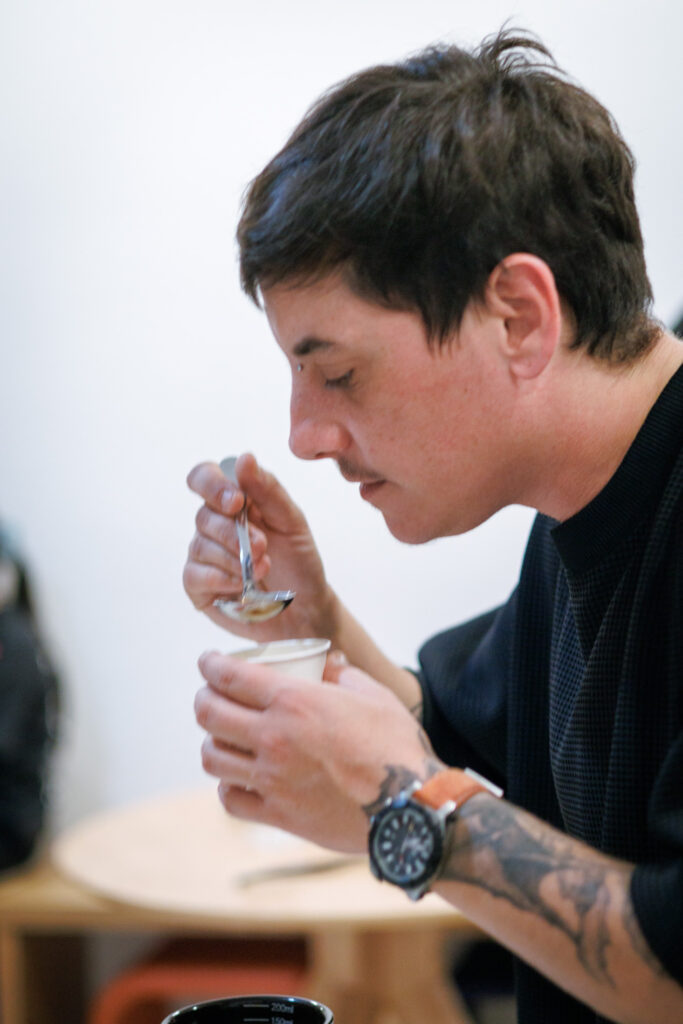
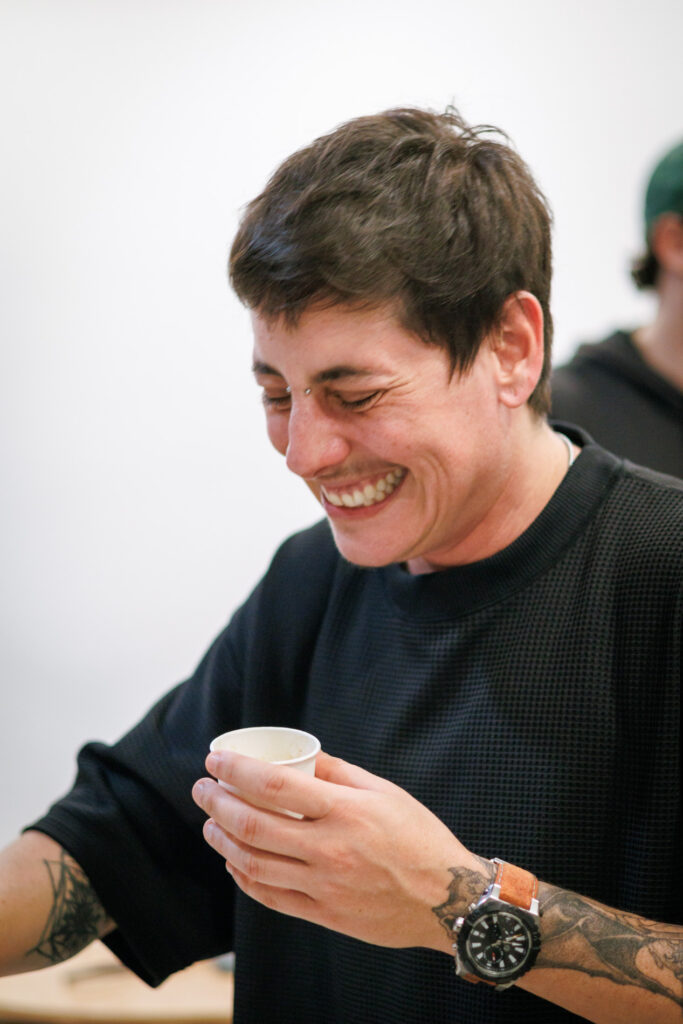
You’ve been in coffee since 2013 – over a decade of craft, competition, and community. What does the version of you that started in Rio de Janeiro think when he looks at where you are now?
When I started, coffee was an adventure. I was a designer, and coffee gave me a way to experience life more intensely, to be closer to people, and to build something of my own. I don’t think I had any idea that it would become a career or take me this far.
I can imagine that version of me asking what I had to do to get here. He would probably expect a list: which courses to take, what books to read, what skills to develop, like a recipe. But the truth is that I was just following what I deeply believed, working hard, staying curious, and having a lot of fun along the way.
I would say: You don’t need to have it all figured out. Just keep showing up, keep learning, and enjoy the ride!
Tell us a bit about the place you work at. What is your role there?
I’m currently the Head of Coffee, or, as I sometimes say, the Head of Head Baristas, since I’m responsible for all that coffee touches in both Sense of Coffee locations. That includes everything from coffee orders and menu development to training the teams, setting standards, promoting events and making sure we are consistent across both shops. And what I like about Sense is that I feel supported to develop ideas around coffee, with the tools to put them into practice, whether that means improving things at the bar, developing the team or supporting their participation in courses, competitions and events.
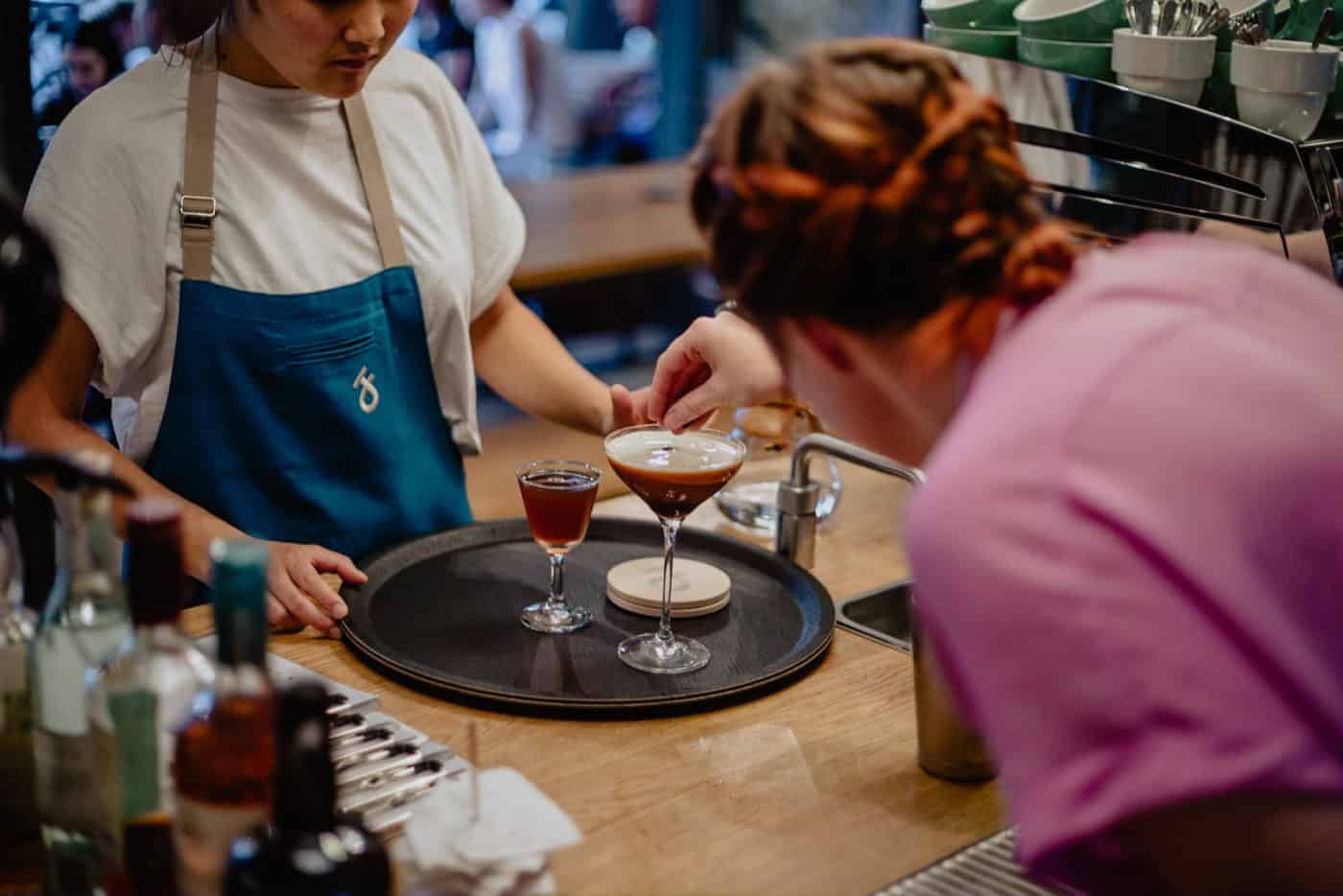
As we try to constantly improve the quality of what we do, we also want to be part of and contribute to the coffee community around us. We keep our espresso at €1, valuing the local tradition of having a quick espresso at the counter, but alongside it, guests can find brewing methods like V60 and AeroPress, or our barista set, where they can try an espresso, a cappuccino and a batch brew side by side. And even that €1 espresso can be an adventure, since we are proudly a multi-roaster coffee shop. I think it creates an interesting space for both roasters and guests: roasters can present their work and different beans, while guests can constantly discover new flavours. Part of what I do is curating which coffees make it onto our grinders and finding that balance between what we want to explore and what we think our guests will enjoy.
We currently have two locations, each one with its own personality. Our Oriente shop is smaller and cosy, where guests can slow down a little bit and enjoy a good cup of coffee. Rossio is right in the middle of everything, with different people from all around the world stopping by every day. It’s also where we often test new drinks, like our signature Pastel de Nata Latte, before they go on the menu in both shops, and where we gather the community through cuppings and workshops.
You are also involved in some other projects; can you let us know about them?
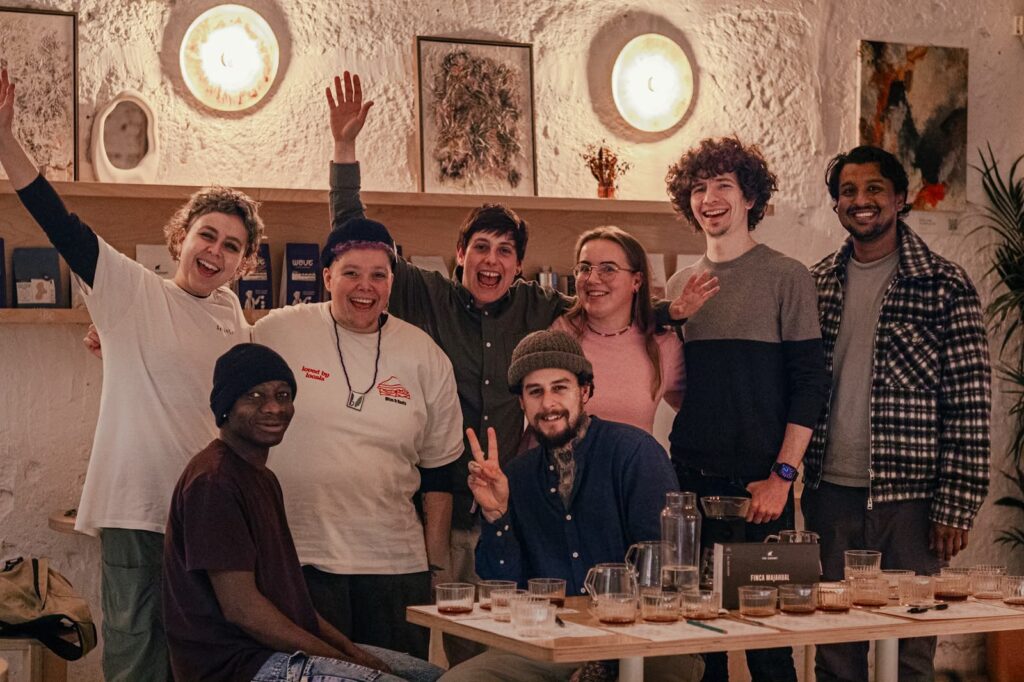
My most recent project is The Coffee Bloc, which I started with Alesia Zhvirblia. Since I arrived in Portugal, I’ve always wanted to help build the local coffee community, bringing people closer together and creating more opportunities to exchange experiences. That’s what led us to create The Coffee Bloc, an open space for baristas, roasters and anyone who works with coffee, a place where we can improve our skills together, explore experiments, share what we know and have a great time. Each session has a different theme, so far ranging from how fermentation affects coffee to a series of water experiments.
More recently, I also joined SCA Portugal as Events Coordinator, going in the same direction but on a national scale. The way I see it, an SCA chapter is more than workshops and competitions, and I hope we can also become a real point of support for the community, giving people a voice and bringing everyone closer together.
Since you have mentioned being elected as the Events Coordinator for SCA Portugal. What does that responsibility feel like, and what made you say yes?
I see this new SCA Portugal chapter as a new beginning. We have a team of people who are genuinely committed to helping build not only a stronger and more structured specialty coffee scene in Portugal, but also a community where baristas feel supported and represented.
Being responsible for making all these big events happen comes with a lot of responsibility, but I really trust the team we have. We all bring different experiences and skills with us, and I think that’s one of our strengths.
The biggest challenge will probably be making all of this happen as a volunteer team, alongside our regular jobs and personal lives. Besides organising everything, we also have to promote the events, find sponsors and build the support needed to make them happen. But maybe the experience of being a barista helps with that. We’re used to pulling four coffees, steaming milk, blending a smoothie and keeping an eye on a premix on the stove, all at the same time. So hopefully we can apply some of that same management here.
For me, in the end it’s also about getting more involved in the community and having the chance to help shape what this new chapter can become. I’ve been wanting to do more at a national level for a while, and this felt like the right moment to step in, especially with a team I trust and people who share the same motivation.
What do you want the Portuguese national championships to feel like – not just procedurally, but as an experience for competitors, judges, and the audience watching?
For me, the most important thing is to create more opportunities for people to compete. We want more baristas and other coffee professionals to feel encouraged and able to take part. For many of them, a national championship is also a chance to represent our community on the world stage, so I think we have a responsibility to make the competition itself as professional and well organised as possible.
For competitors, I want it to be challenging and exciting. There are a lot of rules, a lot of preparation and, obviously, a fair amount of pressure when you’re standing on that stage. But I also want people to remember that they’re surrounded by their community. The judges, volunteers, organisers, and everyone watching are all there because they care about the same thing.
And then there’s the other side of it: I love a good party. So while the competition itself needs to be serious, I don’t think the whole experience needs to be. I want people to enjoy being together, meeting each other, and sharing a drink after the competition.
For the judges and volunteers, I want that same sense of belonging. They’re giving their time, knowledge and energy to make the championships happen, and I want them to feel valued for that. And for the audience, I want it to be exciting and welcoming enough that even someone who knows very little about competitions can walk in, get curious and understand why everyone is so excited about what’s happening on stage.
If people leave feeling that they competed hard, learned something, met good people and had a really great time, I think we’ve done our job.
Portugal’s specialty coffee scene is still relatively young. Does that feel like a limitation or an enormous opportunity, and why?
The coffee scene in Portugal reminds me a lot of Brasil. In general, people are used to drinking coffee that is very dark and bitter, which is quite different from what we find in specialty coffee. That can make people more hesitant to embrace a different approach to coffee, so I think it takes time to open that door.
But I can already see a lot more Portuguese people becoming curious and more open to trying more complex flavours and different ways of experiencing coffee. I saw a similar shift happening in Brasil when I was there, and I think that, over time, these ideas will naturally become more integrated into the local coffee culture here as well.
For those who understand the pace of the market and are willing to be patient while still being bold enough to push things forward, I think there’s a great opportunity to help shape where coffee culture in Portugal goes next.
How do you stay motivated and inspired to keep improving your coffee-making skills?
What inspires me most about coffee is the connection between people. I get to meet producers and roasters while looking for new beans, work with baristas who constantly bring fresh ideas to the table, and, at the other end of it, hopefully make the difference in someone’s day when they come in for a cup of coffee.
I carry with me a very Brasilian feeling that coffee means hospitality. Coffee is what we offer when someone comes to visit, something we prepare because we want them to feel welcome. And that connection is what drives me.
What are some common misconceptions about our industry that you’ve encountered, and how do you address them?
I think one of the biggest misconceptions comes from the word specialty itself. When people hear quality, it’s easy to associate it with something luxurious, exclusive or simply more expensive. But for me, the value of specialty coffee is much more about care than luxury.
There is an incredible amount of work behind a good coffee. It starts with the producer and continues through processing, roasting, brewing and service, with many different people putting their time and knowledge into getting the best out of that coffee. When all of that becomes just another product to sell, I think we are missing the point.
Sometimes I see more importance being given to how a coffee looks on the bar than to how much the person behind it actually understands the coffee, its processing or where it came from. Latte art is a nice skill to have, but it shouldn’t be a substitute for understanding what is in the cup or respecting the work that made it possible.
I try to keep that in mind when choosing the coffees I work with. Even though I’m no longer working in a producing country, I still look for roasters and projects that have a real relationship with producers and, whenever possible, give me a way to know more about the farms and the people behind the coffee. For me, that connection is part of what makes specialty coffee special in the first place.
What are the current trends in cafes in your region? Are there any trends you promote yourself and would like to see more often in other places?
I think you might be expecting me to talk about the next big drink trend or some new brewing technique. But the trend I’d really like to see more of is valuing the people who work in coffee, especially baristas.
For me, that starts with treating baristas as professionals and taking care of the people doing the work. Fair pay, reasonable workloads, flexibility when life happens, proper breaks, time and healthy food to eat, and genuine concern for people’s physical and mental health shouldn’t be seen as perks. They should be part of how a professional coffee industry works.
Baristas are often expected to know everything, do everything, and somehow do it all at the same time (attend to guests, take payments, make coffee, run food, clear tables, wash dishes, restock, prep for service) with expectations that sometimes even a machine would struggle to keep up with. If we want people to stay in coffee and build a career here, we need to create an environment where that is actually possible.
And that goes beyond working conditions. It also means investing in people and giving them reasons to keep growing: good training, continued education, opportunities to compete, learn new skills, and take on new responsibilities. I’d love to see more baristas being encouraged to keep building their knowledge instead of being expected to arrive fully formed.
That’s the kind of trend I’m interested in. A coffee industry where someone can start as a barista and, over the years, discover different paths through competitions, education, roasting, management, consulting, events or whatever they’re passionate about. A place where coffee doesn’t have to be a stepping stone to something else, but can be a career with many different directions to grow into.
Photo by @atualizadacomsucesso.
If there were one piece of knowledge about coffee you’d like everyone to know, what would that be?
Coffee gave me the incredible opportunity to learn how to make mistakes. It showed me that sometimes, hidden behind what we call a “mistake”, there are possibilities that might be even better than what we had expected in the first place.
Over the years, I’ve been surprised more than once by coffees that didn’t follow the traditional extraction parameters and somehow turned out to be great. It taught me to calm down that need to always get things “right” and, instead, become curious about what the mistake of the day might bring.
I still like getting things right. I just don’t need to be right all the time.
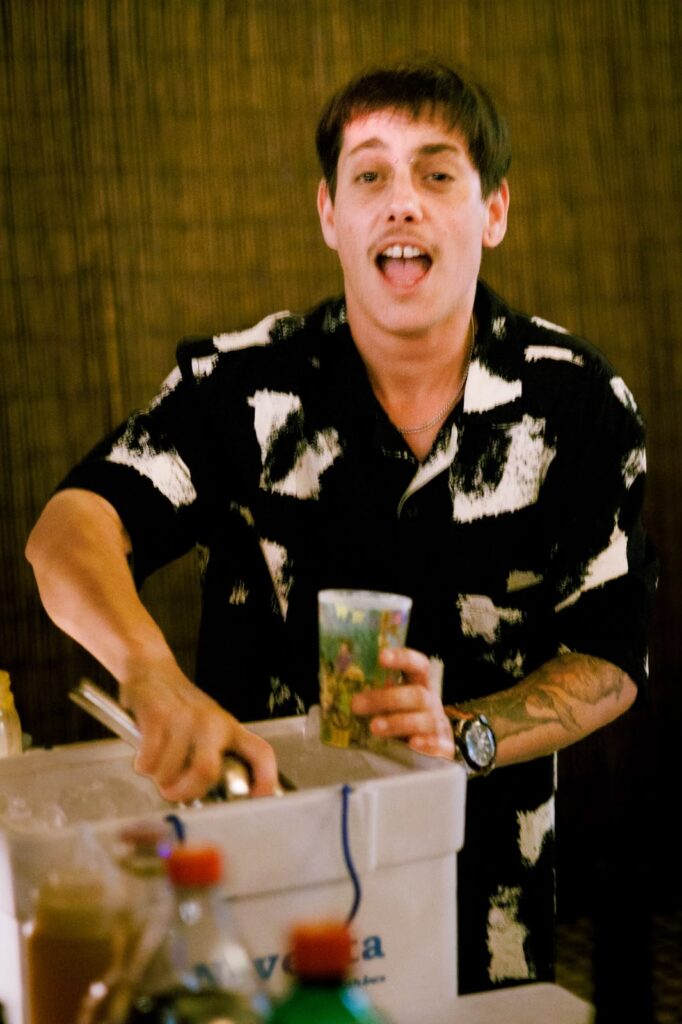
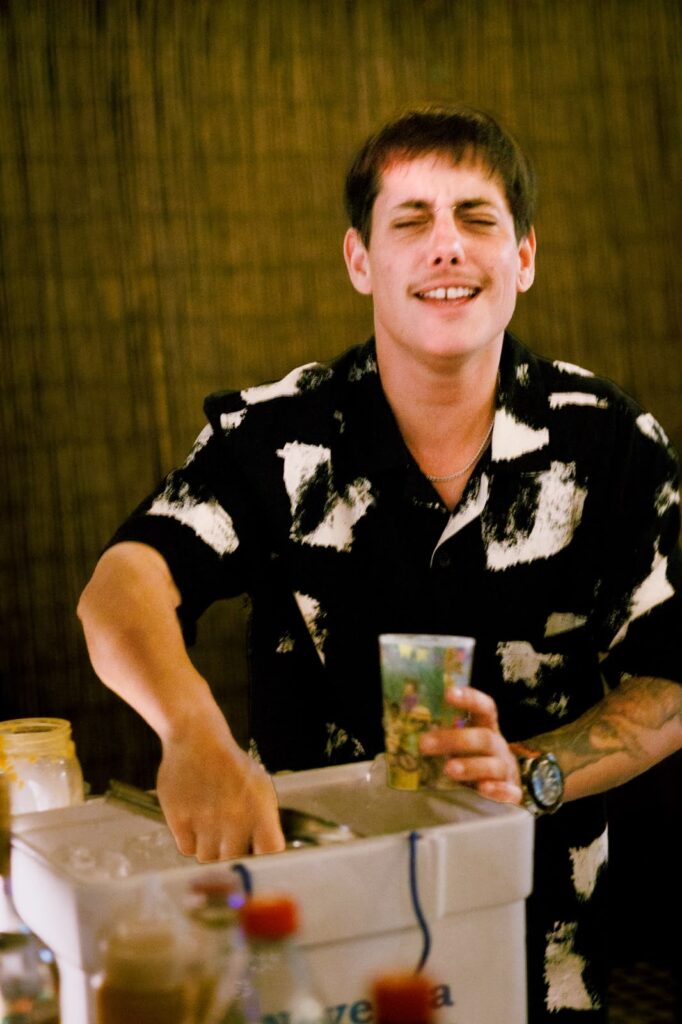
What are your passions and hobbies apart from coffee?
Outside of coffee, I mostly enjoy spending time with my family, taking my girl out to samba and hanging out with my kid. Actually, not that often, since they usually join me at cuppings and events when they can. I’ve also been reading quite a lot about psychology lately, and I’m planning to start studying it more seriously later this year. And of course, I really enjoy going for a ride on my motorbike when I can and watching my Flamengo win another game.
Where in Lisbon do you find your best inspiration?
Every now and then, I feel like I need some contact with nature. It can be a walk through Monsanto, a quiet moment in one of the city’s parks, or a trip to the beach just to look at the horizon. Something about being around nature helps me slow down, clear my head and see things from a different perspective.
But then there’s samba. The energy of the instruments, the people, the clapping, everyone singing together – that feeling that life is good and everything will be alright. There’s something about it that feeds me in a completely different way.
I think I need both. Some time in nature to clear my head, and some samba to fill up my heart.
What coffee challenges are you looking forward to? Any new projects or collaborations?
I think I’m at a point where I want to make the most of the opportunities I have to bring people together and create things around coffee. I’ve been really enjoying producing events and creating spaces where people can learn from each other, experiment and share what they know, and I’d like to take that much further. I also feel there’s still a lot I want to do with Sense, and I’m really excited about what’s still to come.
At the same time, I want to keep pushing myself on the sensory side. I feel like there’s still a lot of room for me to develop there, to recognize flavors more clearly and keep challenging the way I taste and experience coffee. It would also be amazing to get much closer to the farms. I’ve visited quite a few over the years, but I still feel that every farm has a different story to tell. Spending time with producers, hearing those stories and understanding more about the people and the work behind the coffees I serve is something I really value. I genuinely hope I get the chance to do much more of that in the coming years.
So I guess I’m looking forward to keeping things moving, learning from different people and seeing what we can build along the way. There’s still a lot I want to explore.

Quick Fire Questions for Driel Telles de Menezes:
Filter coffee or espresso-based?
Filter coffee!
Milk coffee or black coffee?
Black for filter, milky for espresso.
The most underrated coffee drink?
Cold brew.
The most underrated coffee brewer?
Aram Coffee Maker.
How do you make coffee at home?
Chemex.
No.1 café in Europe that every coffee geek should visit?
Wait, they weren’t planning to visit us?
What’s your favourite city to have a specialty coffee tour outside of “your city”, why?
Probably São Paulo or Belo Horizonte. I haven’t done that many coffee tours, especially around Europe, but I’d love to do Barcelona, London, Berlin and Oslo.