
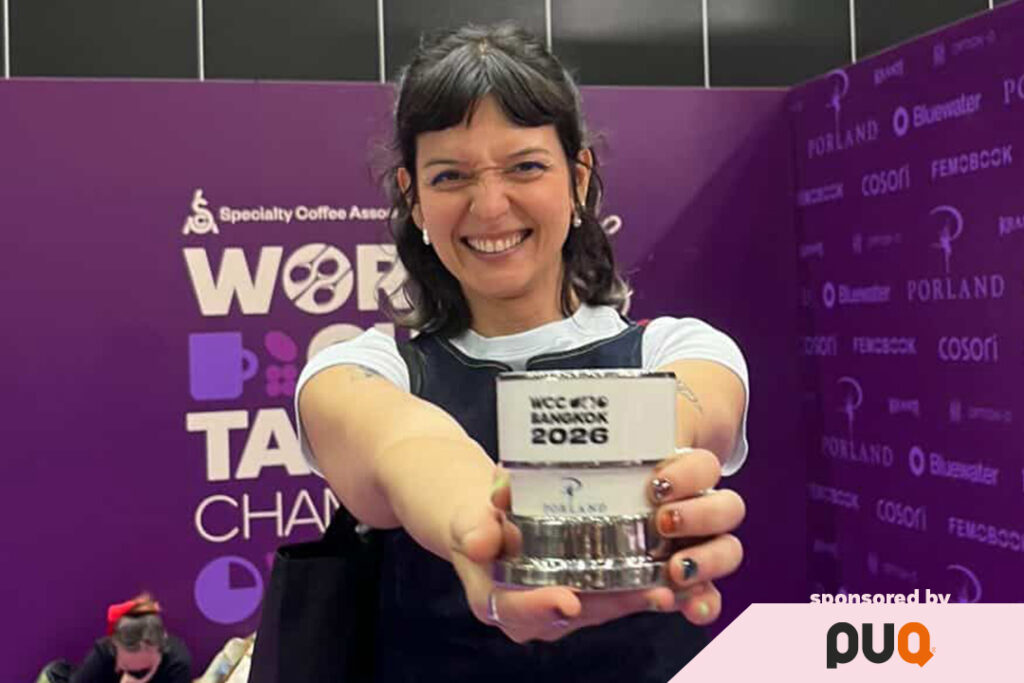
Catherine Queiroz volunteered as a timekeeper at the World Cup Tasters Championship in Brazil in 2018. Eight years later, she came back from the same competition in Thailand holding the Vice Champion trophy, having not even packed an outfit for the podium because she genuinely had not expected to get there. That combination of quiet confidence, community spirit, and a complete absence of ego around her amazing achievements is probably the best introduction to who Catherine is and how she moves through the coffee world.
Originally from Rio de Janeiro, Brasil, she built the first chapter of her coffee career at origin, developing a deep understanding of Brazilian coffee before moving to Zürich and spending years working her way across the entire supply chain, from coffee shop bars to cupping labs, from SCA judging panels to her current role as Coffee Quality and Education Manager at Neumann Kaffee Gruppe. That arc is rare, and shows how Catherine thinks about quality: not as a fixed standard, but as something contextual, human, and deeply connected to who the coffee is actually for.
What stands out most about Catherine is not the titles, impressive as they are, but the consistency of her values across all of it. She will tell you that a well-made cappuccino in a small shop can be just as meaningful as a rare competition coffee. She still visits her friend’s café every week to stay connected to what is being brewed. She plays in carnival street bands in Rio and never misses the festivities. For Catherine, coffee has always been about connection and enjoyment first, and everything else follows naturally from there.
Catherine, what is your first memory with coffee?
As a kid growing up in Brazil, you are introduced to coffee quite early. My first memories are drinking filter coffee with milk with my family for breakfast, probably when I was around 8-9 years old.
What inspired you to pursue a career in the coffee industry, and how did you get started? What did you do before coffee?
My background is in Hospitality and Tourism. I worked for a large education institute in Rio, developing courses for the hospitality and gastronomy area, and that is where I started to develop a strong interest in sensory experiences related to food and drinks. At the time, there was no coffee course available, so I decided to explore it on my own and quickly fell in love with it.
I wanted to leave the corporate world, spend some time abroad, and I found a path through a barista career. After working in Rio for a while, I volunteered as a timekeeper at the World Cup Tasters Championship in Brazil in 2018 (and eight years later, here we are). Through this event, I met many people and eventually the owners of a coffee shop in Zurich (Mame), who invited me to do a trial, as they were always looking for baristas. I did, and I worked there for two years, which is how my career in Switzerland began.
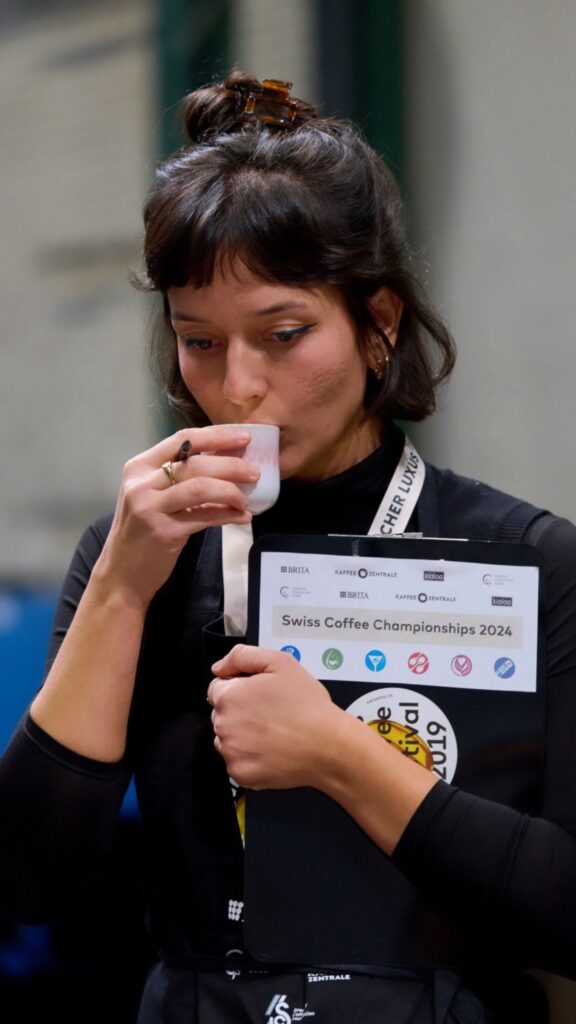
Afterwards, I also worked at COFFEE (another shop in Zurich), continued volunteering at SCA events, and then became manager at Collective Bakery, where they serve Rose Coffee Roasters. I competed in Barista competitions, supported friends in theirs, and later joined NKG as Quality Manager. Alongside that, I became more involved in SCA Switzerland activities, including judging (Barista, Brewers, Roasting).
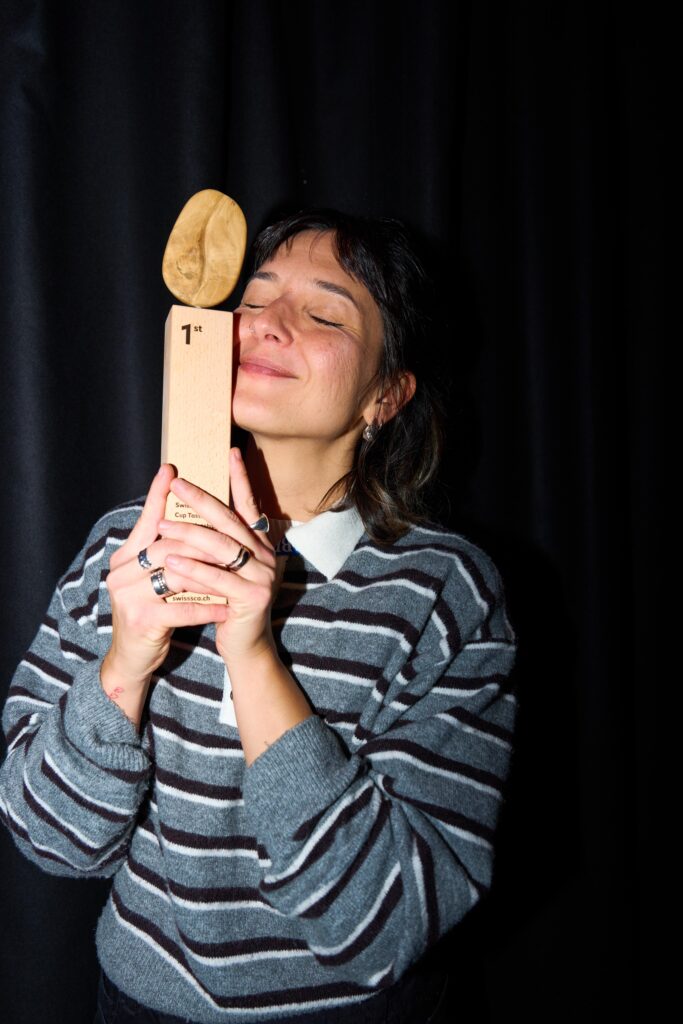
Last year, I decided to compete in the Cup Tasters Championship for the first time, which was a great experience. I placed first, had a few months to prepare, and have just returned from Thailand with the Vice Champion trophy. I couldn’t be happier!
Tell us a bit about your current work projects. What are your roles there?
Apart from the daily quality activities, sampling, cupping, and sensory reports, we also have many education projects in development. We host several CQI, SCA, and judging courses at our office, and we are often involved in major events, helping with organisation, such as WOC Brussels. We also visit customers, and I am currently developing my own Cup Tasters workshop, etc.
Your journey in coffee has taken you across the entire supply chain, from sourcing to serving, from Brazil to Switzerland. What does it feel like to have stood at both ends of that chai, near where the coffee grows and in the cupping labs where it’s evaluated and cafés where it is served?
I feel very grateful to have started my coffee career in an origin country. Many people work with coffee, but they don’t have the opportunity to visit farms, and that alone is already a huge privilege. On top of that, in the beginning of my career I worked exclusively with Brazilian coffee (in Brazil, we are not allowed to import coffee from other countries), which helped me develop a very strong understanding of our own product.
Later, I had the opportunity to move to Europe and start exploring and understanding coffee from around the world, becoming familiar with different origins, processing methods, flavour profiles, and how to extract them in coffee shops, as well as how to select and evaluate them as a green coffee importer. I am really happy to have been able to build my journey in this way.
What does coffee quality actually mean to you, and where does the human element become irreplaceable, even in a world increasingly driven by data and industry scale?
I feel that it is important to understand that coffee quality is quite subjective. Not everyone has access to specialty coffee (in fact, most people in the world don’t), and it is also important to find a home for each bean.
At the beginning of my career – like many of us entering specialty coffee – it is easy to become a bit too strict or overly focused on perfection. Nowadays, I really appreciate it when, for example, I go to Brazil and drink a very easy-going, tasty, chocolaty coffee. This is also part of what coffee is, without judgment or pressure around what “good coffee” should be.
To be honest, I am lucky enough to have access in Switzerland to very rare and expensive coffees through friends who compete or run roasteries. But when I travel, even if I go to a very high-end coffee shop, I often choose something simple from the menu. For me, that is also the beauty of coffee: when someone can brew and serve a well-executed washed Kenya or Colombia, and the quality comes not only from the coffee itself, but also from the skill of the barista, the roaster, and everyone involved in the chain. That, to me, is what true quality is.
How do you stay motivated and inspired to keep improving your coffee-making skills?
I do a lot of cappuccinos at work and some filter coffee at home on the weekends. I also like to go every week to my friend’s coffee shop to stay up to date with the beans they are serving, the brewing methods, and so on. And of course, I really enjoy judging as well, which is another way to learn from competitors.
For me, staying motivated comes from staying close to the community and continuously exposing myself to different perspectives on coffee, whether that’s through daily practice, competition, or simply observing how others approach it.
You’ve described your passion as building connections with farmers, roasteries, baristas, and local communities wherever you travel. In an industry that can sometimes feel transactional, how do you protect that spirit?
Coming from an origin country definitely makes it a bit easier to build these connections. I know farmers, roasters, and baristas more directly, and I’ve been able to carry those relationships with me into my work in Switzerland. I’m also very happy to be involved in SCA activities within our local community here.
With this network of people around me, it feels very natural to build and maintain connections. In this industry, relationships are really at the centre of everything, and I try to stay present, curious, and open in order to keep those bonds alive.
What are some common misconceptions about our industry that you’ve encountered, and how do you address them?
One common misconception about our industry is that coffee quality is purely about rarity, price, or scoring high in competitions. In reality, quality is much more contextual and includes how a coffee is produced, who it is for, and how it is experienced in everyday life.
Another misconception is that specialty coffee is always complicated or exclusive. I think this can create a barrier, when in fact coffee can be both highly technical and very simple at the same time. A well-made cappuccino in a small shop can be just as meaningful as a rare competition coffee, depending on the context and intention.
I also often see the idea that expertise in coffee is only about tasting skills or technical knowledge. For me, it is equally about communication, consistency, and understanding people: from producers to customers.
I try to address these misconceptions by keeping an open mindset, sharing knowledge in a practical way, and always trying to connect coffee back to its purpose: enjoyment, connection, and accessibility.
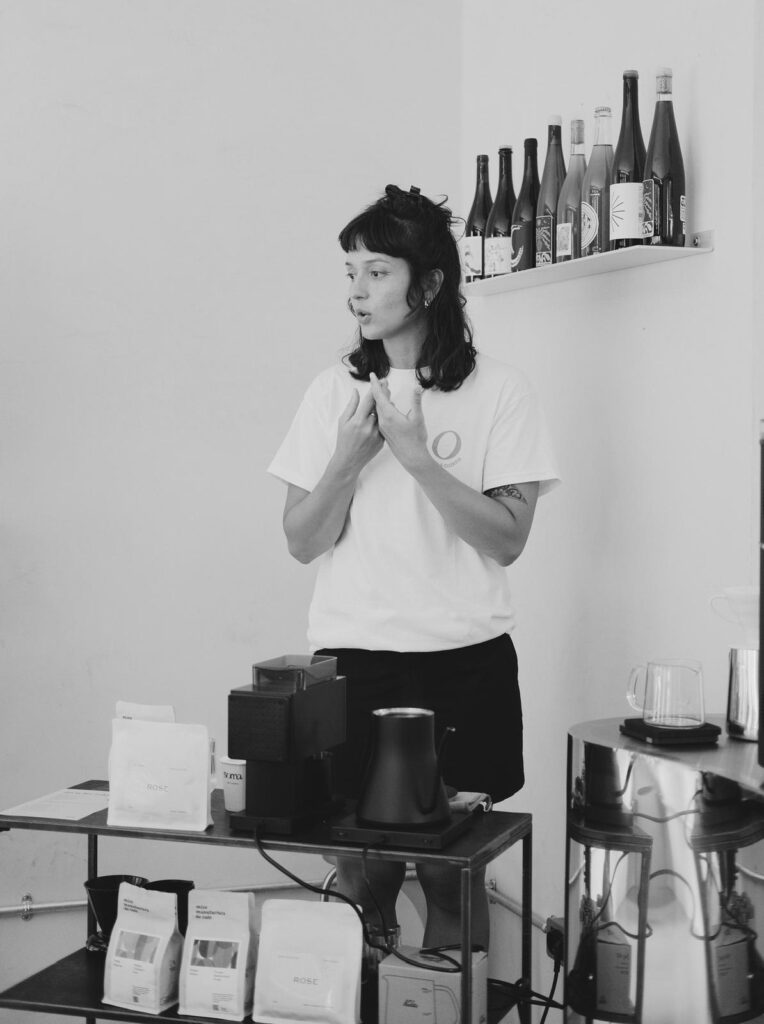
You have some amazing achievements in championships. Can you tell us more about them? What are the next championships you’d like to compete in?
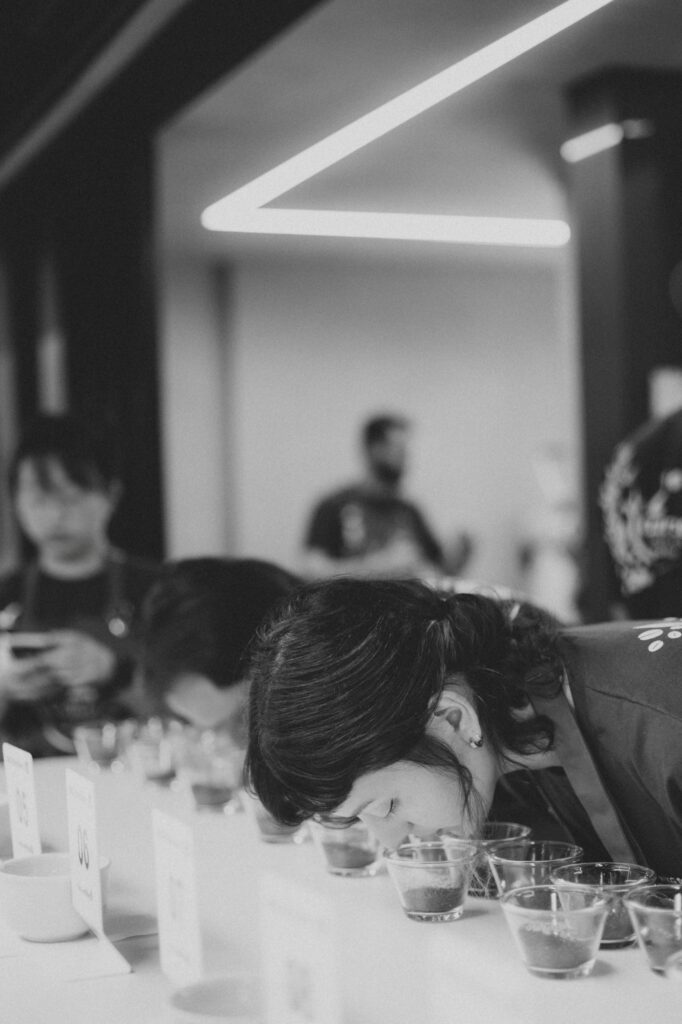
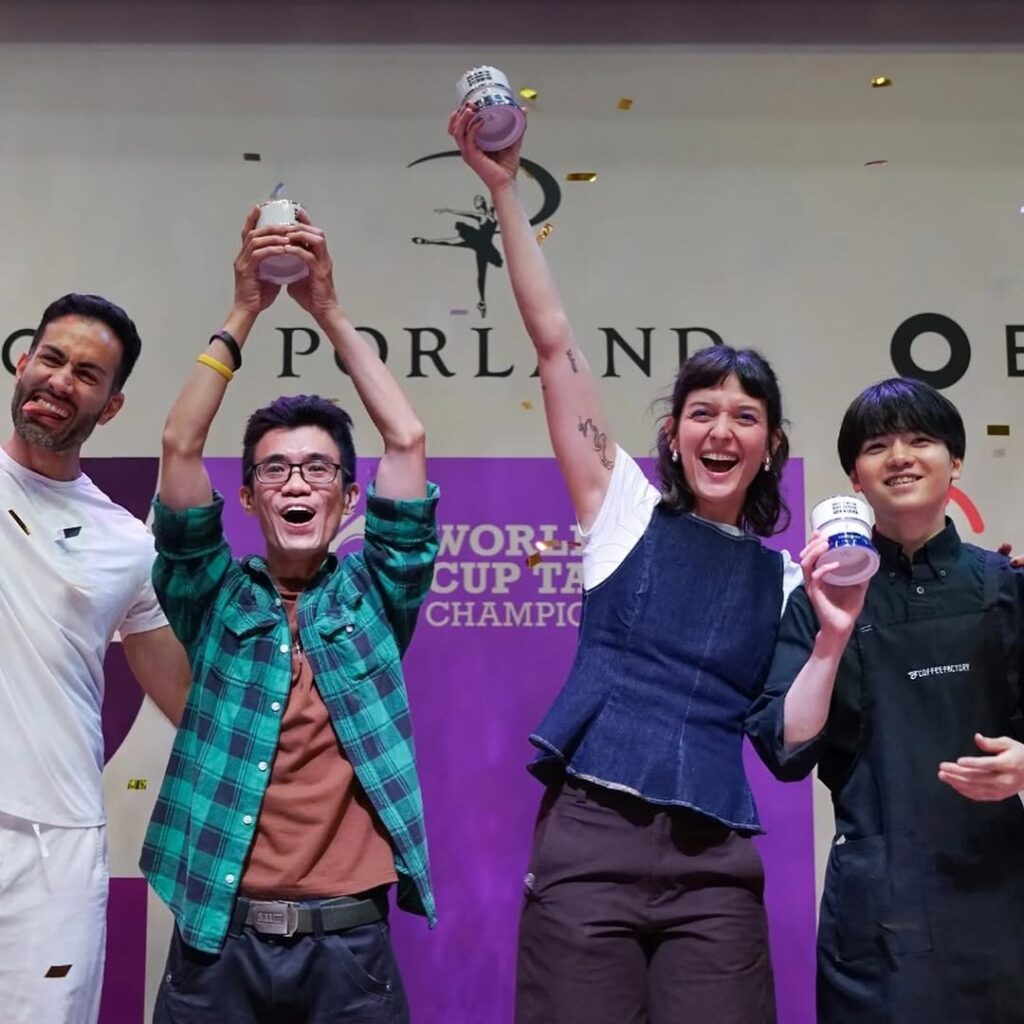
I was already in 2nd place in the Barista Championship in Switzerland, first place this year in the Swiss Cup Tasters Championship, and I just achieved second place at the World Cup Tasters Championship.
To be honest, I wasn’t expecting to come second. I didn’t even have an outfit prepared for the third day on stage and had to buy one there, haha. I was just having a really good time and was already very happy to make it into the top 16. I think that mindset helped me stay calm and focused. I didn’t feel pressure to perform; I just wanted to do my best, meet people, and enjoy the experience, and I ended up with a Vice Champion trophy, which I’m very proud of.
How did it feel to compete on the World Stage?
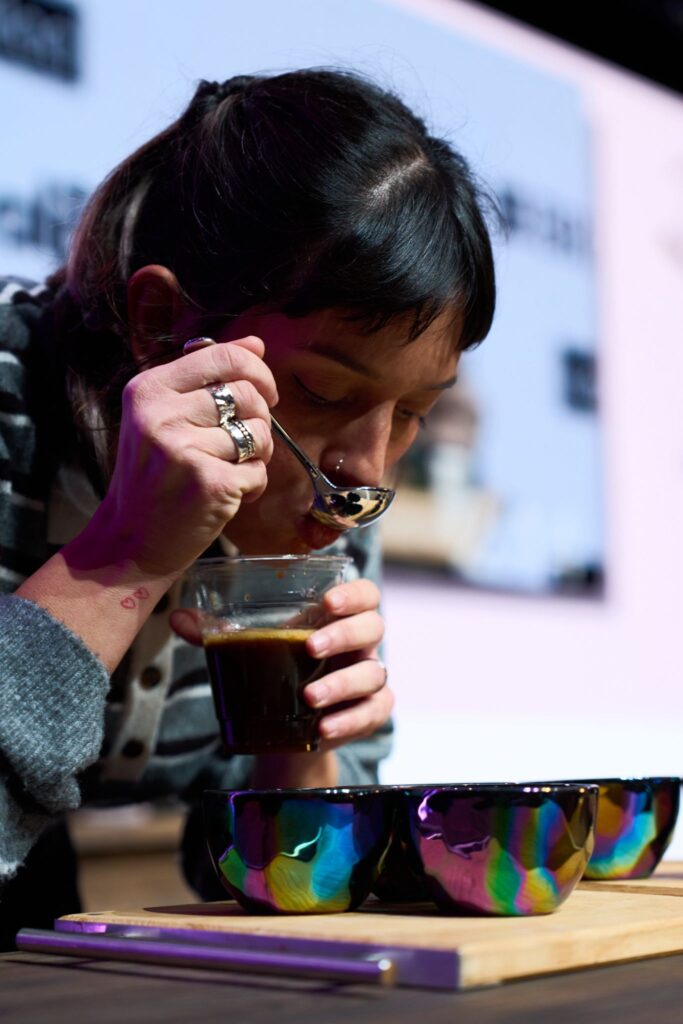
Competing at the world level was amazing. The atmosphere of Cup Tasters is quite unique. I have been present in many backstage championships, and there is often a lot of tension, with so much equipment and preparation required before going on stage. In Cup Tasters, all the work happens beforehand; once you are there, there is not much you can change.
What felt special was how community-driven it was. Many people were there with small teams, partners, or friends, which created a very supportive and connected atmosphere.

What, in your opinion, is the most important thing to have in mind when you start to compete in coffee championships?
I think the most important thing when starting to compete in coffee championships is to understand that the journey is the main goal. You learn so much, meet many people, and create memories, and that in itself is already a huge outcome. What happens as a result is often a combination of many factors: some you can control, some you cannot.
I am very inspired by people who come back year after year, not because they feel they have something to prove to others, but because they want to improve themselves. To me, that is the real spirit of competition.
Becoming a World V-ce Champion definitely amplifies your voice and influence on the industry. Which topics are close to your heart and values that you would like to talk more about?
Becoming a Vice World Champion definitely amplifies anyone’s voice and influence in the industry. The topics that are closest to me are accessibility, connection, and community. I sometimes feel that championships can become quite distant from the everyday reality of coffee, so I believe small actions can help bring it closer and make coffee more accessible and inclusive for more people.
If there were one piece of knowledge about coffee you’d like everyone to know, what would that be?
Outside of coffee, I’m very passionate about sports such as running, cycling, and pole dance. I also love the sun, beaches, and Brazilian carnival: I never miss it, and I even play in carnival street bands with my friends.
What are your passions and hobbies apart from coffee?
Travelling, observing people, aesthetics, and storytelling!
Where in your city do you find your best inspiration?
My hometown, Rio de Janeiro, is definitely the place that inspires me the most.
What coffee challenges are you looking forward to? Any new projects or collaborations?
At the moment, I’m developing my own concept that I can bring to coffee events worldwide. I’m also collaborating with a friend on a coffee project with my own signature, and I’m looking forward to more meaningful collaborations with brands that feel aligned with my journey.

Quick Fire Questions for Catherine Queiroz:
Filter coffee or espresso-based?
Filter coffee.
Milk coffee or black coffee?
Milky. I love oat cappuccinos, hehe.
The most underrated coffee drink?
Espresso Tonic!
How do you make coffee at home?
V60.
No.1 café in Europe that every coffee geek should visit?
I really love Nomad in El Poblenou, Barcelona. I have really good memories when I was new in Europe and would go there frequently. I always go back, and it’s always been a very nice experience.
What’s your dream place to have a coffee tour?
Can I say two? Barcelona and Porto. They both feel a little bit like home for me. I have friends, I know the streets, and I have my favourite shops and baristas.