
Goldy has been quietly rooting for this page. Long before his own feature, he read the Barista Stories profiles of friends he admired and thought, “Maybe one day I’ll be here too. Just keep going.” So he kept going, and the year he is having makes a strong case. 2026 is his first full year as a roaster, and he spent it working at Jampot Coffee Co. in East London. He finished 6th at the UK Barista Championship, joined the Coffee Knowledge Hub Youth Academy, and ran the London Marathon to raise £1,800 for a food bank.
The route there was a winding one. Born in Nagpur, he studied computer science, spent almost three years in retail analytics, tried running a tiny café that served instant coffee and ice cream shakes, and then completed a Master’s in Business Analytics at Durham. Those years left him with a habit of breaking problems into small, testable pieces, which he now applies to roast profiles and latte art practice alike. Some of that was already there in his first coffee memory, a blended iced coffee made from instant sachets with college friends, which he calls “the frappe before the frappe”.
In this hefty, flavourful and needed conversation, Goldy talks about why he would love to see cafés stay open into the evening, how he gets through a day of 25 production roasts, and what he has learned from coaching himself one small skill at a time. He also lets us in on a few of the friends who inspire him, and tells us how he found the spark and how it became his light!
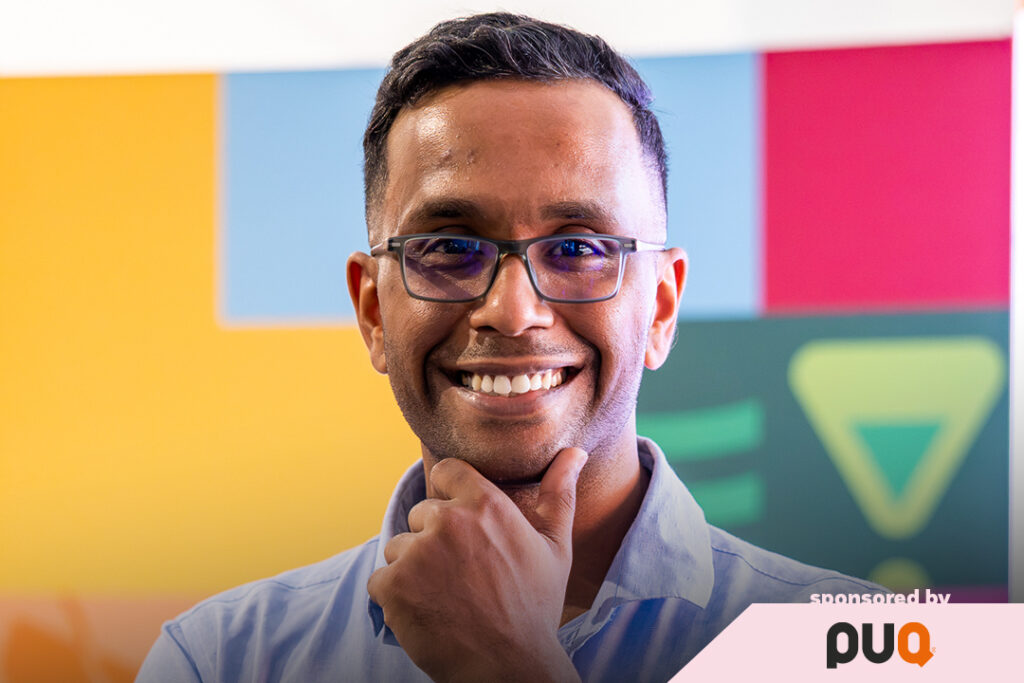
Goldy, what is your first memory with coffee?
My first memory with coffee goes back to my undergraduate College days in India. After college, my friends and I used to have this cold coffee made with a sachet of instant coffee, a tiny bit of sugar, milk and loads of ice, all blended together until it was really frothy.
Looking back, it was surprisingly balanced and not overly sweet. But more than the taste, I remember the place and the time I spent with my friends after college. With India’s warm weather, a glass of cold coffee was always refreshing.
It was affordable, delicious for what it cost, and in a way, some adaptation of it still exists in modern-day frappes. It was the frappe before the frappe for me!
You have mentioned that you were ´manifesting´ a feature in Barista Stories. Why is that? What story do you have to tell? What drives you?
I think calling it manifestation will be oversimplifying how I feel about it. Over time, I’ve seen so many incredible people featured in Barista Stories, a few of whom are my close friends. I happen to know their stories personally, and with every new feature, I used to think, “Okay, maybe one day I’ll be featured here too. Just keep going.” Everyone has a story to tell, and each one is unique to them. So it’s incredibly humbling to think that someone might read my story and find something interesting or relatable in it. Being featured amongst some of the very best coffee people across Europe is genuinely an honour.
I also believe you only get lucky when you continue to work hard at something you’re passionate about. The right opportunities tend to find you when you keep putting yourself out there. Passion is one thing, but having a direction to channel it towards is another. And when you find something that aligns with who you are and what you want to do, good things happen.
Whether everything is aligning for me is something I’ll only know in hindsight. But looking at how this year has unfolded, I’m incredibly grateful that many of my efforts have started bearing fruit, and that I’ve been privileged enough to meet some of the most incredible people in coffee along the way.
What inspired you to pursue a career in the coffee industry, and how did you get started? What did you do before coffee?
Before coffee, I studied computer science and worked in retail analytics for almost three years. Somewhere in between, I also tried running my own very small café, where we served instant coffee, cold coffee, ice cream shakes and things like that.
Growing up, I loved reading books about entrepreneurs who changed the world. That idea of finding something you genuinely believe in and giving absolutely everything to make it happen has always stayed with me. For me, coffee sits at the intersection of three things I love: community, business and craftsmanship.
There’s something incredibly individual about coffee. No two cups made by two different people are quite the same. There is always a little bit of the person who made it in the cup, or at least that’s how I like to think about it. And then there’s the community. People from completely different cultures, backgrounds and walks of life somehow find common ground through coffee. It creates a space where you feel you can belong. On top of that, the learning never ends. There are opportunities to travel, meet inspiring people and hopefully create some positive impact along the way.
If I could find the right balance between making a living, having enough passion to keep going and creating meaningful impact, I’d consider that a pretty good place to be. The memories, places and experiences along the way are just a bonus. Hopefully, I manage to balance all three in the long term.
Can you walk us through your career?
My career has been fairly unconventional, although the more people I meet in coffee, the more I realise that there’s probably no such thing as an unconventional career in this industry. We all just find our own way into coffee. I studied computer science, originally planning to build a career in software development, data science or analytics. I ended up working in retail analytics for almost three years before moving to the UK to pursue my Master’s in Business Analytics at Durham University.
Durham was a really important chapter for me. It reminded me how much I enjoyed working with people from different cultures and backgrounds, and how much community mattered to me. After graduating, I moved to Milton Keynes, where I got back behind the bar as a barista. I worked there for about six months and also spent time learning at the roastery.
Eventually, I moved to London and joined Jampot Coffee Co., where I now work as a Senior Roaster. I don’t think there was ever one particular moment when I decided to leave analytics for coffee. It was more of a feeling.
I often say to one of my closest friends, Nikol, that it’s a privilege to be passionate about something, but it’s another layer of privilege altogether to be able to pursue it with all your heart and soul. And somewhere amongst all of that, life happens.
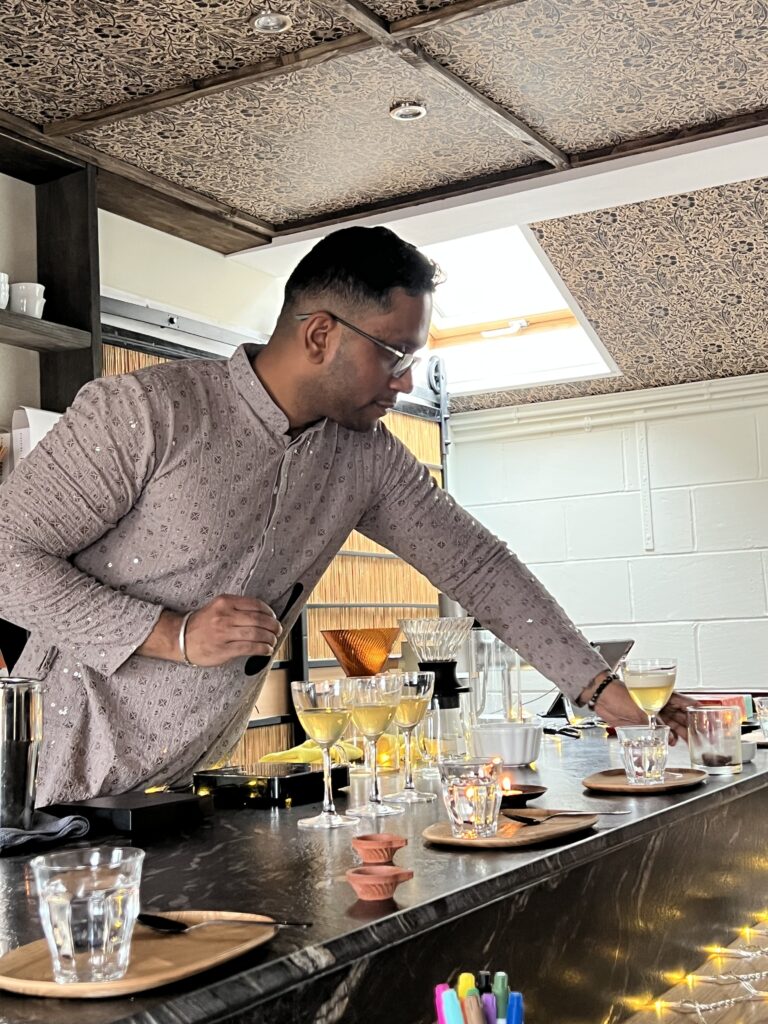
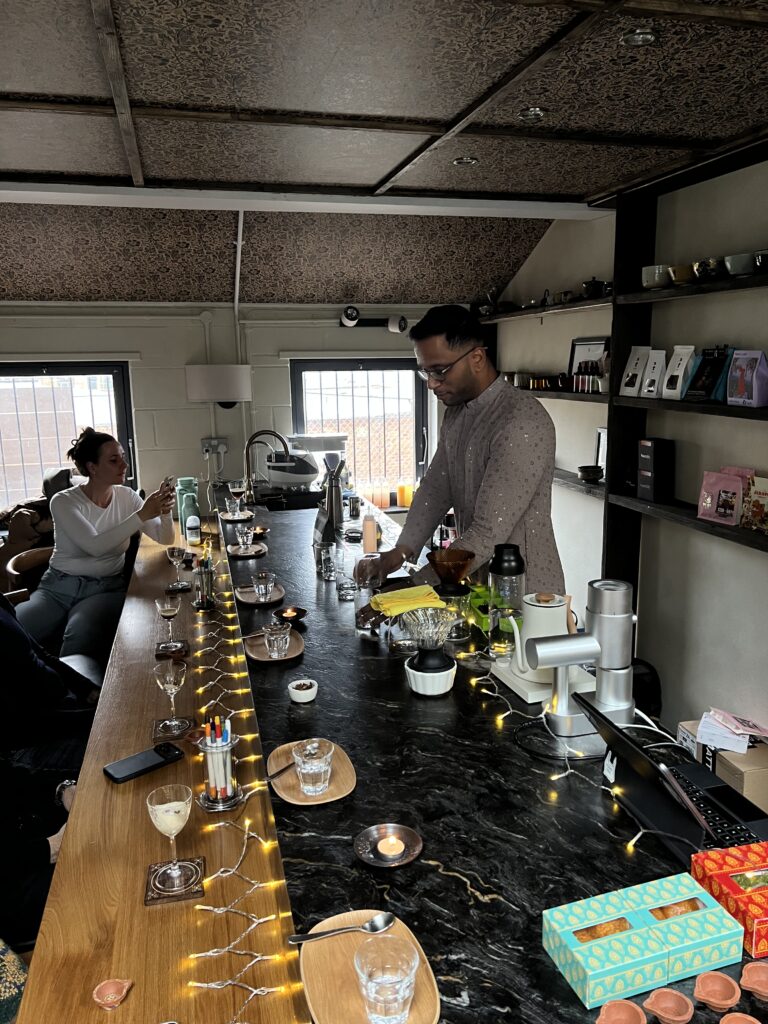
Tell us a bit about the place you work at. What is your role there?
I work at Jampot Coffee Co., based in East London, near Maryland. I’m the Senior Roaster, but as with most coffee companies, you end up wearing quite a few different hats. My work involves everything from green coffee evaluation, sample roasting, cupping and production roasting to routine quality control, wholesale tastings and training.
I also support our team and wholesale partners with different coffee-related projects, and competitions have increasingly become part of what I do as well. Essentially, I get to be involved in quite a lot of what happens to coffee, from green beans to the final product, which is something I really enjoy.
What kind of experience do you want your customers to have when they try your coffee?
I think I’d like people to experience coffee for what it is, rather than what I want it to be. Every coffee comes with its own expression. For me, it’s about finding that sweet spot where I can roast and present it in a way that allows the customer to experience it as closely as possible to how it’s meant to be. But beyond the coffee itself, I think the human experience matters just as much.
Some of my most meaningful experiences in hospitality have come from serving regular customers. You start by making someone a cup of coffee, and eventually you know their order, what time they usually come in, who they might be with and sometimes even what’s happening in their life. What begins as a cup of coffee becomes a genuine connection. At that point, it’s not just about coffee anymore. It’s about being human.
What is your favourite part of the day at work, and why?
No two days are quite the same, which is something I really enjoy. But if I had to pick, it would probably be those production roasting days when I have 25 or so batches lined up, and I can just get into my zone. I love having a really structured day where I know exactly what needs to happen and what I want to achieve by the end of it. You arrive, make yourself a coffee, start roasting, and everything hopefully goes according to plan. There are always a few other things to get done in between, but when the workflow is smooth, and you’re completely focused, it just feels right. I think that’s probably my favourite part: being in the flow while roasting.
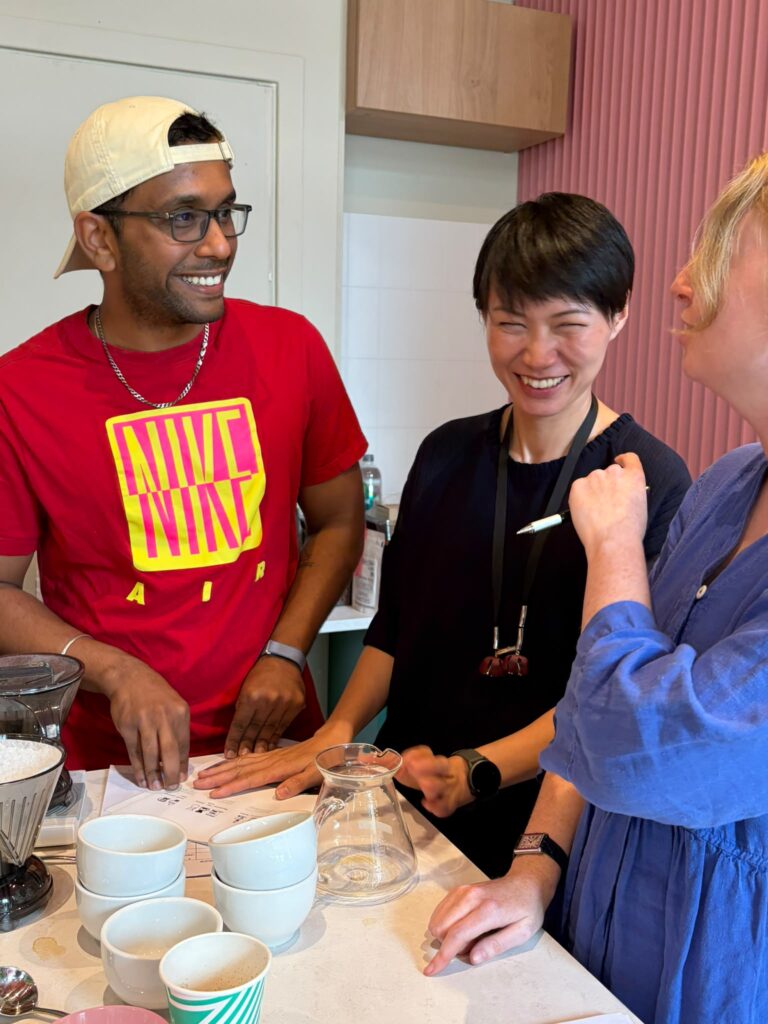
With Eling, Bee and Matthew.
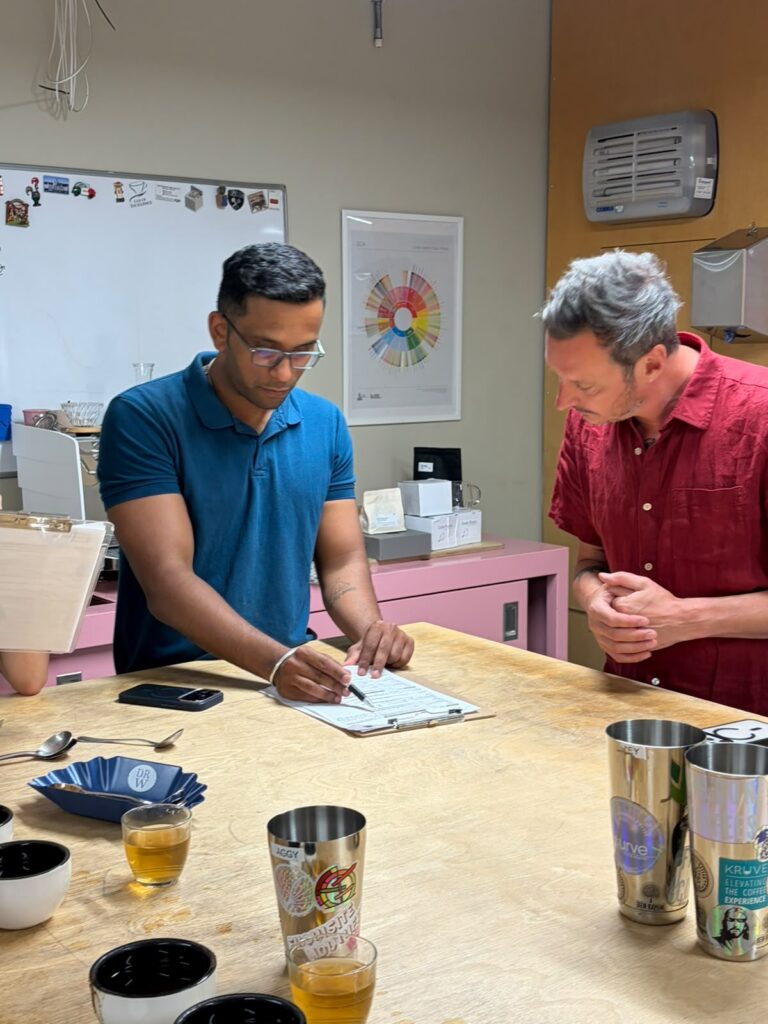
You also have a Master’s degree in Business Analytics. Do you apply that knowledge in your work duties?
I try to! I don’t necessarily use analytics actively every single day in the traditional sense. But I use it a lot when researching, learning or trying to solve a problem. For example, if I’m working with a coffee, blend, roast or brewing approach that I have little to no experience with, I tend to research it in a very data-oriented way. I’ll try to understand how other people approach it, what the common practices are, where our strengths lie and how those things might fit together.
I think the biggest thing analytics has given me isn’t just a technical skill set, but a framework for how I think. It’s taught me to break down complicated problems, structure my thoughts, look for patterns and turn information into something actionable. That’s become quite natural for me now, and it carries over into almost everything I do in coffee.
How do you stay motivated and inspired to keep improving your coffee-making skills?
I don’t know if I’d call it motivation or inspiration anymore. I think it’s more about continuously trying new things and challenging myself in the best possible way. I like challenges that feel personal, but in a good way. You have to go to your limits to find out where your limits actually are.
And we’re incredibly fortunate to be surrounded by a coffee community that’s passionate, global and generally very willing to share knowledge and help others. When I see someone achieve something extraordinary, I don’t necessarily think I need to do the same thing at the same level. Instead, I think, “If they’ve managed to do something like that, maybe there’s a way for me to carve my own path too.” Their achievements are the result of their own hard work, and I respect that immensely. But seeing what’s possible makes me curious about what’s possible for me. I think that’s my North Star, rather than motivation.
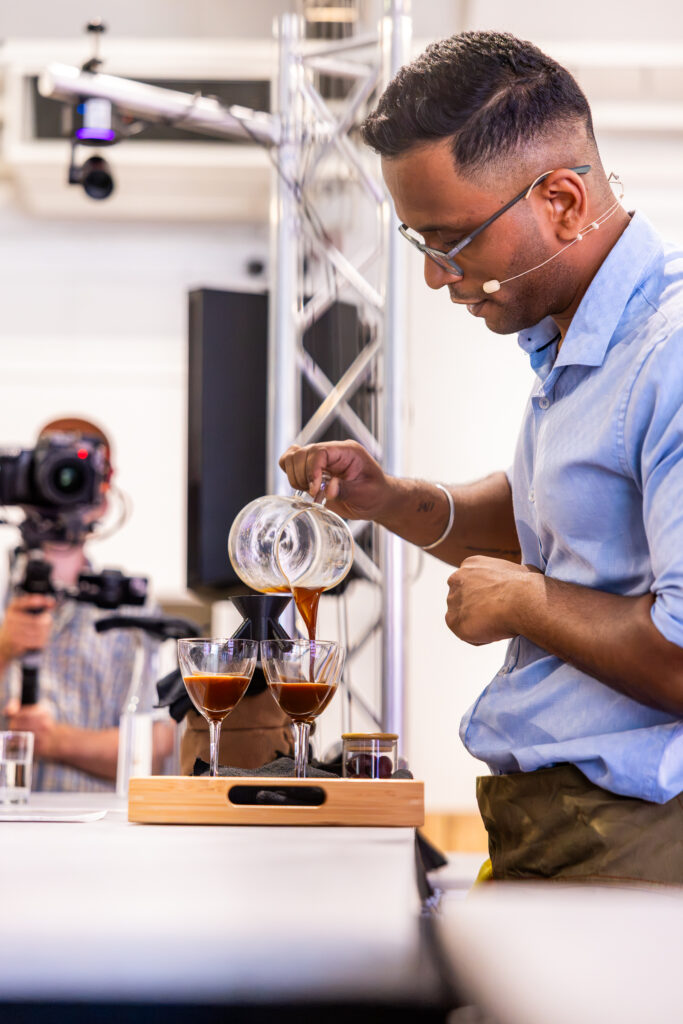
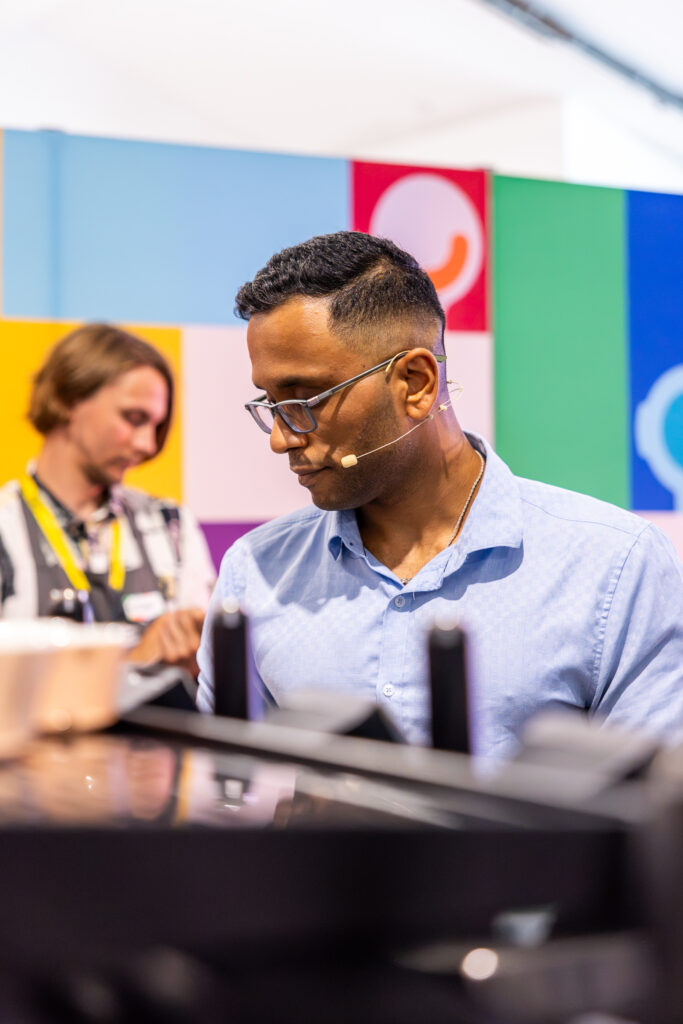
What are some common misconceptions about our industry that you’ve encountered, and how do you address them?
I often meet friends who still work in corporate jobs, and they sometimes imagine coffee as this really cool, fun job where you get to make drinks, meet people and do exciting things all day. Which, to be fair, is partly true! But there’s also a lot of cleaning, maintenance, lifting, preparation and repetitive work involved. It’s a very physical job, and there are so many tiny details you have to be mindful of every single day.
I think the biggest misconception is that it’s “just coffee”, so it must be relatively easy. But good coffee comes from lots of small things being done consistently well. All those little details eventually add up to the quality of what’s in the cup. And hospitality itself can get incredibly busy and demanding. It’s important to remember that while it’s an exchange between a business and a customer, it’s also a human interaction. Kindness and empathy need to go both ways. Coffee is the medium, but it’s ultimately a human connection.
What are the current trends in cafés in your region? Are there any trends you promote yourself and would like to see more often in other places?
I think signature beverages have really taken off, which is quite exciting to see. But one thing I’d personally love to see more of is cafés staying open later. I understand that café economics are challenging and extending opening hours isn’t always straightforward. But I think there could be an opportunity to create additional business while also giving people another kind of social space. Not everyone drinks alcohol or wants to socialise in pubs and clubs.
Having cafés open after work could create a different kind of third space, where people can meet, read, work, have conversations or simply spend time together. And what’s interesting is that the same café could have two different personalities: one during the day and another in the evening. I’ve seen a few cafés experimenting with evening openings and night café concepts, and I hope it’s something that continues to grow.
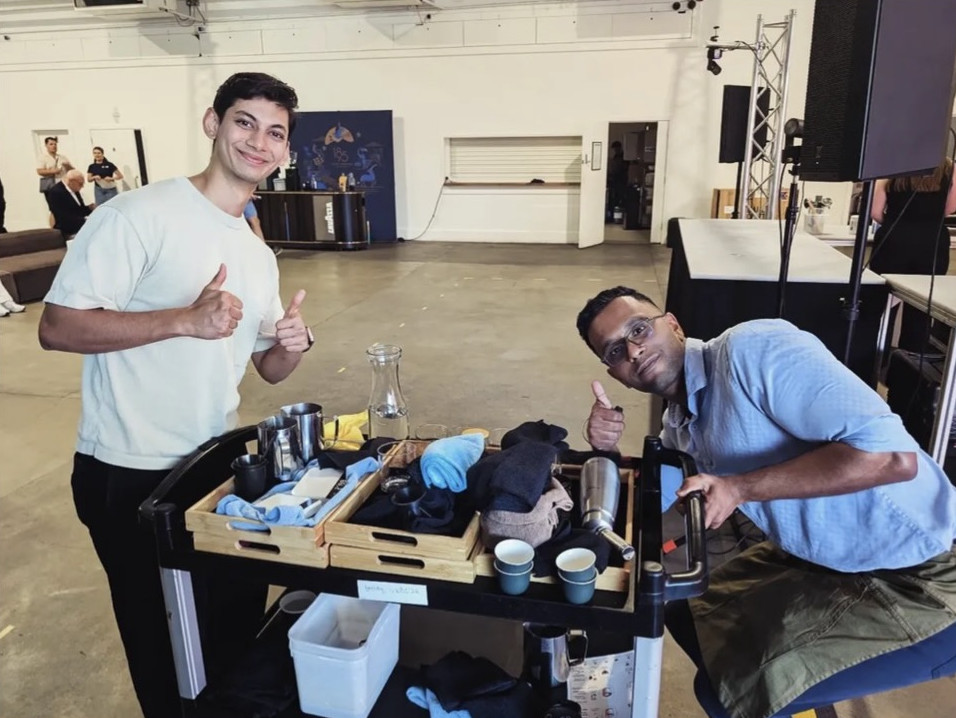
You have mentioned that you are lucky to have inspiring close friends in coffee. Let’s give them a shout-out 🙂
Oh gosh, there are so many!
Nikol Novotná is one of my closest friends, and she’s incredibly good at what she does. Her career and the way she’s approached things have always been inspiring to me. Then there’s David Rickenback from Victoria Arduino. A coffee competition judge and really a jack of all trades. He’s a legend, and I really admire the way he manages things and tries to do them the right way, most of the time! And Rachel Kua, a barista at Special Guests, Similar to me, first year full-time in coffee, recently won the UK Hario Brewers Cup, and will be representing us in Japan!
There are honestly so many more people I could name, but I’m going to stop at three before I accidentally leave out someone close to me and they come after me!
You have some amazing achievements in championships yourself. Can you tell us more about them?
I mean, nothing quite title-worthy yet! I haven’t won any major titles. But I competed in the 2026 UK Barista Championship during my first full-time year in coffee and managed to make it to the finals, finishing in the top six.
Which, even now, feels a bit mad to say out loud.
In my head, I made it to the finals against quite a few odds, but I was also incredibly fortunate to have some of the most amazing people supporting me throughout that journey. The people I met, the things I learned and the experiences I had along the way meant far more than just the final result.
I’d also love to mention the Coffee Knowledge Hub Youth Academy as an achievement, which I’ve been fortunate enough to be part of this year. The Youth Academy supports people pursuing careers in coffee, and it’s given me an incredible opportunity to learn, meet inspiring people and grow both professionally and personally. I think opportunities like these can make a massive difference, especially when you’re relatively new to the industry.
What are the next championships you’d like to compete in?
I don’t necessarily see competitions purely in terms of winning championships or collecting titles. Of course, we all aspire to have those titles in front of our names, but I don’t think they should define us. For me, whatever choices I make, whether it’s competing or something else, should ideally set me up for the best possible learning pathway.
At this point in my career, competitions give me the opportunity to be amongst some of the most passionate and talented people in the country, go head-to-head with them and see how I measure up. It’s a great way of reflecting on what’s possible and how far I can push myself. I’ll be competing in the UK Barista Championship again, and I have my eyes on a few other competitions too. But we’ll see how things unfold. But I would love to be on the Coffee masters stage next year at the London Coffee Festival. One competition at a time, always.
What, in your opinion, is the most important thing to have in mind when you start to compete in coffee championships?
First, understand the amount of effort you’ve signed up for. The standards are incredibly high, and if you’re not prepared to put in the work, you’ll most likely get found out on stage.

Secondly, understand the rules. They’re there to help set you up for success, but if you’re not familiar with them, you can end up making some really avoidable mistakes that might affect your confidence.
And finally, I’d say break the whole process down into learning milestones rather than just chasing points.
That’s something I’ve tried to do myself. For example, if I don’t know how to split milk properly or pour it consistently, I’ll spend a few days working specifically on that. By the fourth day, hopefully I’m a little better. Then I can start putting two and two together and move on to the next thing. Eventually, those small improvements build momentum. I think approaching competitions as an opportunity to learn, rather than purely to score points, makes the whole experience far more meaningful.
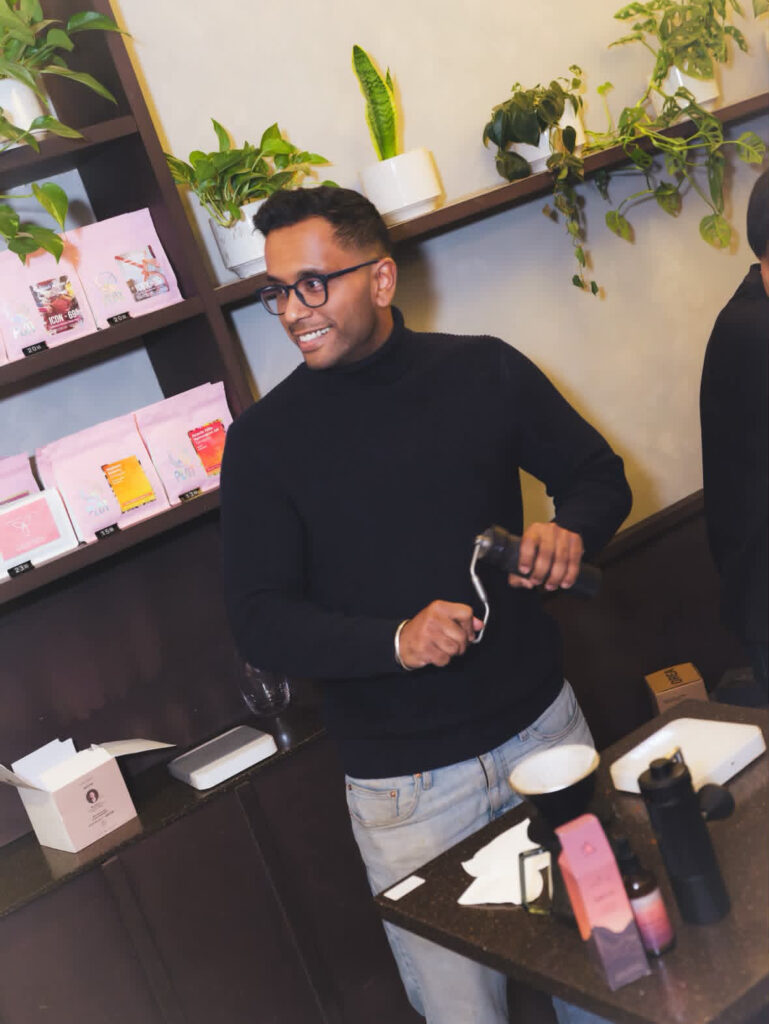
If there were one piece of knowledge about coffee you’d like everyone to know, what would that be?
That coffee starts as a fruit! I know it sounds almost silly, but I think it’s a really important thing to understand.
There’s an extraordinary amount of effort involved in taking coffee from a fruit growing on a farm to the cup of coffee you’re drinking at your local café. By the time your barista grinds the beans for your everyday flat white or latte, that coffee has already been through so many different hands, processes and decisions.
I think understanding that journey helps us appreciate how complicated the coffee supply chain really is and how much work goes into making an everyday cup of coffee possible. The supply chain isn’t perfect, and questions around pricing, sustainability and fairness are incredibly complex. I wouldn’t pretend to have all the answers. But I’d love for more people to understand and appreciate the amount of effort behind their cup of coffee. And hopefully, in an ideal world, that appreciation goes a long way.
What are your passions and hobbies apart from coffee?
I love getting a workout every now and then, meditating, watching movies and reading books. All that kind of boring stuff! And then there’s football. I’m a massive Chelsea fan, so if I’m not watching them on TV, I’d love to be supporting them live. I’d also love to travel a lot more, so hopefully travel becomes a bigger part of that list soon.
Where in London do you find your best inspiration?
I actually love visiting cocktail bars and old pubs. Not necessarily just for the drinks, but to see how differently they approach hospitality, service, workflow and the overall experience. I’m always curious about how a place creates its own culture, atmosphere and soul. It’s interesting to see how different spaces bring people together.
When I’m looking for something quieter, I love a good park. St James’s Park is one of my favourites. I also enjoy sitting somewhere by the river or canal, birdwatching, people-watching or just reading a book. And the beautiful thing about London is that there’s almost always a museum, gallery or something interesting around the corner. Sometimes I just love walking around Central London without much of a plan. Preferably when it’s quiet!
What coffee challenges are you looking forward to? Any new projects or collaborations?
Quite a few, actually! We’re working on a really interesting specialty Robusta blend through our partnership with a farmer in Uganda, which is something we’re particularly proud of and excited to release. I’m also really curious to see how the pre-batched espresso concept develops in the UK and how people respond to it. It’s something I’d love to follow closely as the market evolves.
On a more personal level, I’d love to collaborate with some of my friends who own cafés and create experiences or projects that represent both of us equally. I think there’s something really special about bringing two different personalities and approaches together and seeing what comes out of it.
Longer term, I’d love to find ways of giving back to coffee-growing communities, perhaps by co-operating with or adopting a farm and supporting local education, health care, and general well-being. I don’t know exactly where my career will take me, and I don’t particularly want to set limits on what’s possible. I think the important thing is to keep learning, growing and, hopefully, passing it on. You find that spark, you become the light, and then you pass it on.

Quick Fire Questions for Goldy:
Filter coffee or espresso-based?
Filter coffee.
Milk coffee or black coffee?
Black.
The most underrated coffee drink?
Split shot.
The most underrated coffee brewer?
Clever Dripper.
How do you make coffee at home?
Pour-over.
Favourite piece of coffee equipment?
PUQpress!
No.1 café in Europe that every coffee geek should visit?
Scenery in London.
What’s your favourite city to have a specialty coffee tour outside of “your city”, why?
I love the coffee culture in my hometown, Nagpur, and Bengaluru. Overall, there’s a massive boom in Indian coffee culture!