
Valeria´s first serious encounter with coffee happened in 2010 in Donetsk, Ukraine, where a barista would shout across the bar that the coffee ´was dying´ and someone needed to drink it right now. It was the moment she understood that coffee could be treated as something fragile and alive.
Her background is not the typical barista story. A proud Ukrainian who has been working in hospitality since 2004, Valeria was already a restaurant director by her late twenties, managing operations across restaurants and entertainment venues, before coffee pulled her in a completely different direction in 2014. Within a week of her first serious conversation about single origins and roast profiles, she had read several books and signed up for professional workshops. That pace of learning never really slowed down. Competitions, judging, SCA Ukraine leadership, roasting, education: she has moved through the industry with the methodical curiosity of someone who needs to understand how every part of the system connects.
That instinct has followed her ever since, through more than a decade in the industry, across Ukraine and now Berlin, where she works as Head Barista, Roaster, Brewing Trainer, and recently Assistant Director at Röststätte Berlin. What Valeria has built is not only a career but a perspective. For Valeria, coffee is not a single discipline but a language, one that links people, product, and experience into something coherent. She teaches it that way, judges it that way, and inspires it that way. Good coffee, she says, is about balance, not intensity. The same can be said of her!
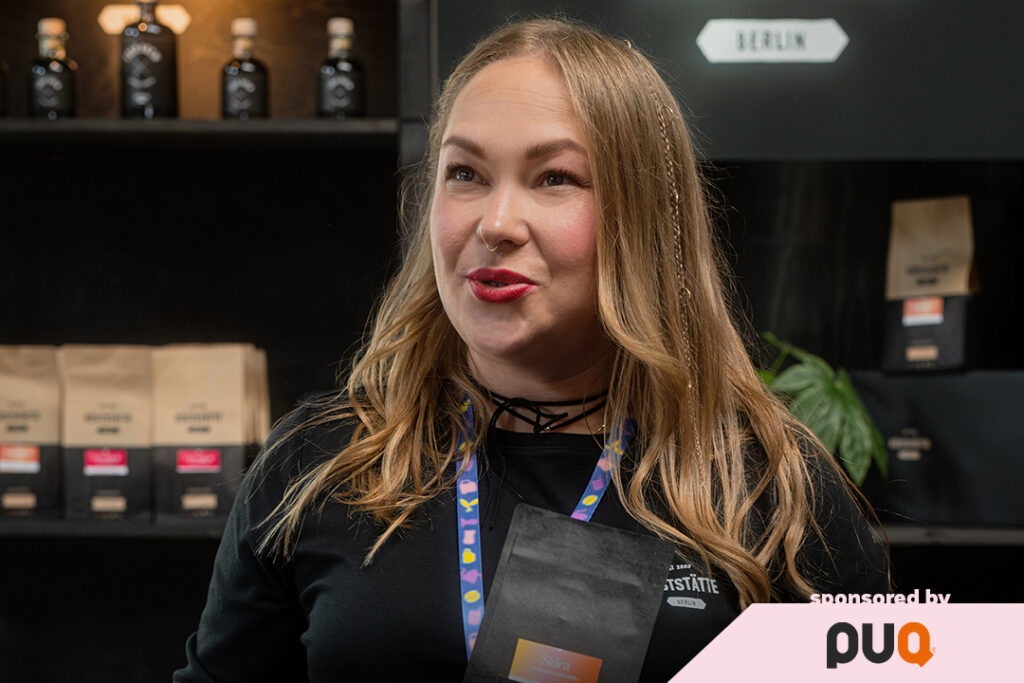
Valeria, what is your first memory with coffee?
My first memory of specialty coffee goes back to 2010 in Donetsk, Ukraine. At that time, I was working as an administrator in a restaurant that was building a new concept. It was quite unusual for the industry back then – we had a clear separation between the restaurant, the bar, and a dedicated coffee area. And there was this barista – completely obsessed with coffee. What I remember most is his voice from behind the bar, almost shouting: “Take the coffee now! It’s dying! You have 30 seconds! Where is the service?!” It wasn’t just noise – it was passion, almost intensity about quality. That was the first time I realised that coffee could suffer if it’s not treated properly. That moment stayed with me. After that, I started drinking coffee from that bar, and slowly became curious about what makes this industry so special.
What inspired you to pursue a career in the coffee industry, and how did you get started? What did you do before coffee?
My entry into the coffee industry happened completely by chance. In 2014, my friends who were opening a coffee shop invited me to join their project. At that time, I honestly had no idea how coffee shops worked – my background was entirely in restaurants and nightlife.
I have been working in hospitality since 2004. Like many in this industry, I started as a waitress. By the age of 20–21, I had already become a restaurant administrator. After finishing university, my career progressed quickly – and by 2008, I was a restaurant director. Later, I held management positions across restaurants and entertainment venues. Everything changed in 2014, during a period when both my country and my personal path were going through major transformations. That’s when coffee unexpectedly entered my life.
I remember after that very serious meeting about selecting coffee for the new project, I asked their roaster where he actually knew all of this from. He was talking about single origins, blends, and roast profiles – terms that meant absolutely nothing to me at the time. But instead of feeling lost, I felt curious. He shared his sources with me, and I went home and started reading everything I could find. Within a week, I had gone through several books and signed up for professional workshops. From that moment, I entered the coffee world deeply – and I simply couldn’t stop!
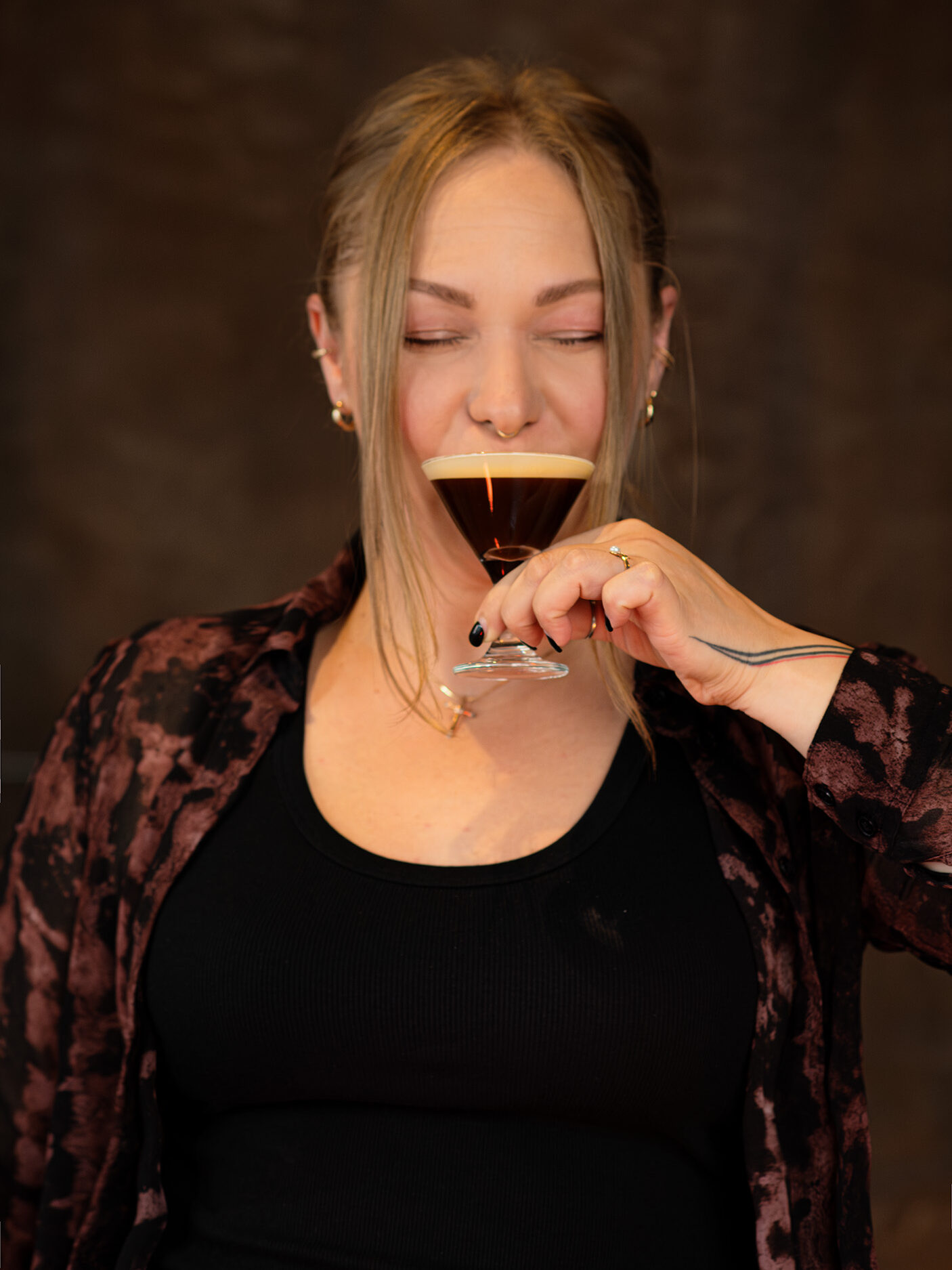
Can you walk us through your coffee career?
My journey in coffee has been very organic and at the same time quite fast-moving. I came into the industry with a strong background in management and hospitality, so at first I looked at coffee through the lens of operations. But very quickly it became clear that coffee is a completely different language – with its own depth, precision, and culture.
I started working in a coffee environment where I learned the basics: bar operations, extraction, workflow structure, and product understanding. For me, it was important not just to manage processes, but to truly understand the product from the inside. Then came a period of intensive learning – courses, certifications, hands-on practice, and continuous development of sensory and technical skills. I learned a lot from practitioners and through everyday service.
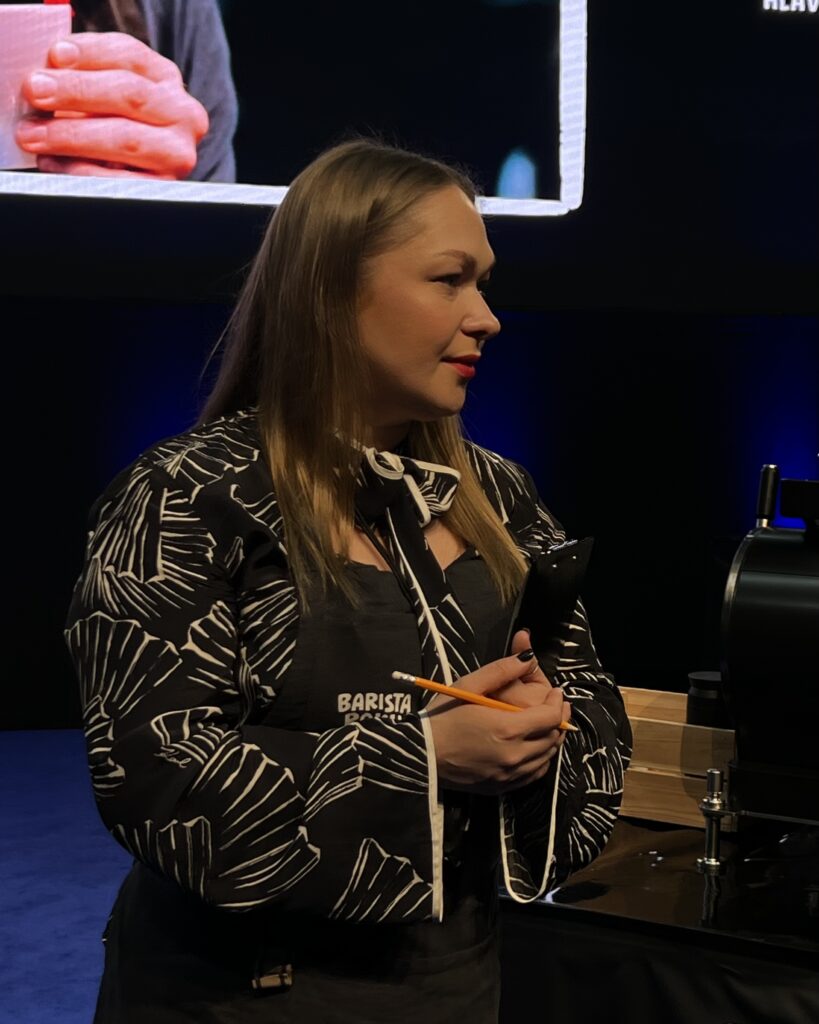
Over time, I moved from controlling bar operations to training teams within an established project, as well as developing standards and contributing to the growth of coffee-focused initiatives. An important chapter of my journey was connected to coffee competitions. I first participated in them as a guest in 2015, and it became a completely new window and real discovery for me. Later, by diving deeper into rules and structure, competitions gave me discipline, clarity, and a deep understanding of precision and detail.
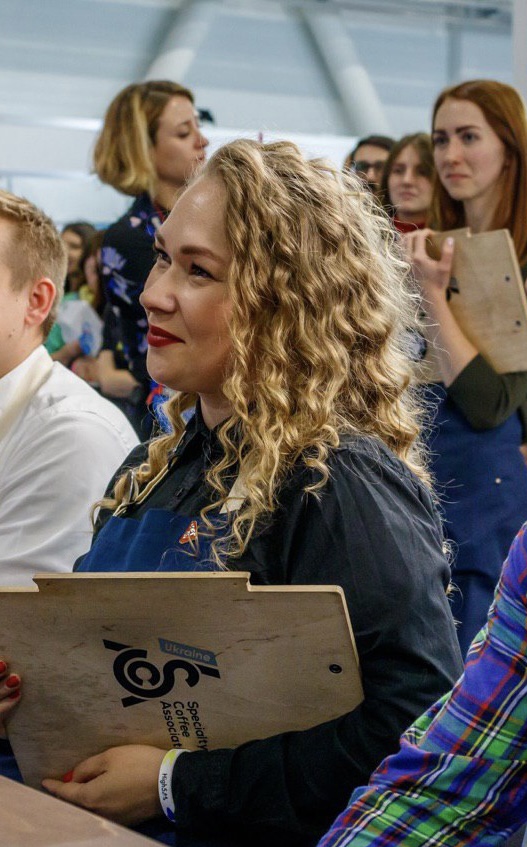
A very meaningful step followed when I transitioned into judging (thanks to a wonderful coffee lady with a capital letter). This opened a completely new perspective – the ability to look at coffee not only through execution, but through evaluation, balance, and systems. It is a whole universe, and entering it was not as easy as it may seem. After another important encounter with the then-active coordinators, I became part of SCA Ukraine in the role of Membership Coordinator.
At the same time, the founders of that very first project – who are also my friends – began to grow and expand rapidly, and I became part of what is probably the most loved and meaningful project to me, working as a network operations manager for eight years. This continued until political circumstances eventually separated us. But for me, it was more than a project – there are experiences like that you don’t replace. It is a kind of love that stays with you forever.
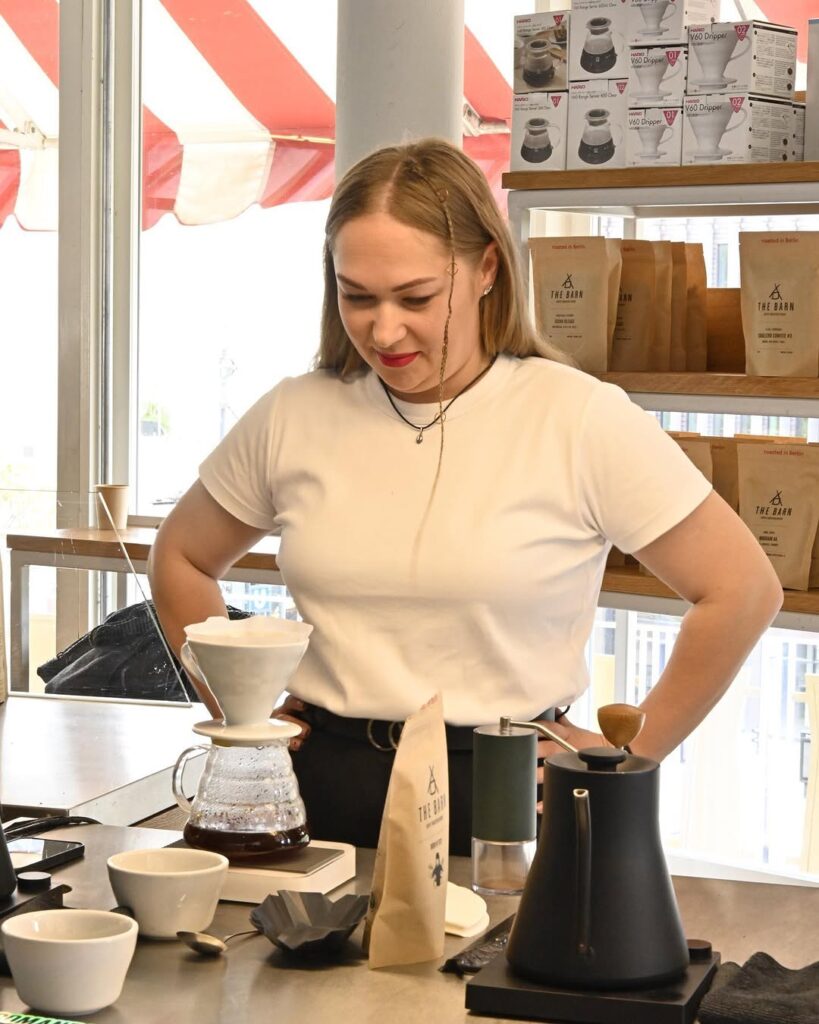
the German Comandante Championship.
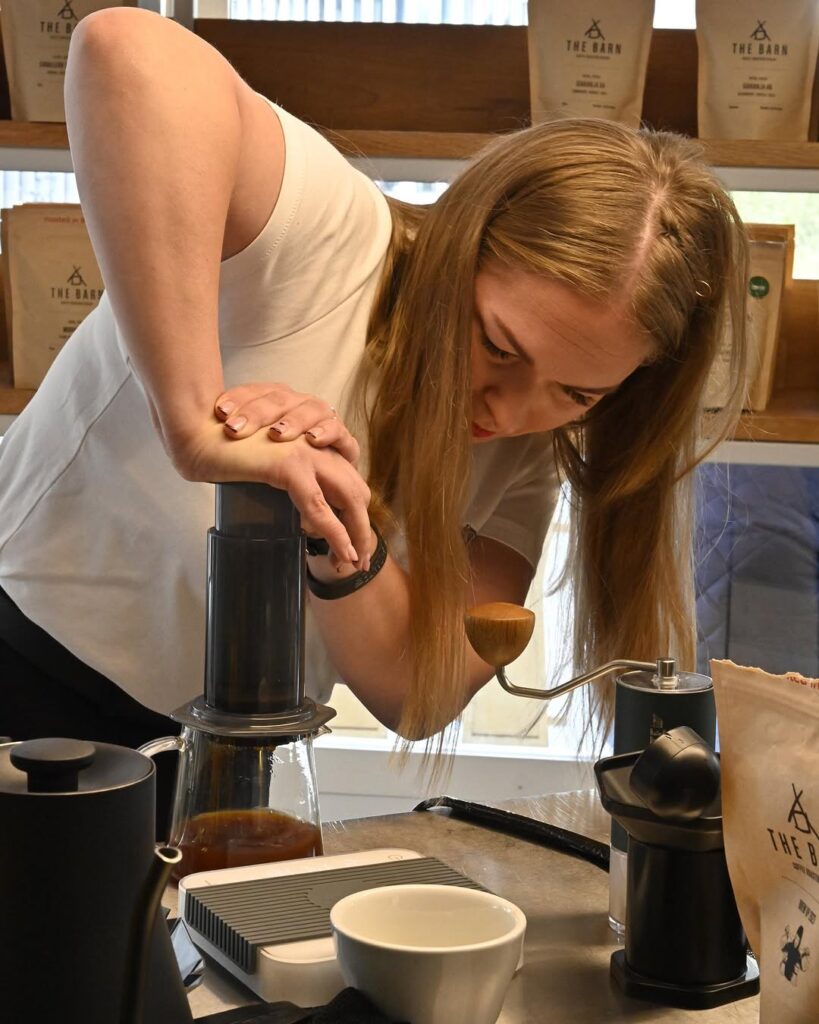
the V-ce Champion! Photos by Anna Sokolova.
Tell us a bit about the place you work at. What is your role there?
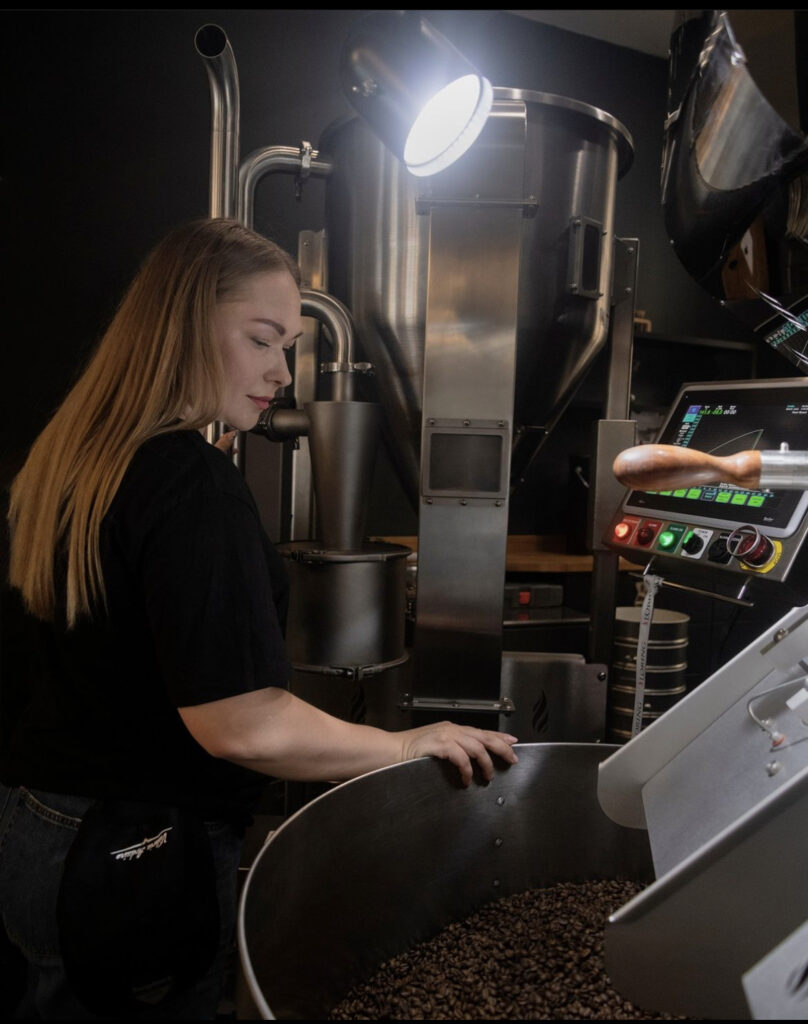
Right now in Berlin, I work at Röststätte Berlin – a well-known coffee company founded back in 2003. In this company, I combine several roles. As I mentioned in a recent interview, I’m a multidisciplinary coffee professional, hihi! Head Barista, roaster, and a trainer for my favourite course – manual coffee brewing.
For me, coffee is not a single role, but a system where everything is connected: people, product, and experience. I work in a dynamic environment with highly skilled professionals, where quality and consistency are essential. The goal is always the same – to ensure that the guest experience fully reflects the quality of the product.
What is your favourite part of the day at work, and why?
The morning rush. It’s intense, fast-paced, and very honest. You can clearly see how the team functions, how decisions are made in real time, and how important details are. Roasting days are also a completely separate form of focus – almost like meditation.
How do you stay motivated and inspired to keep improving your coffee-making skills and grow within the community?
Curiosity. In coffee, there is no endpoint. There are always new variables, new coffees, new approaches, and new equipment. And of course – people. Conversations with professionals in the industry are a constant source of inspiration.
The people who inspired me to work with coffee and to explore it in depth were the roasters and a sales manager of a well-known company in Ukraine at that time, Evgeniy Oleynik and Misha Burdin. The people I started the project with in Kyiv, who are also my friends and part of my most beloved project, 1900 Coffee, are Oleksandr Pinchuk and Anton Polishchuk. And my coffee lady, life coach, and podcast partner – Marina Penzeiy!
The coffee love that always inspires me – the SCA Marketing Coordinator, World Championship Photographer, and my consulting partner, a person who has been by my side in life and has changed it – Sokolova Anna.
And the people who gave me a second chance at life in Germany, who are also my founders, mentors, and close friends, are Yvonne and Ivo Willer. The people who inspired me to continue working with coffee are Izabella Fortini and Vladislav Demonenko. These people are much more than just exceptional professionals and colleagues in the coffee industry for me — one love.
This is the essence of my connection and my philosophy, not only knowledge, but the people who surround me. And there are many more names like this along my journey.
You have been very active in SCA Ukraine. Can you tell us about it?
This was an important part of my journey. As a Membership Coordinator, I worked with the community, supported educational initiatives, and helped connect people within the organisation. It reinforced the idea that coffee is not only about technical skills, but also about interaction, collaboration, and community.
What are some common misconceptions about our industry that you’ve encountered, and how do you address them?
That it is “just making coffee”. In reality, it is a highly complex profession that combines science, sensory skills, communication, and emotional intelligence.
What are the current trends in cafes in your region? Are there any trends you promote yourself and would like to see more often in other places?
I see a growing interest in non-alcoholic coffee-based drinks, more attention to texture, and a stronger connection between coffee and gastronomy. Decaf coffee. Personally, I would love to see more simplicity executed at a very high level – clean flavours, balance, and respect for the product.
You also teach and organise coffee courses! Which skills do you like to teach the most?
Extraction and flavour understanding. When people start truly tasting coffee and not just drinking it – that’s the turning point.
You have been competing in the past, but nowadays you are more active as a judge. Do you prefer to judge?
I appreciate both, but judging gives me a broader perspective and a continuous learning curve.
What are the three things you love about judging coffee competitions? And what is one thing you don´t like and would love to change about them?
I love: – attention to detail – diversity of approaches – the learning process that never stops. What I would change is the accessibility and perception of competitions – they can sometimes feel overly intimidating. I would love to see more openness, inclusivity, and a stronger focus on education rather than pressure.
If there were one piece of knowledge about coffee you’d like everyone to know, what would that be?
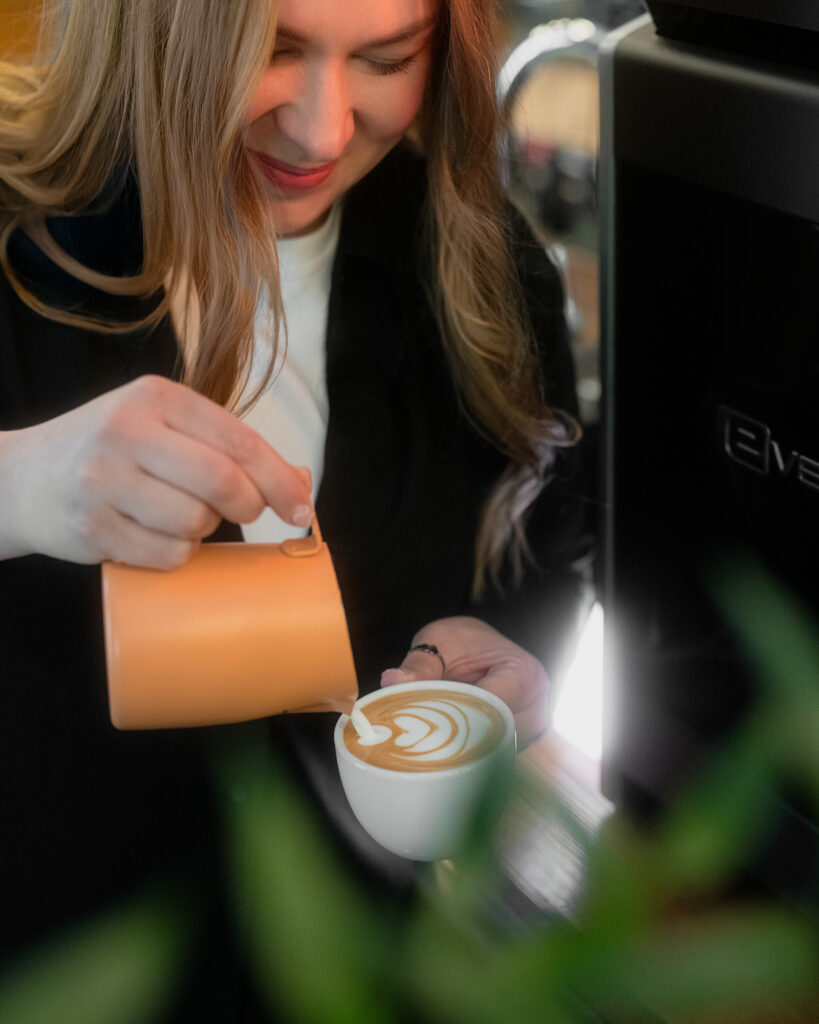
Good coffee is about balance, not intensity!
What are your passions and hobbies apart from coffee?
Travelling, observing people, aesthetics, and storytelling!
Where in Berlin do you find your best inspiration?
In people. I’m surrounded by incredibly talented individuals across different fields. Also in walking through different neighbourhoods – Berlin is a city of contrasts, and especially in spring, it becomes very inspiring.
What coffee challenges are you looking forward to? Any new projects or collaborations?
I want to continue developing educational projects and further connect coffee, service, and storytelling. I also plan to return to podcasting – those are personal directions. More structured and larger projects will be announced gradually on my page!

Quick Fire Questions for Valeria Kutuzova:
Filter coffee or espresso-based?
Filter – because it gives coffee space to speak.
Milk coffee or black coffee?
Black. Always.
The most underrated coffee drink?
Decaf. When it’s good, it’s seriously good!
The most underrated coffee brewer?
Delter Press – it’s a less common immersion-style brewer, but I like it for its controlled extraction environment, which enhances sweetness and creates a very round and structured cup with minimal variability.
Favourite piece of barista equipment?
My grinder – everything starts (and ends) there.
How do you make coffee at home?
V60.
No.1 café in Europe that every coffee geek should visit?
I don’t believe in a single No. 1 café in Europe. Instead, I would say it’s about cities with strong coffee cultures – Copenhagen, Berlin, Amsterdam, and London – each of which represents a different expression of specialty coffee.
What’s your dream place to have a coffee tour?
Copenhagen — because it feels like coffee is treated with calm precision and respect.