
Tereza’s first memory of coffee is a teaspoon of sweet black coffee, slipped to her secretly by her grandmother when she was three or four years old. It is a small detail, but it tells you something important about her relationship with the drink: it has always been bound up with warmth, with people, and with the quiet joy of being let in on something. Twenty years later, that same instinct, to share, to welcome, to bring people closer to something they did not know they needed, is still at the heart of everything she does.
Her career reads like a map of the Czech specialty coffee scene itself. She was there at the very beginning, winning the National Barista Championship in 2010 and representing the country at the World Barista Championship in London, then spending years building Doubleshot’s training centre from the ground up into one of the most respected coffee education spaces in the region. Behind the bar, on the competition stage, and in the classroom, she has shaped the way an entire generation of Czech baristas thinks about their craft.
But what makes Tereza’s voice particularly worth listening to right now is what she has been thinking about away from the bar. Trained as a strength coach and deeply committed to barista physical health, she is one of the few people in the industry willing to talk seriously about the body behind the coffee. Add to that a recent milestone chapter of full-time motherhood that she describes as the most intensive leadership training she has ever attended. And you have someone who brings a rare combination of expertise, honesty, and hard-won perspective to some of the conversations the coffee world finally needs to have.

Tereza, what is your first memory with coffee?
My very first memory takes me back to when I was about three or four years old. I remember playing on the floor under the table, and my grandmother would secretly slip me a teaspoon of very sweet black coffee – the exact thing I kept begging her for over and over again.
What inspired you to pursue a career in the coffee industry, and how did you get started?
From the very beginning, I saw working in a café as a great opportunity to connect with people in a pleasant environment. I started out at Coffee Heaven, a Polish coffee chain that has since closed, but which was a dominant player in the Czech market at the time. Back in 2008 – just before the specialty coffee scene really took off in the Czech Republic – I was studying Andragogy (professional development) and Human Resources, so working at the café was initially just a part-time job alongside my studies.
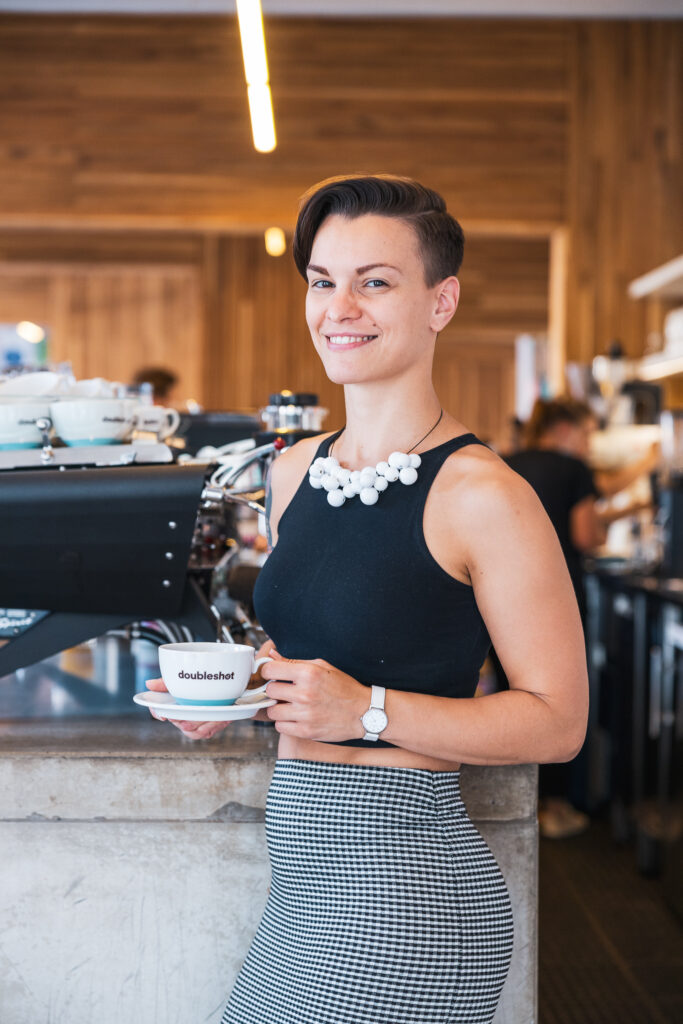
Can you walk us through your coffee career?
In 2010, while representing Coffee Heaven, I took part in the National Barista Championship. Thanks to a somewhat unexpected win, I had the honour of representing the Czech Republic at the World Barista Championship. That victory opened doors for me into the emerging specialty coffee scene.
Later that same year, I joined forces with Doubleshot, which was the very first specialty coffee roastery entering the Czech market. I spent several years as the head barista at Můj šálek kávy and was instrumental in establishing our dedicated education center. From 2015, I moved into a full-time role leading the training centre, focusing on what I had always felt was my greatest strength: sharing knowledge clearly and effectively, whether with professionals or enthusiastic home baristas.
I also explored other competitive barista disciplines before eventually transitioning into the role of a technical judge, which I found incredibly rewarding.
Tell us a bit about your current role.
I have to start this by saying that my current ‘workplace’ is the playground, the kitchen, and the living room, as I am currently taking some time off to care for our daughter full-time. That said, in my role at the training centre, I was responsible for developing the curriculum for all our courses. I led workshops on everything from espresso, filter coffee, and latte art to onboarding new baristas and conducting advanced classes for seasoned professionals, including sensory training.
My specific specialty, which draws on my background in strength training, is optimising bar efficiency and ergonomics. I led most of these courses myself, while also mentoring colleagues who co-taught with me.
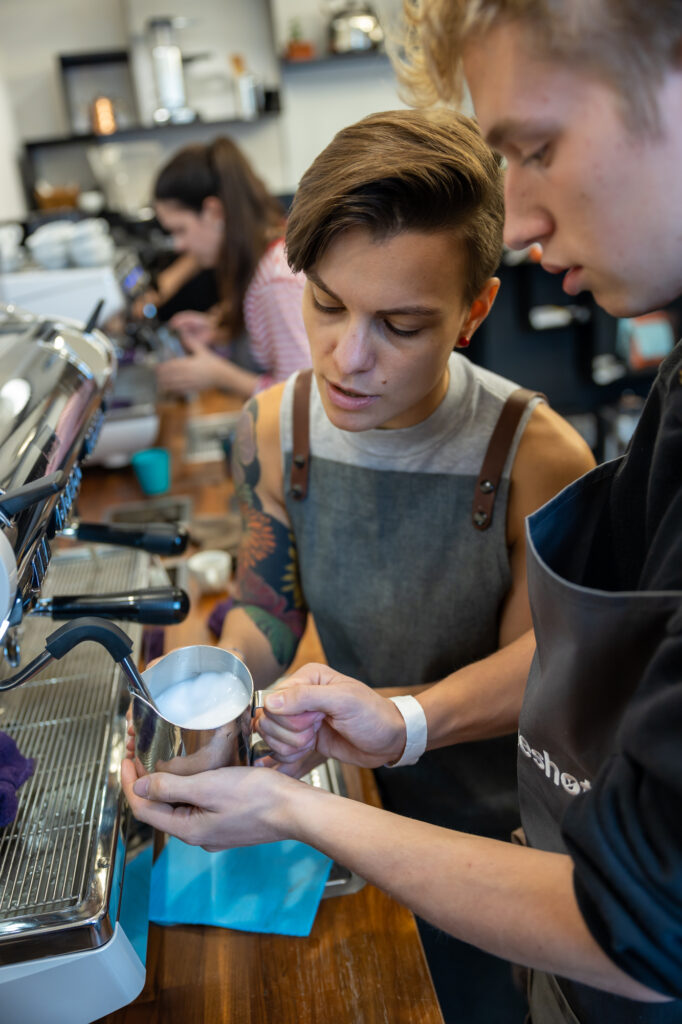
You’ve been with Doubleshot since the beginning, building their training centre from scratch. What does it feel like to watch someone you trained go on and compete, teach, or open their own places?
Seeing the success of my students is the most rewarding part of my work. Every year, I find myself getting emotional at competitions, watching people excel who started their journey with one of our courses, or whom I had the privilege of coaching. But it doesn’t always have to be about those grand goals.
I get just as much joy from meeting participants of our home-brewing classes who proudly tell me that their coffee tastes so much better, that they’ve finally mastered latte art, or that they’ve broadened their knowledge of different coffee origins. Those seemingly small, everyday victories are exactly why I love standing in front of a room full of strangers again and again, asking: ¨What brings you here, and how can I help you enjoy your coffee more?¨
What are some common misconceptions about our industry that you’ve encountered, and how do you address them?
I still occasionally encounter the belief that baristas are snobbish or condescending, that certain orders, like coffee with sugar, offend us. I think that’s a deeply simplistic stereotype. In my courses, I try to teach new baristas that their role is to be a gracious guide, someone who can spark interest and gently show customers how to enjoy coffee in its more natural form. Above all, I believe coffee should bring people joy. In the end, everyone has a right to their own vision of their ‘ideal drink,’ and they are absolutely entitled to it.
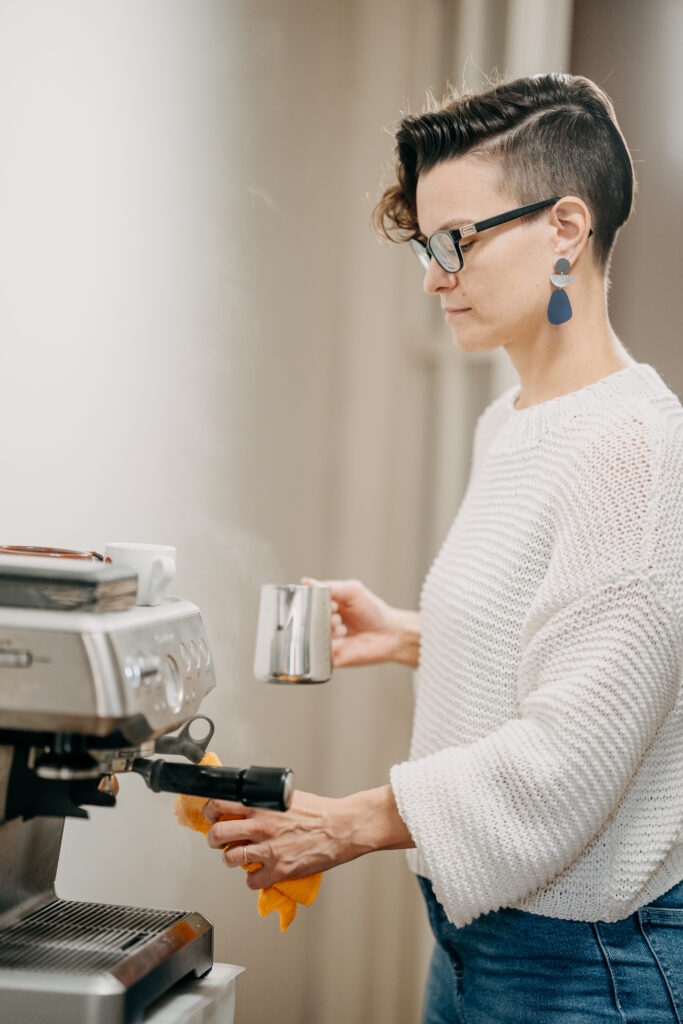
Photo by Lukas Kozel.
Winning Czech Barista Roku and representing the country at the WBC in London – what did competing at that level teach you that no training course ever could?
Above all, participating in a global competition showed me just how easygoing our community really is. It’s incredible how you can instantly make friends and acquaintances from all over the world just because you share the same passion. I’ve always found the vibe at these competitions to be incredibly supportive and eye-opening, rather than hyper-competitive.
Competing, whether on a national or world stage, taught me a level of discipline, organisation, and workflow efficiency I hadn’t experienced before. It also taught me to be fearless and confident when standing behind my product. It was also a fantastic masterclass in performing in front of a live audience, a skill that I later put to good use in my training courses.
You shifted from competing barista to mentor and trainer and described wanting young people to approach coffee “responsibly, healthily, and with fun”. What does responsible mean to you in this context, and why does the industry often get it wrong?
Part of my professional journey has involved visiting coffee-producing countries. Anyone who has spent time on a farm or at a processing station will agree that it is an incredibly valuable experience- one that inevitably changes how you view your place in the supply chain. It’s easy to criticise bean quality after a few months behind the bar and a couple of cupping sessions, but you really need to understand the immense, gruelling labour that goes into every single bean.
We have to realise that we are just one small link in an ecosystem that is far from perfect. But as baristas and professionals who speak directly with our customers, we have great power in shaping their relationship with this fantastic product. We should approach coffee with humility, and we shouldn’t waste it. Even my three-year-old daughter can hum the theme from The Lion King, and she knows that we are all just a part of the circle of life.
If there were one piece of knowledge about coffee you’d like everyone to know, what would that be?
I often spend time explaining just how drastically processing methods influence the flavour profile of coffee. If there’s one thing I’d love for people to realise, it’s that a massive portion of the complexity in their cup is actually the result of microbial activity.
After 15+ years in coffee, what still surprises you behind the bar?
I’m constantly fascinated by how quickly technology is evolving and how much it helps us simplify our workflow and achieve true consistency. At the same time, it still surprises me that, despite all these advancements, the final link in the chain – the human element – can sometimes ruin all the hard work that came before it with just one wrong move.
What does the coffee industry owe its people, and is it paying up?
The coffee industry owes its people decent living conditions and the ability to live with dignity – not just survive – from this beautiful work. This responsibility extends across the entire supply chain, from the farmers who grow the beans to the baristas and staff who serve them. We are moving in the right direction, but we still have a long way to go.
You’re a certified strength trainer and a passionate advocate for barista physical health. Why is this conversation still not mainstream in coffee, and what’s at stake if the industry keeps ignoring it?
I think things are slowly improving. We’re seeing that even though our profession is physically demanding, many baristas are staying active in their free time. At Doubleshot, we have our own running club, my colleagues play volleyball in the summer, or go rock climbing – and whenever I host a course on ‘healthy movement behind the bar’, it’s always fully booked. That said, I’d love to see more of this initiative coming from café owners themselves. I want them to be truly aware of how important the physical and mental well-being of their staff is. At the end of the day, baristas are literally carrying a heavy load on their shoulders – all day, every day – and that deserves to be taken seriously.
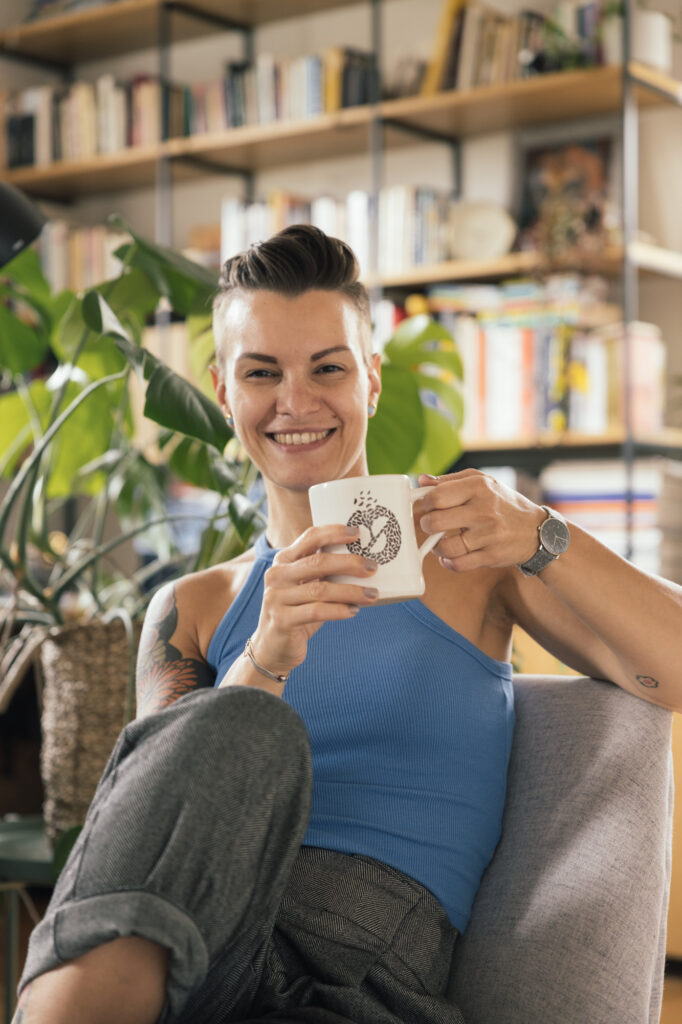
Photo by Václav Miskovsky.
What’s the one movement or habit that every barista should be doing to stay in better health and avoid the physical strains of the job?
When you get home in the evening, lie on your back, put your legs up against the wall, and hold that position for at least 10 minutes. Whenever you walk past a playground or an outdoor gym, hang from your hands for a few seconds and just let your body decompress. Or even better, get a pull-up bar for your home!
You’re bringing topics like parenthood and family into the gastronomy conversation, both for staff and for guests. What aspects do you think should be more discussed and a wider part of the hospitality know-how?
From an employee’s perspective, I’d love to see more flexible part-time opportunities, company-sponsored childcare, and tax incentives for employers. From the perspective of a parent, I’d like to see more societal tolerance for young children and their presence in public spaces.
Unfortunately, the current state of the Czech environment is quite disappointing in this regard; there is a constant pressure for children to ideally be invisible and silent mini-adults. As for what motherhood has brought to my professional life, I actually gave an entire speech on this at the recent Cropster Forum.
In short, I find fascinating parallels between respectful parenting and high-level hospitality: I am much more patient, more forgiving, and I strive to be an equal partner to the customer. I’m also faster and more efficient, and above all, I want the experience to be fun for them. As an educator, I’ve learned to pass on knowledge with even more clarity and patience, and I’m really looking forward to putting all of that to good use in the classroom again.
What does a café or hospitality workplace that genuinely supports parents actually look like, and how far is the industry from that right now? What are the first steps businesses should take in order to be more inclusive in this aspect?
I completely understand and respect that not every venue wants to cater to families with children. However, it really comes down to the details – sometimes all it takes is welcoming staff who make it clear that you and your children are genuinely wanted.
It’s about small, simple acts of flexibility: ‘The table decor is beautiful, but could we move it for a moment for safety? Is it alright if my child eats their own puffs while we wait? May I walk my child around the space under my supervision so they don’t get restless?’ In many other countries, these kinds of things are standard, and the staff will often proactively offer help. Here, I would honestly just be happy if I didn’t feel like my presence was a burden.

Regarding our work environment, we must acknowledge that, as a service industry, our jobs cannot be transferred to a remote or home-office setup. We work weekends, holidays, and nights. However, as I mentioned before, it would be a huge step forward if employers were simply more understanding and willing to offer some operational flexibility – such as shifting start or end times – so that parents can actually manage school and kindergarten drop-offs and pick-ups. I know this might not seem fair to everyone, but I truly believe that raising the next generation is a vital and difficult task that we, as caregivers, have taken on. As a society, we should be supporting each other through that.
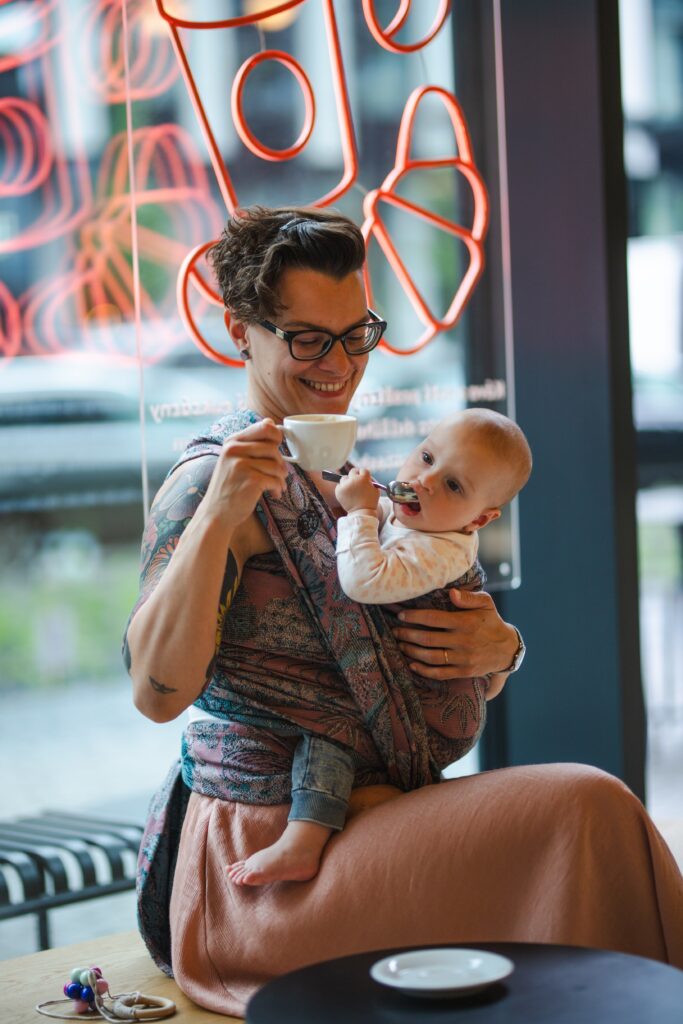
What do you want a young barista who is also a fresh parent to hear from you that nobody told you?
There’s no point in stressing about things in advance. You never know what kind of child you’ll have or what specific things you’ll find challenging, so it’s best not to have any expectations. I personally struggled a lot because I couldn’t return to strength training sooner than two years post-partum.
I had idealised the experience, expecting that I would be able to delegate certain tasks much earlier. However, my child had her own needs, and I decided to prioritise them – and I have absolutely no regrets! I am a huge advocate for secure attachment, and it is truly worth setting your own hobbies and needs aside for a while. Creating a strong bond between parent and child is essential for your child’s development and well-being, and it should be supported. At the same time, it’s crucial to choose a stable partner to raise your child with – someone with whom you share a parenting philosophy, so you can build a team that can support one another.
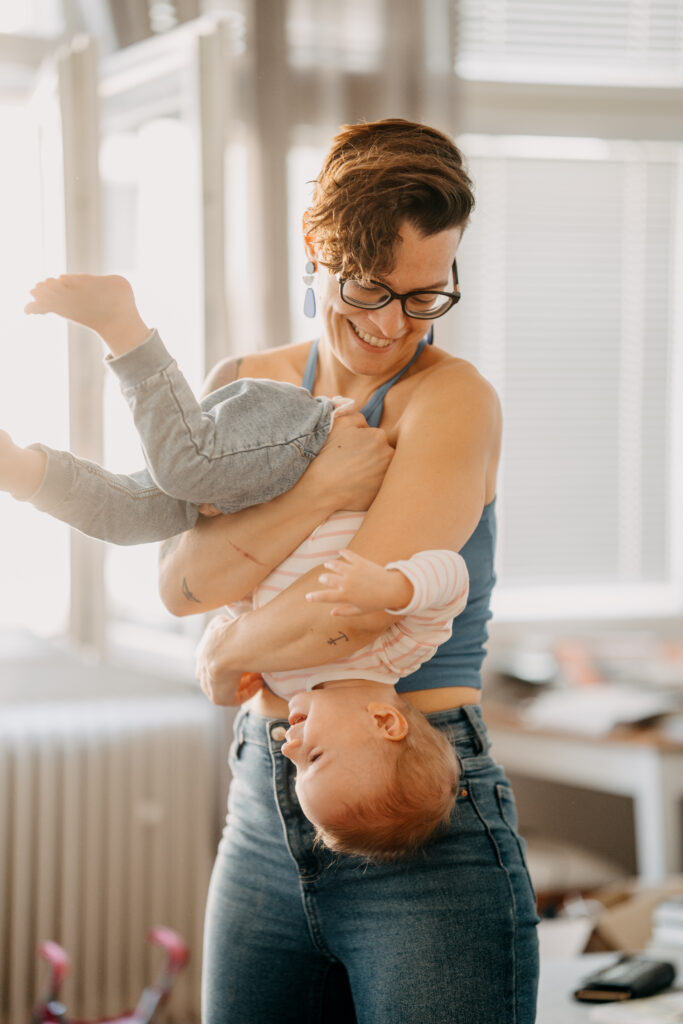
That said, I must add that parenthood isn’t just about sacrifice; on the contrary, it’s an amazing and deeply fulfilling period of life that I am enjoying and am incredibly grateful for. It is also the most intensive leadership training program I have ever attended. I don’t believe parenthood is the key to a happy and fulfilled life for everyone, but if you feel called to this role, look forward to it. I am in awe and happy every single day – and yes, exhausted, too!
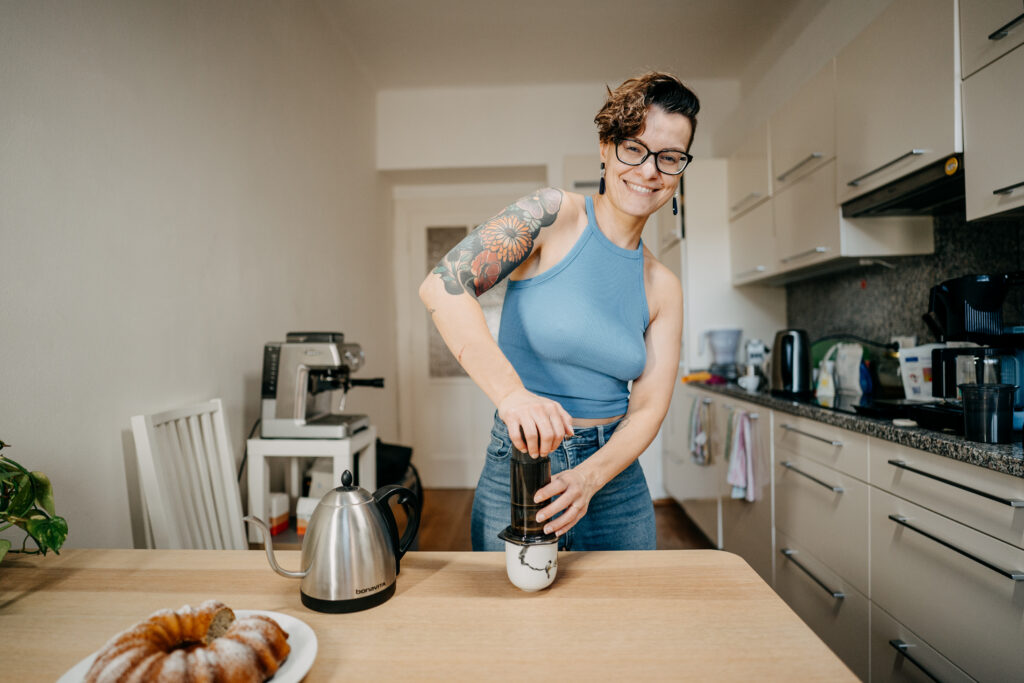
Photo by Lukas Kozel.
Where in Prague do you find your best inspiration?
Since becoming a parent, a whole new space has opened up for me as I’ve searched for leisure activities for my daughter. I’ve been pleasantly surprised by the projects organised by local community centres. These non-profit organisations often support not just children, but also seniors and disadvantaged families.
I truly wish their activities were more widely known and better integrated with the commercial sector. For example, our neighbourhood organisation, Nesedím, sou sedím, organises community lunches, IT consulting for seniors, repair workshops for appliances, and programs for teenagers. That is the kind of place where a great cup of coffee would always be a welcome addition, and I would love to see more of these projects connected to the broader local business scene.
What challenges are you looking forward to?
Right now, my biggest challenge is finding a balance between family and work life – ensuring I can dedicate myself to my family while not losing that part of my coffee identity and continuing to put my experience to good use. I’m open to any projects that align with my values, and I would like to tap into my expertise to support their businesses and staff. I’m really looking forward to returning to teaching courses, and I also hope to get more out in the field. I’d love to help venues optimise their operational efficiency and workflow.

Quick Fire Questions for Tereza Procházková Balá:
Filter coffee or espresso-based?
Espresso-based, cappuccino!
Milk coffee or black coffee?
Milky but with Oatly!
The most underrated coffee drink?
Decaf coffee!
The most underrated coffee brewer?
V60!
How do you make coffee at home?
Espresso machine and Moccamaster.
No.1 café in Europe that every coffee geek should visit?
Kiosek, Prague.