
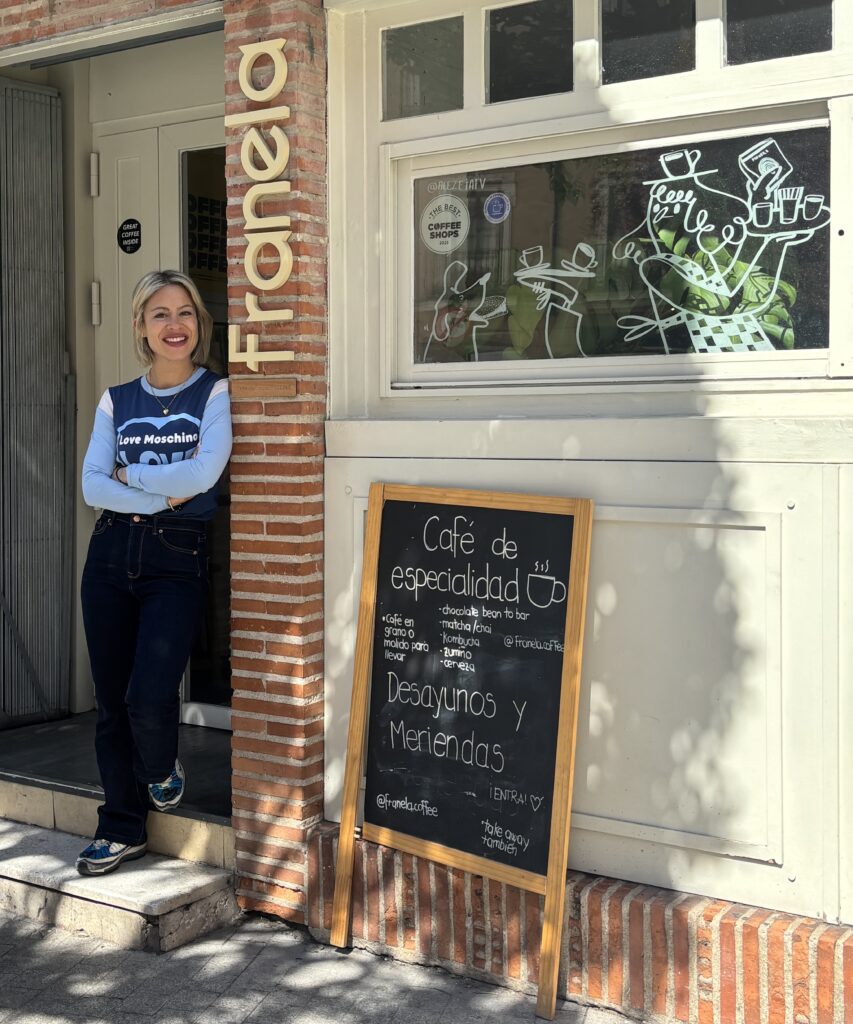
Some people open a café and then run it from a comfortable desk or armchair. Elisa Gutierrez Lopez opens her café every single day, goes behind the bar, pulls the first morning shots and brews filters alongside her team. The owner of Franela and Peseta in Valladolid is not the kind of person who manages from a distance. She is there for her team, leads by example and greets her guests with a warm “Hola cariño” or “Hello baby” before they even reach the counter. In six years, she has built two businesses and a loyal community around them, not through strategy alone, but through the kind of genuine presence that guests can feel the moment they walk in.
Her path into coffee began with a single cup in Málaga that tasted like flowers and changed everything she thought she knew about the beverage. Before that, she had spent years in retail management, leading teams and running points of sale for large companies. That grounding in people and numbers turned out to be exactly the foundation she needed when she decided to open Franela, a specialty coffee shop she describes as her little home kitchen, named after the cloth filter she used to brew her first cup on a farm in Costa Rica.
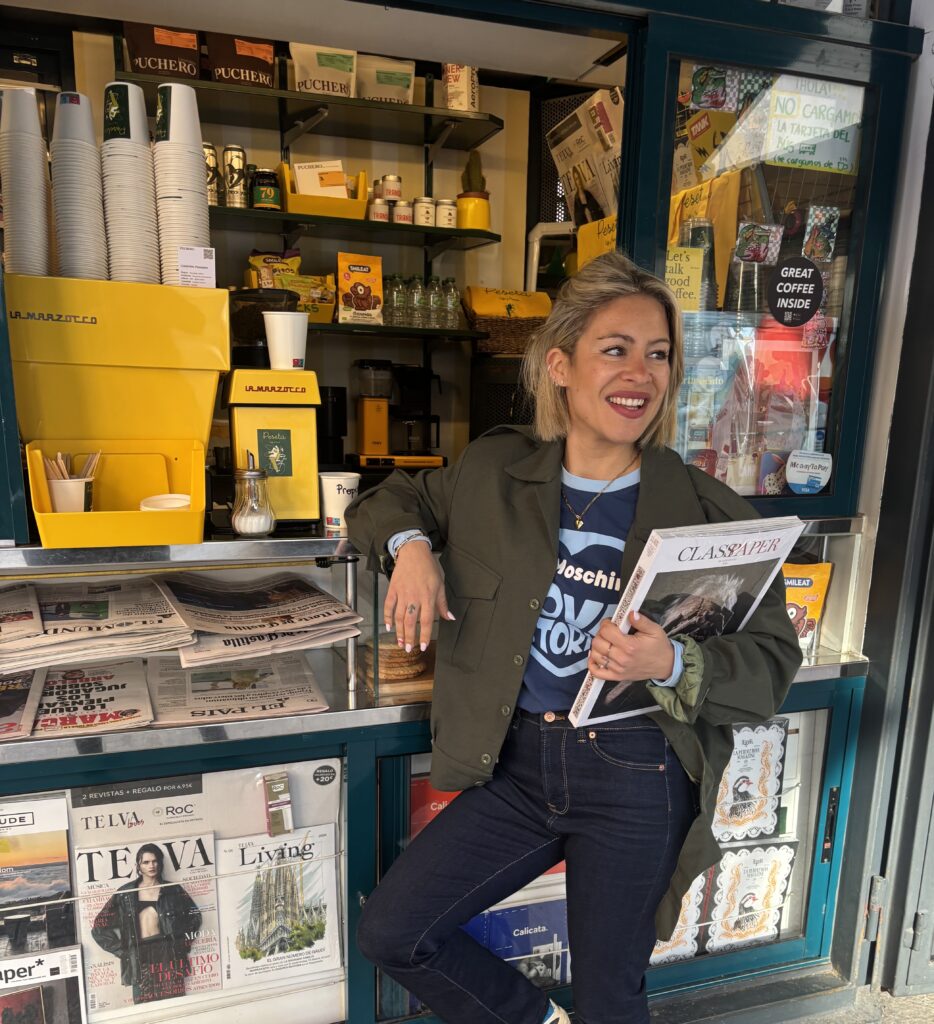
Peseta, her second venture, is something else entirely: a specialty coffee kiosk built inside a vintage magazine newsstand, where customers come for an espresso to go and end up lingering at the window, lost in conversation. Two very different concepts, one city, and one exceptional person running between both with the energy of someone who genuinely cannot imagine doing anything else. Eli treats her guests with genuine love. The warmth is not part of the brand. It is just her.
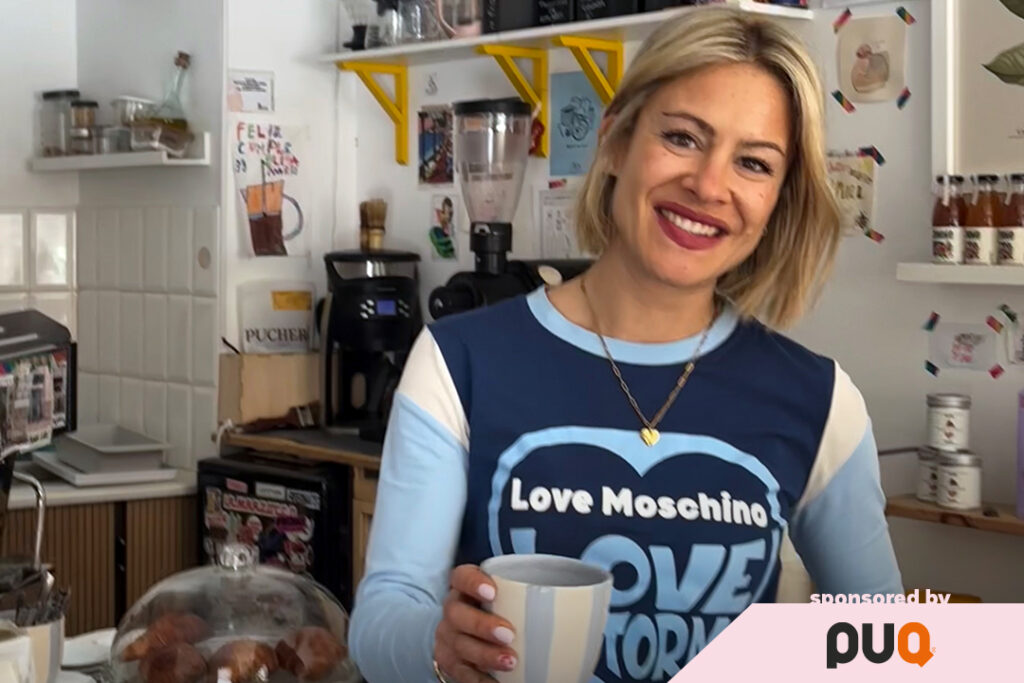
Eli, what is your first memory with coffee?
My earliest memories of coffee are from my grandmother’s house. She always made coffee for breakfast, and when I stayed overnight, she’d let me dip my cookies in it. It’s a memory that fills me with a lot of affection and love.
What inspired you to pursue a career in the coffee industry, and how did you get started? What did you do before coffee?
I’ve always loved coffee. Even before discovering the world of specialty coffee, I used to drink black coffee, especially during my university years. When I started one of my first jobs, I was assigned to Malaga, and that’s where I began to learn about specialty coffee. I fell in love with finally tasting a coffee that wasn’t bitter.
Then I found a specialty coffee shop, not knowing what it was, but the barista suggested I get a filter coffee instead of an Americano. I remember it tasted like flowers, and it blew my mind to discover that coffee could have so many nuances and be so enjoyable. That’s where my adventure began in 2016. Since then, I’ve gone to that coffee shop every day, talked to the barista, and started to learn about the entire value chain surrounding coffee, always trying the coffees she suggested and learning on my own.
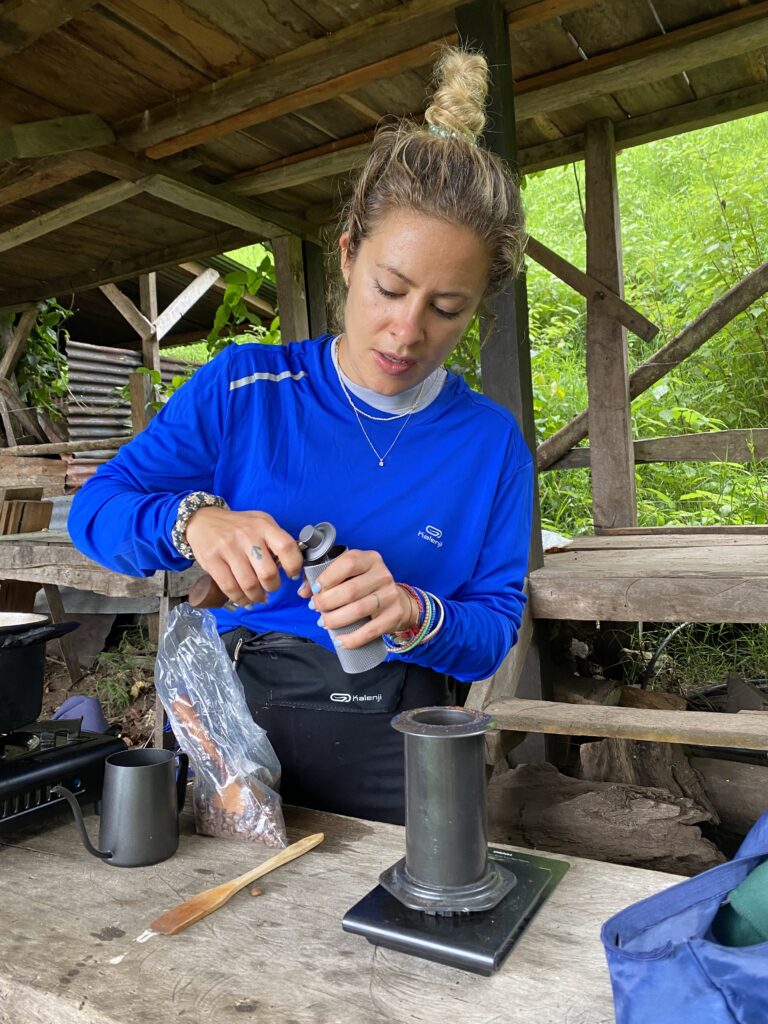
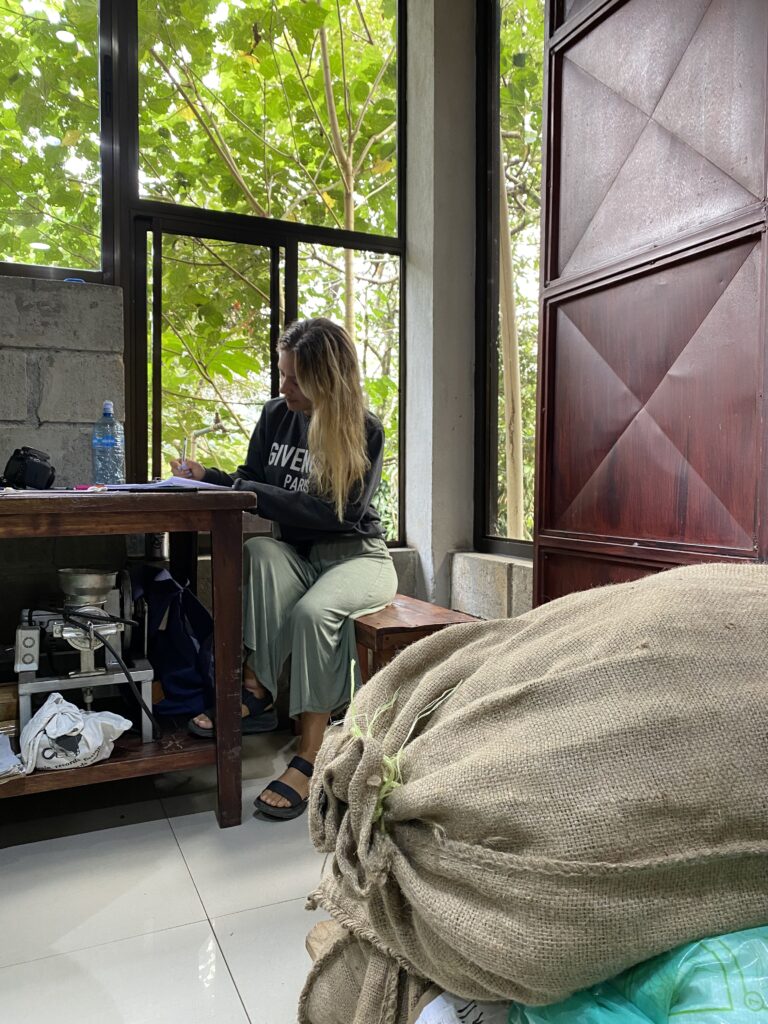
Before entering the coffee industry, I was employed in retail. I worked for two large companies, where I was responsible for team management and development, as well as improving the profitability of different points of sale. This experience has been invaluable in managing my two small coffee shops today. A specialty coffee shop, besides being a passion project & source of enjoyment, needs to be well-managed to ensure the numbers add up.
What was the moment you knew you had to open your own café – was it a feeling, a place, or a cup of coffee?
The moment I knew I had to open my own coffee shop came after I developed a deep passion for coffee, after experimenting and researching on my own and increasingly admiring the value chain from origin to the cup we drink.
I was very fortunate to travel to the source, specifically Finca La Chelita in Costa Rica, and work on a coffee farm there. They taught me to appreciate the bean and value the entire process involved. This coincided with the fact that I had been thinking about opening my own business for several years. That is why I decided to open Franela, so that my passion could become my profession.
I had been living away from my hometown for several years, and the name Franela came from that time. The first coffee I had the opportunity to make in Costa Rica was a drip brewed in a cloth called a flannel. Also, in my country, Franela is a very nice fabric; it reminded me of the pyjamas I used to wear when I was little, it reminded me of home, and that’s where the name of what I call my cafe, the little home kitchen, came from.
Tell us a bit about your places, Franela & Peseta.
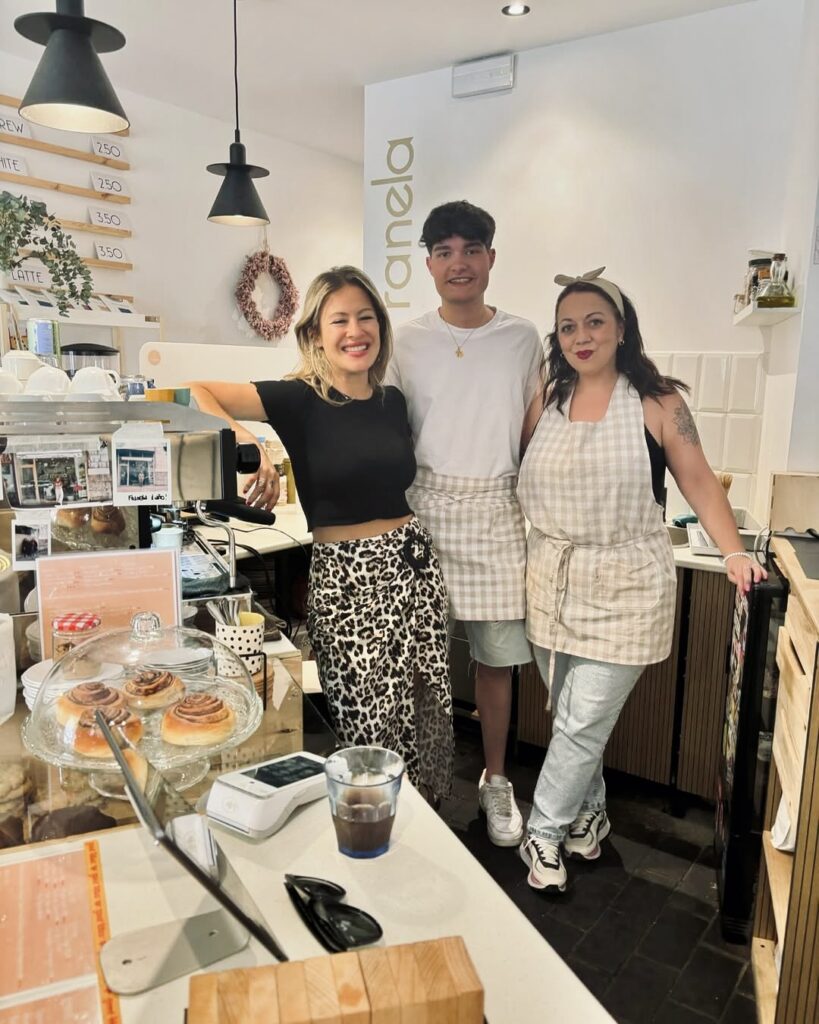
For me, Franela is like a daughter; it’s my little home kitchen, a space where community, good vibes, and a sense of connection are fostered, all centred around specialty coffee. There’s always laughter, good company, and learning, as customers are always contributing and willing to try different coffees and our experiments.
I call Franela my little home kitchen because, in Spain, since childhood, I always remember gathering with my family in the kitchen, preparing and enjoying the ritual of drinking a cup of coffee. That’s how I feel about Franela. With guests who often become good friends and from whom I always learn something new!
Peseta is a different concept, as we only have a single-group espresso machine, batch brew and French Press. The concept is takeaway coffee and quality magazines. Even so, it has also become a place to talk and discover with the customers who come in. It’s lovely to see how many people linger by the kiosk window, chatting over their coffee and sharing anecdotes.
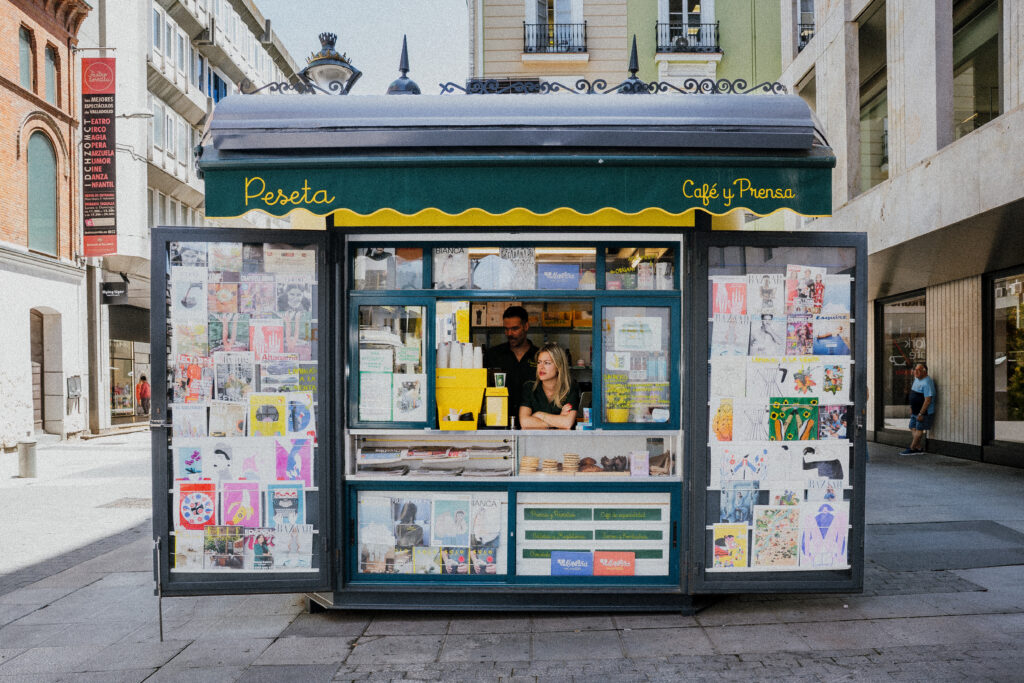
You run two completely different concepts – a full cosy café and a specialty coffee kiosk. How does your brain switch between the two worlds in a single day?
I really like this question. Honestly, you have to be very focused and aware of where you are each day, since I work in person at both places. But at the same time, I feel very fortunate to have two teams who, like me, share a passion for coffee.
Both are meeting points and places to enjoy good coffee, but Franela is something more specific. There, I have the opportunity to prepare coffee using different methods, and I feel very comfortable. It’s also the place where we can taste different things and experiment with them. The guests come to Franela to learn about different origins and processes and to have conversations about coffee.
Peseta caters to a different type of clientele. It’s a takeaway concept where we also serve customers who initially only come to buy the newspaper or pick up an international magazine that’s difficult to find in other stores. Little by little, attracted by the aroma, they begin to discover coffee. It’s wonderful to see that moment when someone tries specialty coffee for the first time and from then on doesn’t want to try anything lesser. That fills your soul and gives meaning to my work.
Something I love about Peseta and Franela is that we both have a very broad audience, from young university students to senior citizens, from those who appreciate good coffee to passionate coffee lovers. And that’s wonderful. I always learn something from each one of them!
The magazine kiosk concept is so unexpected. What was the spark behind pairing coffee with print media?
I’ve always loved magazines. My mother always read them, and when I was little, I’d take them from her and love looking at the photos and reading articles about Valladolid. Sadly, newsstands are disappearing, so as soon as I had the opportunity to acquire one, I didn’t hesitate. But it’s also important to mention that the process wasn’t easy. I had seen the concept of a newsstand with coffee in other cities in Spain and abroad, and it was something that fascinated me. Combining international magazines, which are hard to find in my city, with my passion, which is specialty coffee, has been a wonderful idea.
The reception people have given this place has been truly surprising, especially since my city can sometimes be a difficult place to start a business. I indeed think it helped Peseta that a lot that people already knew Franela’s coffee. Many regular guests from the café would come by to say hello. But there have been many others who are new to us, and every morning they get their coffee to take to work or enjoy while out for a walk.
I’ve also been surprised by how many customers buy specific magazines or order them on request. It’s an amazing world! I love saying that I went from being a barista at Franela to selling magazines at Peseta – two very different jobs with coffee as the central focus.
What kind of experience do you want your customers to have when they visit your places?
The experience I want my customers to have when they leave Flannel is to fall in love with the coffee. There’s nothing more satisfying than hearing something like, “This is the first time I’ve had coffee without sugar”, or “This is the best coffee I’ve ever had”. That makes my day. But it’s also those guests for whom you can make a filter coffee, or who ask about the different origins you have at the grinder, and who enjoy the coffee you prepare.
Listening to your guests is crucial. I love asking questions, discovering new topics and enhancing my skills. I always say that specialty coffee is a world where you never stop learning, tasting, and enjoying. Really, I don’t get the image of the barista who knows everything or who is sometimes even unpleasant and doesn’t connect with the customer. I believe our role is fundamental in traceability, giving back value to the producer, and making the end customer aware of all the work behind a single cup of coffee. As well as transmitting the passion for coffee and explaining it with humility. We mustn’t forget that, at the end of the day, we’re talking about coffee!
What is your favourite part of the day in your cafes, and why?
There are several favourite moments throughout the day. The first is when the morning begins, arriving at the café and calibrating the morning espresso, and then preparing the filter coffee. That moment of peace and quiet, savouring the coffee we’re about to serve our guests, is the best.
Another highlight is attending to our regular customers, asking them how their day has been, as well as welcoming new people who come to try the coffee and breakfasts we offer. Direct interaction with the guests and ensuring they enjoy their experience is the best part of this profession.
What’s the hardest lesson owning two businesses has taught you that no one warns you about?
The key to running two businesses simultaneously is being very organised. My mind (also because of my personality) is constantly racing with new ideas and projects for both places, and this leads to stressful moments. You have to know how to manage it, take a breath, and focus on what’s important: our team, the guests, and the coffee. That’s the main thing. Nowadays, my motto is “one thing at a time.” Slowly but surely. In the end, everything works out, but I have to be organised and know where the priority lies at any given moment.
How do you stay motivated and inspired to keep improving your coffee-making skills?
Honestly, it’s very difficult to stay motivated 24/7. There’s always the routine, and often you’re not at 100%. But it’s true that every day when I open the café, it’s a joyful moment. And it is a big source of satisfaction to know that I’m starting to calibrate the espresso, get everything ready, and have that first coffee of the morning before starting the day with the team and my beloved guests.
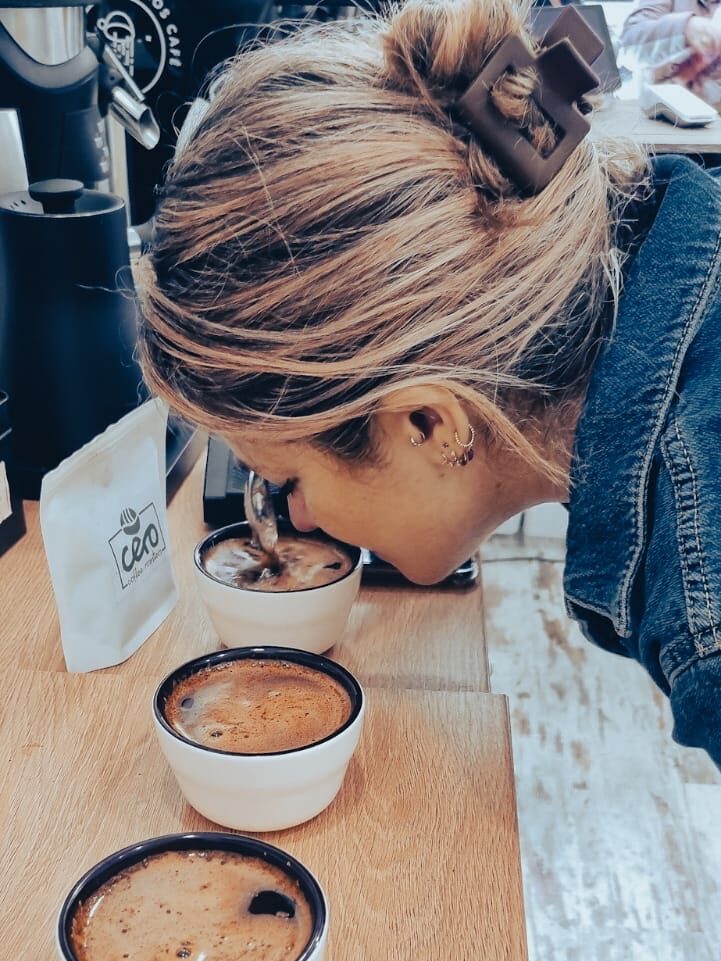
For me, contact with roasters and colleagues in the coffee world is very important, as we can share skills, exchange knowledge, and learn. That’s what helps inspire me and keep creating. Listening to guests, their opinions and their suggestions is also crucial. My mind is always thinking about how to keep improving and how to enhance the coffee experience. Whether it’s bringing in new coffees, trying new espresso or filter recipes, and organising events like cuppings, tastings, or even collaborations to bring coffee culture to more people.
What are some common misconceptions about our industry that you’ve encountered, and how do you address them?
Over time, I’ve learned that you certainly need knowledge to make good coffee, but the most important thing is to always keep experimenting to make a truly delicious cup. For example, you might start with the idea that the correct ratio for an espresso is 1:2 in 25-30 seconds, but then, through experimentation, you realise that this can change, and that your palate, trying different coffees, and swapping them out are key. The same goes for filter brews. For me, making coffee is always fun, starting with some basic standards, but never clinging to them. Instead, I’m always experimenting and tasting. That’s how I surprise myself and learn.
What kind of community do you hope to build around your cafes, and how do you plan to foster that sense of community?
I would love the community around Franela to gradually start enjoying more black coffee. Culturally, in Spain, we’re used to coffee with milk, and while it’s a drink I certainly enjoy, I’d like people to appreciate espresso so they can truly savour the beverage. The same happens with brewed coffee. It is still very unknown. At Franela, we always try to make brews and offer them to our customers so they can discover and try a different way of brewing coffee. Often, people don’t ask for a filter because they’re unfamiliar with it, so we like to offer it and learn more about what they taste, think and enjoy.
If there were one piece of knowledge about coffee you’d like everyone to know, what would that be?
The knowledge I would contribute would be related to the sensory aspect of coffee tasting. Don’t be only focused on the tasting notes on the coffee bags. Discover for yourself. Try blind tastings and taste as many coffees as you can. Store in your sensory memory all the fruits and vegetables you eat, appreciating them, and discover for yourself. Perhaps you’ve never tasted a lychee, for example, but that coffee reminds you of something you have eaten or enjoyed. That’s my trick for continuing to learn.
Another piece of knowledge is also related to filter brewing. I always start with a basic recipe (20 grams for 300 ml of water). From there, I discover which variables I want to modify to get the best out of that coffee, always starting with this base.
What are your passions and hobbies apart from coffee?
Besides coffee, I love eating and drinking in Valladolid. This is easy because there are so many great places to enjoy good food with my friends and family; you could say that’s my greatest passion! I also love exercising, going for runs in Campo Grande and doing Barre at 10 y 10 Studio. To clear my head and feel healthy and strong. I also love listening to music and enjoying a good magazine or a good book for inspiration.
Where in Valladolid do you find your best inspiration?
Valladolid is a small city, but it inspires a lot from its parks, monuments, museums, and wine bars, where you can find friendly people who are always willing to show you that inspiration can be found everywhere.

Quick Fire Questions for Elisa Gutierrez Lopez:
Filter coffee or espresso-based?
Filter coffee.
Milky or Black?
Black
How do you make coffee at home?
V60 or Moka pot.
The most underrated coffee drink?
Spanish Carajillo
The most underrated coffee brewer?
Melitta.
Favourite piece of barista equipment?
Espresso machine.
No.1 café in Europe that every coffee geek should visit?
Wigma in Cyprus.
What’s your dream place to have a coffee tour?
Copenhagen, amazing cafes and bakeries!