
Dušan Bombala has spent two decades building a life around coffee, guided by curiosity and a strong belief in sharing knowledge. His earliest memories go back to the smell of coffee at his family’s country cottage, but his professional path began later, almost by accident, through a sales role that took him to a small family roastery near Milan. That experience shaped his view of coffee as a craft rooted in people, place, and conversation.
In 2020, Dušan opened Bomba barista on the outskirts of Bratislava, a place designed for exploration, dialogue, and community, even as it navigated the challenges of its opening weeks. At Bomba barista, coffee became a shared experience rather than a performance. Dušan focused on openness, experimentation, and warmth, inviting guests to taste widely, ask questions, and feel confident brewing at home.
Two months ago, Dušan made a major decision to pass Bomba barista on to a well-known Bratislava roastery. The change marked a new chapter and a shift in focus towards education, an e-shop and online services. After years of tasting exceptional coffees and working across Europe’s vibrant coffee scene, his attention now turns to sharing that experience in new ways, with the possibility that another physical space may one day appear somewhere else in the world.
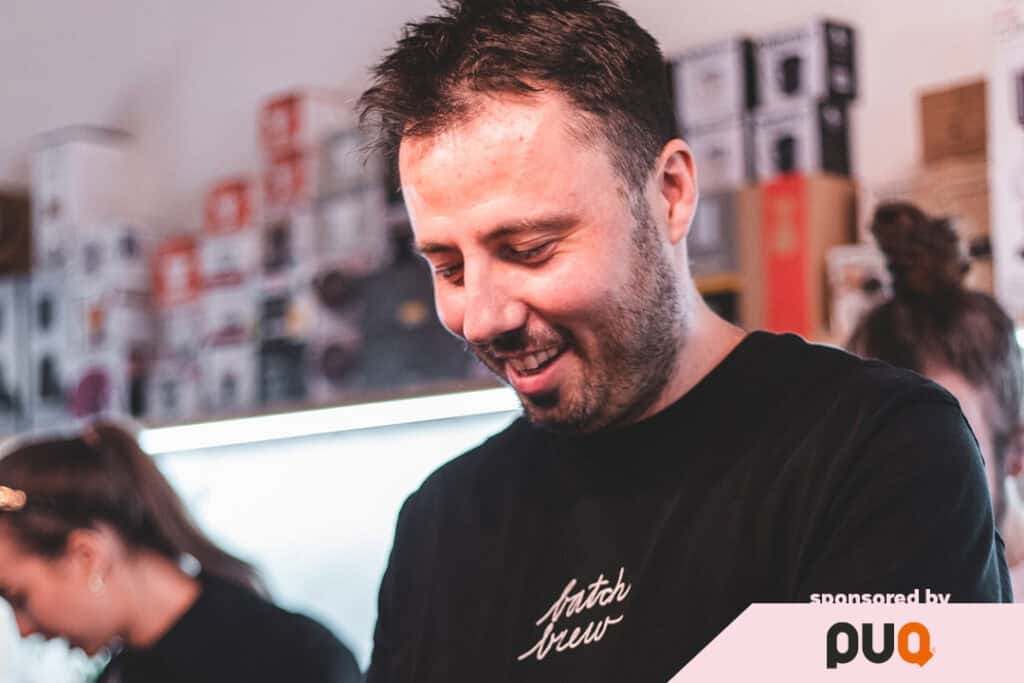
Dušan, what is your first memory with coffee?
My first memory of coffee goes back to when I was a small boy, spending time with my parents at our country cottage. They often made coffee there, and I vividly remember how wonderful it smelled to me.
What inspired you to pursue a career in the coffee industry, and how did you get started? What did you do before coffee?
I started working with coffee completely by chance when I was 20 years old. I was offered a job as a sales representative for a company that was just beginning to distribute an Italian coffee brand in Slovakia. At the very beginning, we went for training to Italy, near Milan, to a small family-owned roastery. The experience left a very strong emotional impression on me and convinced me that this was the right path for me. I loved the combination of business, barista work, and working with people. Later on, I also began training staff in cafés and hotels, and as a strong extrovert, I truly enjoyed it.
I have now been working with coffee for 20 years, and it’s hard to believe how quickly the time has passed. Before I started working with specialty coffee, I also owned my own café in a well-known spa town in Slovakia, which I ran for more than 10 years.
A real turning point came in 2015, when I visited a coffee festival in Bratislava organized by Michal Molčan from Standart magazine. That’s where I discovered a completely new world of filtered coffee and lightly roasted beans, which absolutely captivated me.

Tell us a bit about the place – Bomba barista.
From that moment on, I began to educate myself intensively and experiment with specialty coffee. At the same time, I wasn’t really visiting cafés, as my wife and I had small children. Eventually, this passion evolved into the idea of opening my own coffee shop – something like a laboratory – where I could spend time with my family and friends over great coffee and share this passion with people who had never heard of specialty coffee before.
We opened Bomba barista in February 2020, just two weeks before the COVID chaos began, and all cafés were forced to close. The timing was far from ideal. However, looking back, it was also a very special period. Since we were technically a coffee shop (a retail store rather than a café), we were allowed to stay open. People could come in, taste coffee, soak up a positive atmosphere, and find a bit of encouragement. Thanks to amazing customers and Instagram, we managed not only to survive the first two years but also to gradually build a name for ourselves in the Slovak specialty coffee scene.
What kind of experience do you want your customers to have when they visit your place?
I always tried to ensure that every visit offered a unique atmosphere – where the aroma and taste of coffee, combined with conversations about it, helped people forget their everyday worries and feel like they were in a different world. In many ways, I created the opposite of the sterile and silent environments that some places are known for.
Being located on the outskirts of Bratislava (the capital city) allowed for this approach, as people were not in such a rush and were mainly looking for the experience of drinking coffee. Essentially, I tried to give people what I myself had expected elsewhere but never truly experienced. The atmosphere was always relaxed, and our brand message was simple: you too can become a bomba (great) barista. It’s not complicated or rocket science. You just need curiosity and openness to new experiences. With this approach, we built a beautiful community of people who became bomba baristas at home and within their families, spreading the idea of specialty coffee further.
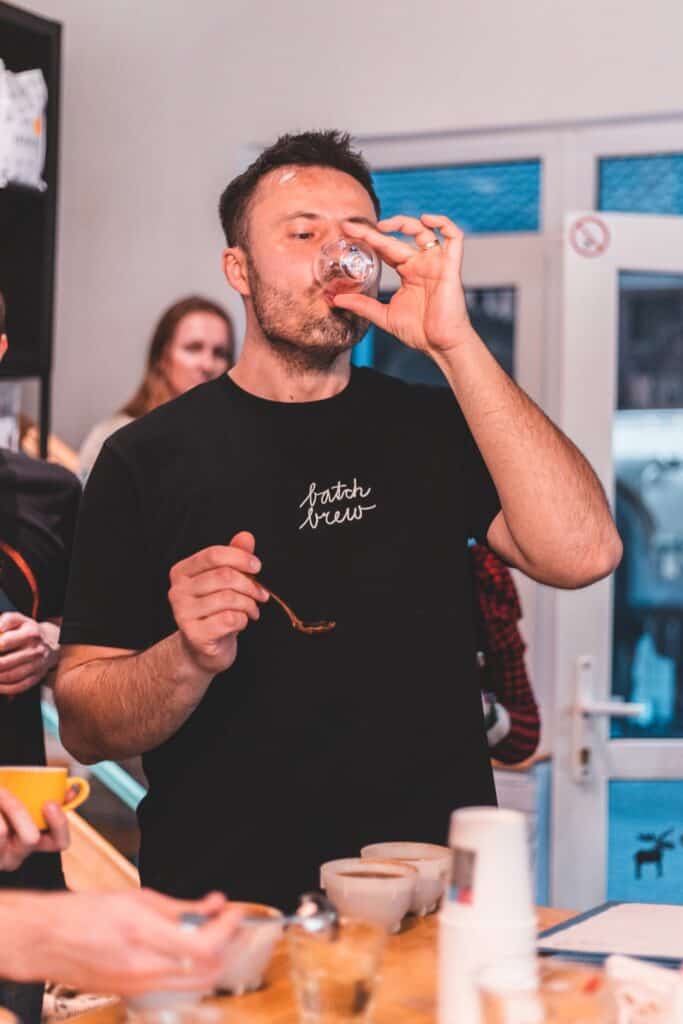
How do you stay motivated and inspired to keep improving your coffee-making skills?
What helped motivate me the most was simply getting up every day and going to work. Over the years, through constant interaction with people and testing new things – new coffees, roasters, and equipment – together with our customers, my coffee skills improved almost automatically. I personally didn’t have much time to follow new trends or watch videos, but the customers did, and we always tried things out together – literally like a lab.
This kept the work exciting because every day was different. I wasn’t just a barista behind the machine, taking orders and executing them like a robot (which is by no means easy – quite the opposite). As a coffee equipment store, we loved testing products, experimenting, and creating reviews. The work was varied and physically demanding, but I believe it was precisely the right community of people that inspired me to keep improving and stay in rhythm with coffee.
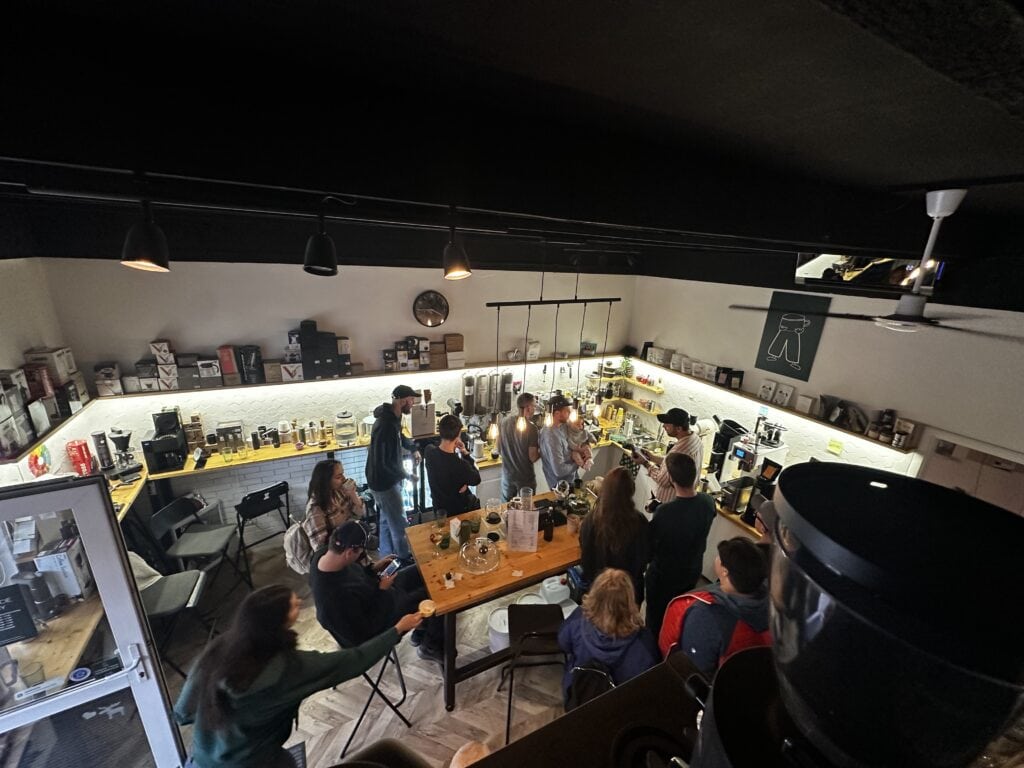
What are the current trends in cafes in your region? Are there any trends you promote yourself and would like to see more often in other places?
To be honest, I don’t really know what the trends are in other cafes, but we focus on having an extremely wide selection of coffees on the shelf—a multi-roaster offering—and we’re not afraid to prepare any drink using the lightest roasts available.
For example, we prepare the drink known as magic in Australia (a 120 ml flat white with oat or regular milk), which literally tastes like a coffee dessert. We also love turbo shots made from extra-light roasts by Scandinavian roasters (60 ml in 15 seconds, using 18 g of coffee).
We specialized in cold drips all year round – typically 2 to 6 different coffees from various roasters, including a decaf version – which tastes fantastic with tonic, whether it’s summer or winter. A proper nitro setup is also essential; it became a customer favorite, and I’m always disappointed when I can’t get a refreshing coffee drink like that, especially in summer.
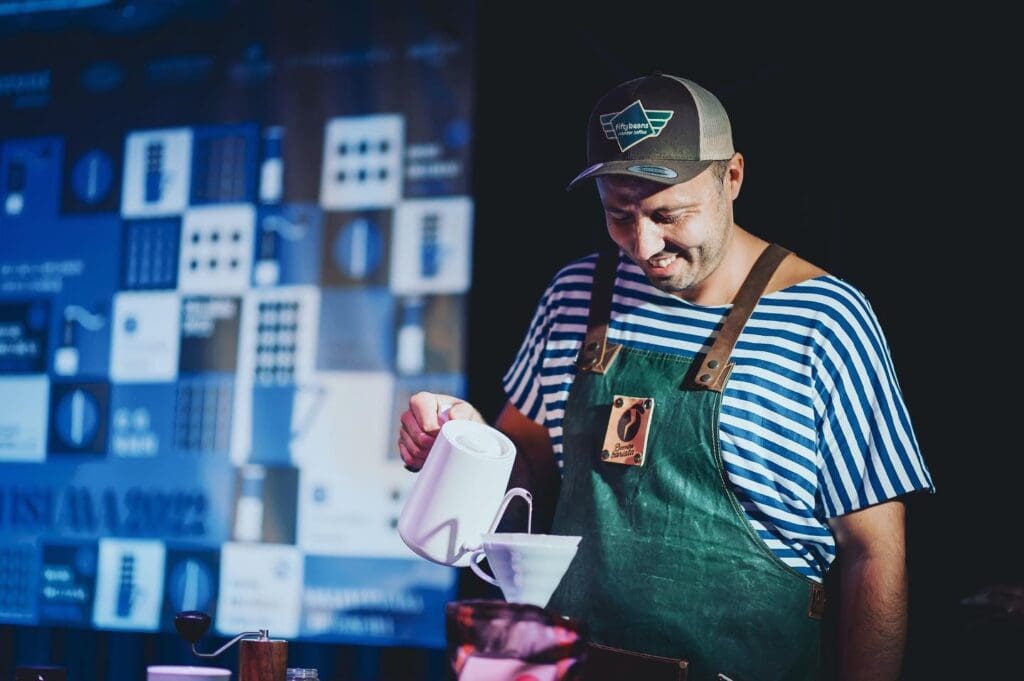
Of course, hand brewing should be a given, with a wide range of coffees from different roasters, using the most modern drippers such as the Pulsar, Orea, or Deep 27 with a Melodrip.
What do you think is the most important quality for a barista to have, and why?
In my opinion, it’s important to realise that although you strive for perfection, you may never fully reach it – and often you achieve it by accident. That’s why humility and modesty are key qualities. At the same time, a barista should also have a healthy level of confidence and certainty in their skills and experience – knowing that they understand what they’re doing and that they are professionals. When customers sense this, they are more open to advice, willing to try something new, and end up experiencing the unexpected.
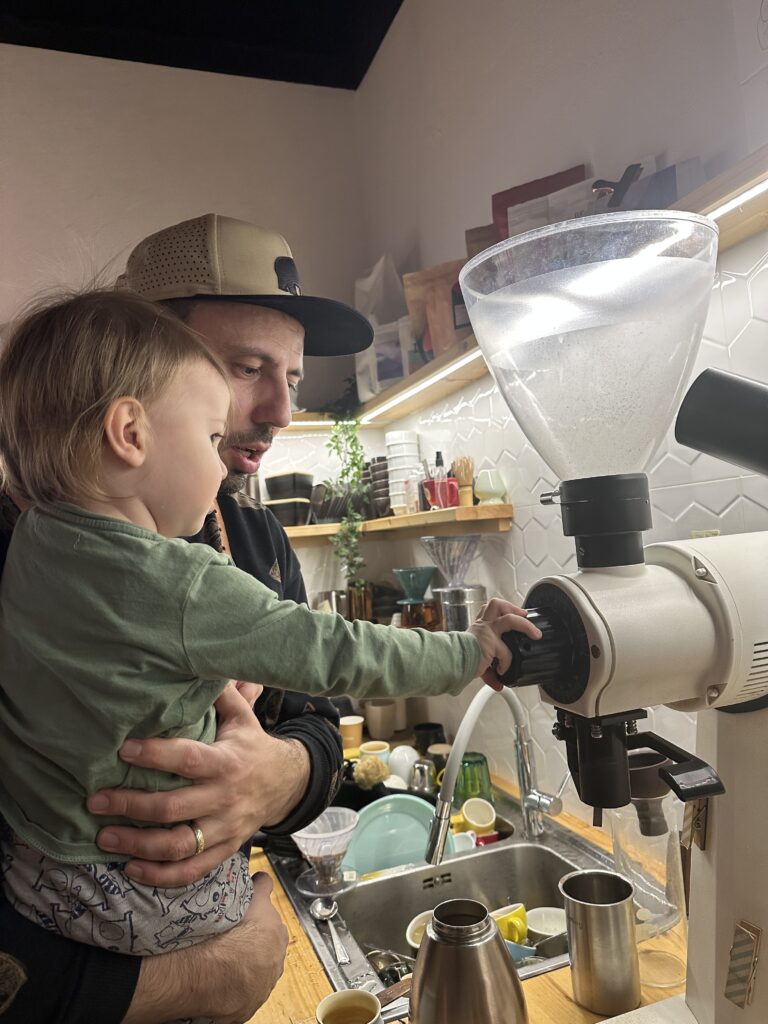
You also offer coffee courses. How do you approach the training process, and what do you focus on?
We run experiential workshops in an informal atmosphere, lasting up to three hours, focused on modern espresso or filter coffee. A format that has proven very successful for us is mixing beginners and advanced participants in the same group. Everyone takes away valuable insights, and each person finds something for themselves.
As a result, every workshop is unique, shaped by the specific group of participants, and I share my own experience with them. The core structure of the course remains the same, but it often adapts based on the questions asked and the varying skill levels within the group.
Our workshops are chosen mainly by aspiring baristas who want to make coffee like professionals – even at home. My main focus is helping them understand the most important principles and showing them how to apply these concepts in a home environment.
If there were one piece of knowledge about coffee you’d like everyone to know, what would that be?
At least 90% of a coffee beverage is water, and therefore, it’s essential to understand how water influences the taste of coffee.
What are your passions and hobbies apart from coffee?
Since we have three children, I spend my free time with my family. There isn’t much time left for other activities, but cycling and hiking are great whenever the opportunity arises. When I do get the chance, I enjoy cooking – I usually start by finding a fancy recipe and then experiment with it, much like I do with coffee.
What coffee challenges are you looking forward to? Any new projects or collaborations?
A major change happened two months ago, when – after nearly six years – we transferred our coffee shop to the well-known Bratislava roastery. It was a difficult decision, but a crucial one with regard to the future. We now want to focus more on online services, our e-shop, and online education – things we simply didn’t have time for while running such a lively physical space.
For years, we’ve had the privilege of working with top European roasters and tasting truly exceptional coffees. Europe really is a coffee mecca, and we’re grateful to be part of such a strong and inspiring coffee culture. And who knows – perhaps one day we’ll open a similar experiential space again, somewhere else in the world 🙂

Quick Fire Questions for Dušan Bombala:
Filter coffee or espresso-based?
Filter coffee.
Milk coffee or black coffee?
Black.
The most underrated coffee drink?
Espresso macchiato.
Favourite piece of barista equipment?
Pulsar.
How do you make coffee at home?
Batch brew or V60.
No.1 café in Europe that every coffee geek should visit?
STOW, Ljubljana.
What’s your dream place to have a coffee tour?
Brno, Czech Republic.