
Jakub Sobota did not arrive in coffee through a dramatic revelation. It started with craft beer, a filter coffee he initially despised, and a slow curiosity that quietly took over everything else. Since 2016, that curiosity has carried him from barista to roaster, from competitor to festival organiser, and eventually to founding Headbag Roasters, the first specialty coffee roastery born in Košice, Slovakia. The transition from working behind the bar to operating a roaster was not an overnight decision. It took years of building, a job he dreaded, and a trip to the coffee plantations of Sumatra that made the path ahead suddenly obvious.
Headbag Roasters, which he runs with his partner Olivia, is deliberately small and deliberately personal. Jakub still gets behind the bar regularly, still delivers coffee to local shops himself straight after roasting, and still thinks about coffee the way a barista does: in terms of what ends up in the cup and how it makes someone feel. That dual perspective, knowing both sides of the process intimately, shapes everything about how he selects, roasts, and talks about his coffees. Clean profiles, honest origins, and a firm belief that natural and washed coffees deserve far more attention than the industry currently gives them.
Outside the roastery, Jakub is one of the co-founders of Fest Čierny Deň, a specialty coffee festival in Košice that has grown from a small pop-up into one of the most genuinely community-driven events in the region. He collects vintage bicycles, shoots on film, and walks his dog Yumiko through the woods when he needs to think. A self-described ordinary person making great coffee, which is exactly how he likes it.
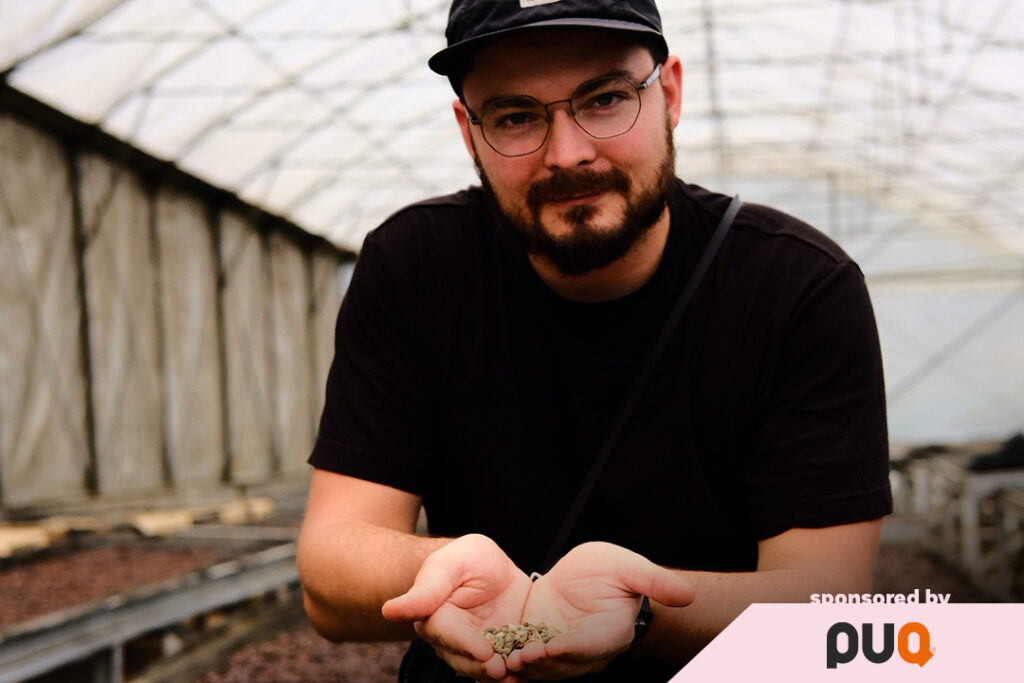
Jakub, what is your first memory with coffee?
My career in gastronomy started with craft beer. During university, I started working in a small craft beer place where the only coffee option was filter coffee. At that time, I absolutely didn’t understand the concept of filter coffee. At first, I actually hated it, but somehow I started to like the process of brewing and connecting the tastes between coffee and beer.
What inspired you to pursue a career in the coffee industry, and how did you get started?
There are a bunch of things that inspired me – a bunch of events and people I met.
I always wanted to know more about coffee, pull better shots and brew better filters every time, and somehow I became a part of the community I didn’t want to leave. I fell in love with specialty coffee events, and I believe I met the right people at the right time, which fueled my coffee career. To be honest, one of my strongest experiences that holds me in the community is the fact that I was a part of the European Coffee Trip team. It was a great honour, and I only have beautiful memories.
Also, the stories behind each barista and roaster in our community are so unique that you always meet great people with interesting backgrounds. I believe it’s hard to leave the specialty coffee community even if you want to.
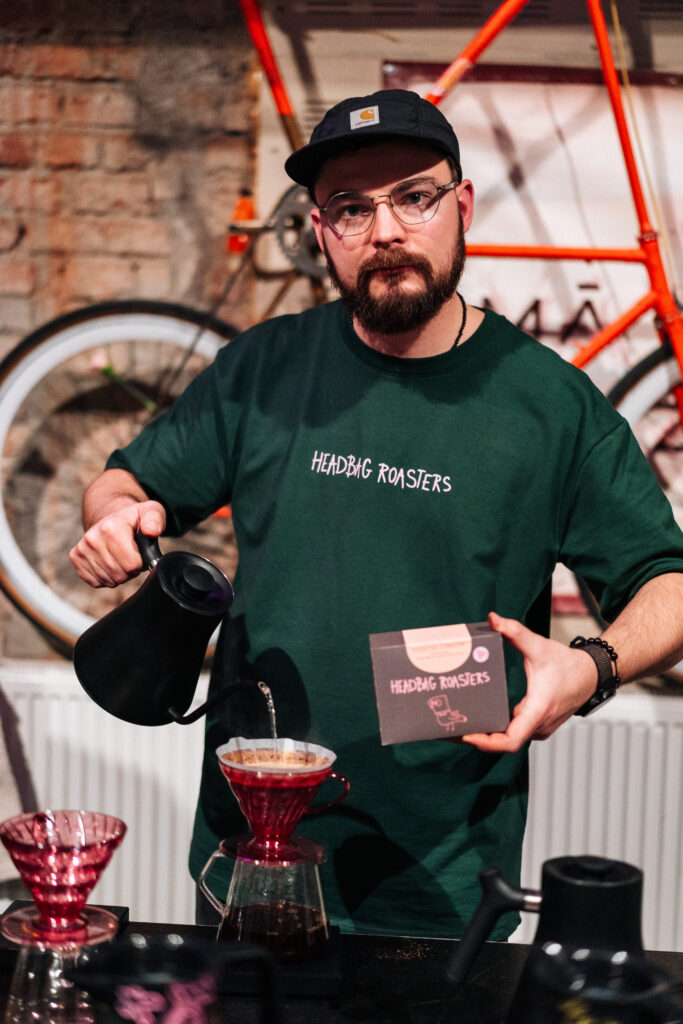
What was the moment you knew you had to open your own roastery – was it a feeling, a place, or a cup of coffee?
The dream about my own coffee business was based on the need to have an impact on the community. The idea was on the table for almost 3 years.
2024 was a really exhausting year. I had an office job I really hated and felt disconnected from coffee. After I travelled to Sumatra, Indonesia, for an origin trip, and the moment I saw coffee plantations for the first time, I just knew I had to get back to coffee somehow. The idea of a roastery just became the clear option.
Tell us a bit about Headbag Roasters.
Headbag Roasters is literally a micro roastery. We wanted it to be small, supporting and personal. People are often looking for the story behind the name of the roastery, but I’ll disappoint you – there’s nothing too deep. The roastery is the story itself, and we want to bring coffee to every possible community, because it doesn’t matter if you are a punk skater or a scientist at NASA, good coffee is here for everyone.
Our team isn’t big, but it’s quite successful. It’s just Olivia and me; we have many achievements together, and we are trying to get better every time. Headbag Roasters isn’t just a roastery – it’s a way in which we try to express our funkiness, craziness and great taste.
Also, we are proud to be the first specialty coffee roastery born in Košice. We want to support nice local projects, talented people and NGOs in the best way we can. We just want our coffee to be a part of everyday people’s lives. This is, for example, why you can get batch brew from our coffee in the local community bike workshop.
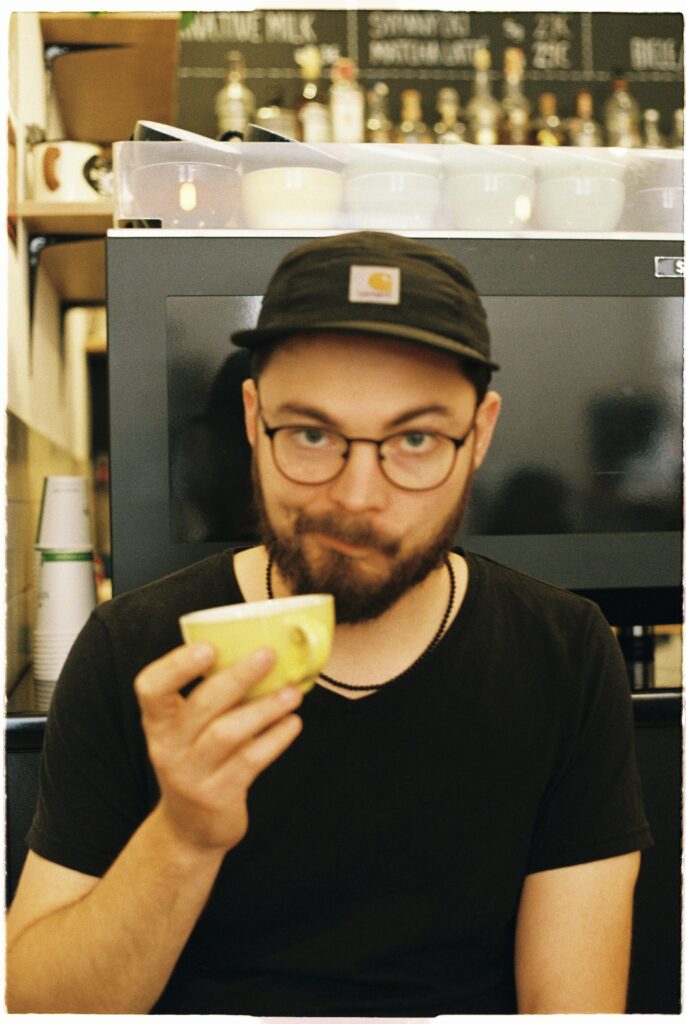
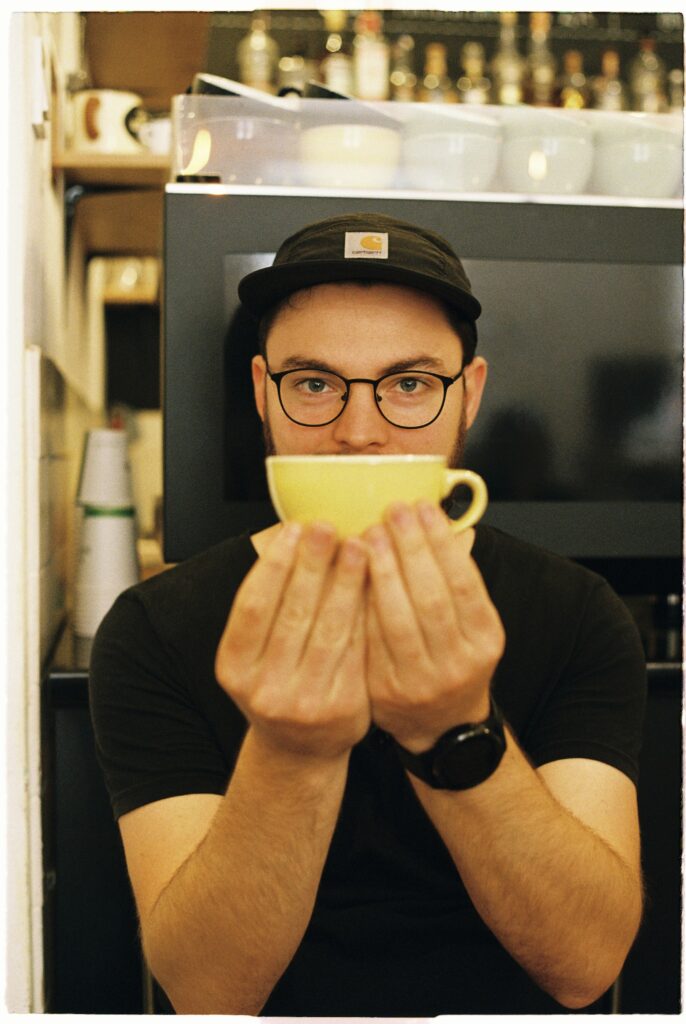
What kind of experience do you want your customers to have when they try your coffee?
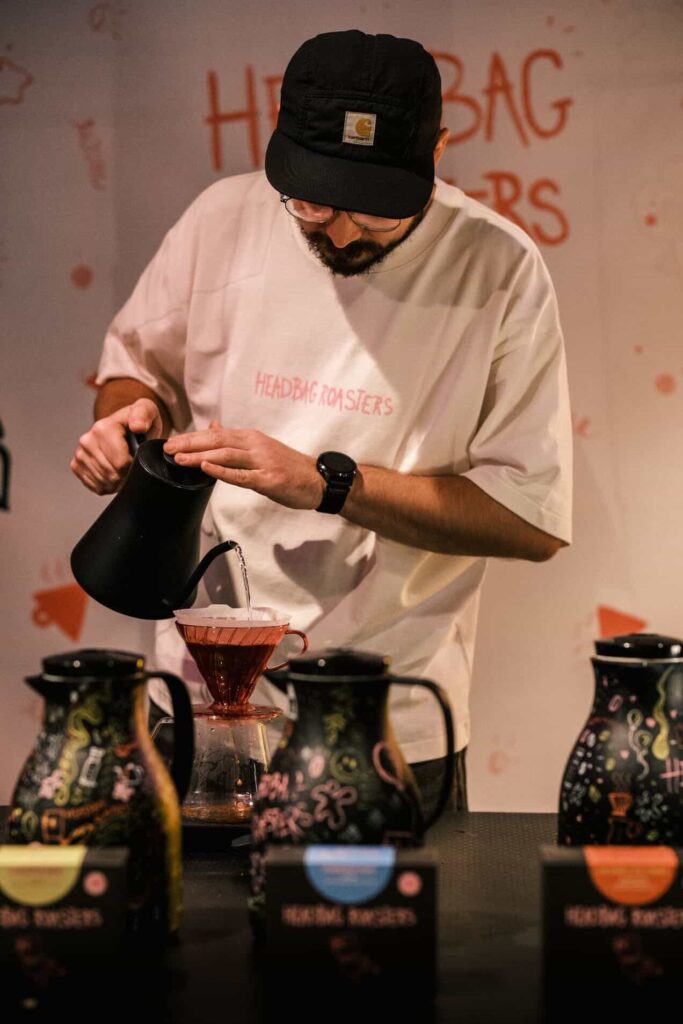
For many years, I viewed coffee roasters as some mystic entities. I knew they had a lot of different insights into coffee and that they were the ones doing magic with the beans. Because many baristas nowadays have a similar point of view, I decided that I want to change it and show all our customers that we are coffee people just like they are. We always want to make personal contact with coffee shops when buying our coffee. If there are any orders in Košice, I usually bring the coffee to the customer’s door right after roasting it. Also, this is why you can often find me behind the bar talking to people.
Of course, quality is extremely important for our production. We usually buy green beans depending on what we want to brew at home for the next month, and we really love coffee with a clean profile. We want every customer to find a story in our coffee and to feel the high-quality and passion in every sip. It’s just a nicely packed, great coffee roasted by ordinary people.
What is your favourite part of the day at work, and why?
Behind the bar, it’s the morning rush and the moment I pour the first god shot and quietly enjoy it. In the roastery, it’s the moment I turn on the roaster. I know I only have 30 minutes to calibrate my mind for work while the roaster is preheating. It feels like a daily ritual – I like it. I also love our delivery days when we distribute coffee to local coffee shops, chatting with the owners and baristas. It almost feels like a day off.
You are also a co-founder of Fest Čierny Deň. Can you tell us more about it?
In 2018, I was a part of the first speciality coffee shop to open in Košice. We felt that the market was not ready for specialty coffee yet, so we decided to educate our customers. Also, as I mentioned before, it was my deep love for coffee events. What started as a pop-up event in 2018 became a beautiful full-size specialty coffee festival. In Košice, we usually do it in our local cultural centre. We grew bigger, but the idea of educating remains. In the peak, we hosted 25 specialty coffee roasters not only from Slovakia.
In the last two years, we also organised two events in Bratislava, and there is one upcoming this year.
How is Fest Čierny Deň different from other coffee festivals?
As I said, the main idea is to do it for the people. It is not a business model, it is more a hobby project. You can feel it in the truly friendly and unique atmosphere that I haven’t experienced at any other similar event.
Also, you’ll never find non-specialty roasteries on Fest Čierny Deň, so we stay true to its original idea. Our goal is to push it on a higher level each time while keeping the original punky vibe.
What kind of community do you hope to build around Fest Čierny Deň, and how do you plan to foster that sense of community?
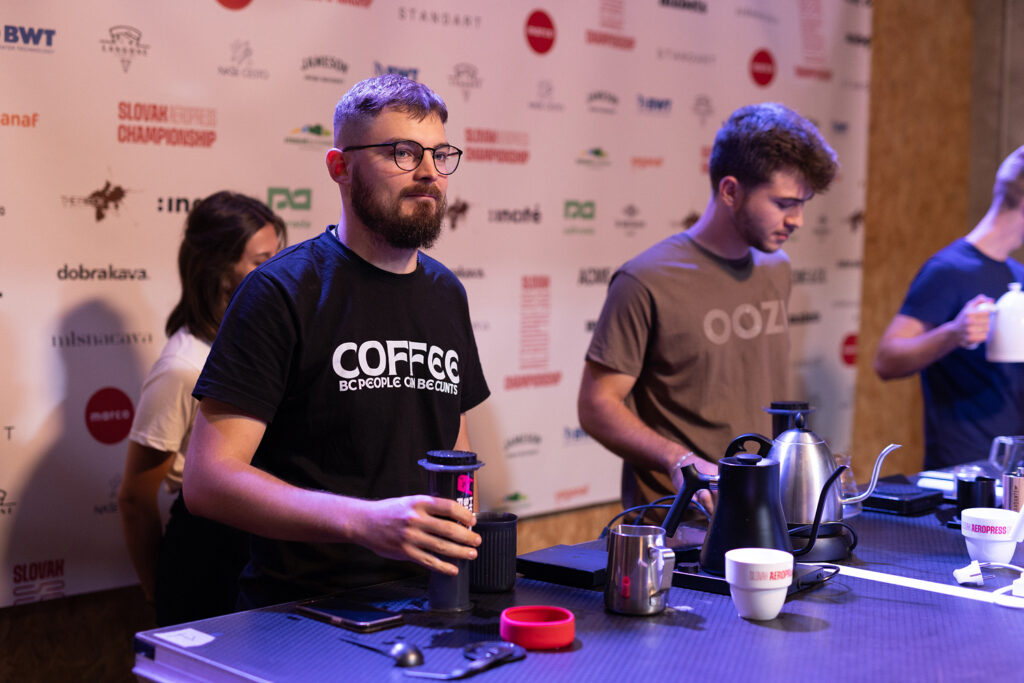
For me, community means that you can talk to strangers about coffee and it feels like you have known each other for years. We already created this; we just want to make the range of coffee geeks wider. We also sometimes organise barista competitions. The priority is to create friendly, competitive, but most importantly, funky competition. As of now, there is still no SCA in Slovakia; the best baristas are always looking forward to competing at our festival.
However, building a community is important every day, not only during coffee events. It contains small talks with passionate coffee geeks in a coffee shop, supporting baristas and pushing them forward. Trying new coffees and recipes with them.
What are some common misconceptions or taboos about our industry that you’ve encountered?
Really hard question. I think the hard but real truth to digest is the fact that for many coffee business owners, it’s much more about money than making their best product.
What are the current trends in cafes in your region? Are there any trends you as a roastery, promote and would like to see more often in other places?
It’s probably that coffee shops are transforming into matcha places during the summer season. It’s not that I hate matcha; it’s more like I hate the idea of the trend. I don’t like coffee shops offering matcha just because it sells; many times, it’s pre-batched, and it makes me feel like they don’t truly honour the quality of their ceremonial-grade green powder.
Also, having 80% of coffees in the offer list being strongly fermented and co-fermented just doesn’t feel right. Is this the way we really want to follow? I know it’s easier to sell it, but do roasters really like it? We usually look for clean coffees, and we are trying to get the best out of them. Usually, one of the eight coffees in our offer list is slightly fermented and easier to find a tropical profile in it. Just make natural and washed coffee great again! I want to see baristas and customers finding the notes of fruits, acidity and sweetness in natural or washed coffees. I want people to be passionate about it.
What do you think is the most important quality for a barista to have, and why?
Passion for learning anything about coffee. With the right balance between passion and effectiveness, any barista can make their café the best in the city. If I had to choose between a skilled barista who just goes to a coffee shop to earn money and one with less experience, but more passionate, I would choose the second one and help him to become the best one.
If there were one piece of knowledge about coffee you’d like everyone to know, what would that be?
Definitely seeing and experiencing coffee processing. For me, visiting the processing stations and seeing the transition of a coffee cherry to a bean was truly a game-changer. It just changes your point of view, and you suddenly start to see coffee beans differently. It’s not just roasted beans anymore, it has become something much more that deserves your attention. Coffee roasters, baristas and all coffee geeks should honour each bean they get in touch with, and it doesn’t matter if it is an 80-point Caturra or a 92-point Geisha.

What are your passions and hobbies apart from coffee?
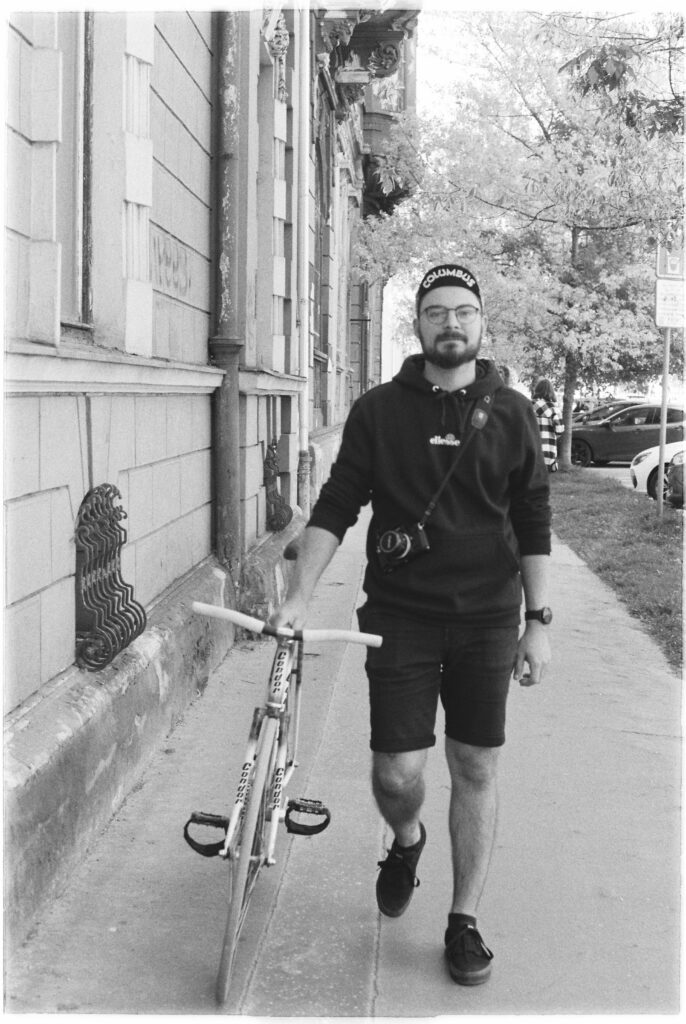
If I am not in a roastery or behind the bar, you’ll most likely find me on a bike. I currently own around 15 mostly vintage bicycles, restoring and rebuilding them. Weekly summer group rides are usually my time tracker. Also, with my analogue outlook on life, I usually carry a film camera with me.
Where in Košice do you find your best inspiration?
Literally anywhere on my daily walks with my dog, Yumiko. Inspiration is all around if you can slow down for a second. Long walks in the woods are the best.
What coffee challenges are you looking forward to? Any new projects or collaborations?
As we are building a local lovebrand, we want to bring it closer to the people through collaborations. Having a roastery opens a completely new range of opportunities and goals. We want to keep it slow; we don’t need to rush, but there are definitely some ideas we want to make real and to be closer to our customers.

Quick Fire Questions for Jakub Sobota:
Filter coffee or espresso-based?
Filter coffee.
Milk coffee or black coffee?
Black.
The most underrated coffee drink?
Cold brew.
The most underrated coffee brewer?
Moccamaster.
Favourite piece of barista equipment?
V60.
How do you make coffee at home?
V60.
No.1 café in Europe that every coffee geek should visit?
Café na Peróne, Košice
What’s your dream place to have a coffee tour?
Brno – just love the amount of great coffee shops, their vibe and people.