Angie’s first encounter with specialty coffee happened in Paris, during an Erasmus year spent searching for something that felt like hers. A colleague from her part-time job at a chain cafée invited her to a specialty coffee shop, and something clicked that had not clicked before. She had two degrees, a family business waiting back in Bogotá, and no particular plan involving coffee. She went back to Colombia anyway and built one from scratch.
What followed was twelve years of committed, deeply personal work inside the industry: writing and translating over two hundred articles for Perfect Daily Grind, opening a micro roastery and coffee lab, competing in the Brewers Cup, supporting producers in Colombia, travelling to origins in Brazil, El Salvador, and Panama. There were also harder chapters, a health crisis that lasted nearly eight years and forced her to step back, rebuild, and eventually start over in Paris before landing in Hong Kong as part of the international sales team at Tanat Coffee. She talks about all of it with an openness that makes you trust her immediately.
This year, Angie became the French Brewers Cup Champion and finished sixth at the World Brewers Cup in Brussels. Her presentation was built around three brewing parameters that work anywhere in the world, regardless of the tools or environment. A concept that was born from real conversations with real brewers at festivals and bar takeovers across Asia and Europe. The message she brought to the world stage was quietly radical: great coffee does not have to be complicated. It just has to be honest.
Angie, what is your first memory with coffee?
Feeling the smell of freshly brewed coffee in an electric coffee maker people would call “greca” back home during my cumbia dancing classes when I was a kid.
What inspired you to work in the coffee industry, and how did you get started?
While studying to achieve my two degrees in languages and business management back in Colombia, I used to work part-time at my family’s business, a clothing manufacturing company. I was trying to learn from the business with the hope of one day taking over, but I guess fate had something else for me and at the same time I didn’t feel this was the role I wanted to pursue for the years to come.
Later on, I had the opportunity to do an exchange program in a business school in Paris, and while living the Erasmus life, I was desperately looking for a passion, or something that could let me be myself. I felt I didn’t have any special hobby or calling, or I wasn’t fully driven by anything. I tried so many things, but nothing was clicking until a colleague from my part-time job in Pret à Manger back in the day invited me to a specialty coffee shop and that made all sense.
Somehow, I still had the pressure of doing something with my two degrees after several years of studies. That’s when I got a job as a translator for Perfect Daily Grind that then evolved into becoming a writer. I consider this phase of my early years in the industry as my coffee academy. I wrote and translated over 200 articles, something I was truly enjoying. Thanks to this, my network in coffee started to grow quickly, as I’d interviewed so many amazing professionals from different parts of the chain and different parts of the world, which gave me tons of knowledge.
But there was something still missing; I had to create something of my own. I come from a family of entrepreneurs, and I had a business degree, so I had to become one, and coffee was the right thing to do. This led to opening a micro roastery and coffee lab through which I was applying many of the things I was learning as a writer. Things continued evolving to expand into a coffee shop and, with that, starting to compete in the Brewers Cup in Colombia.
Can you walk us through your career?
My career in coffee has been very dynamic, full of ups and downs. Since the very first filter coffee in my mouth, something changed in my brain; I had to understand everything that was behind that cup. This very first sip of specialty filter coffee in Paris gave me a reason to go back to Colombia and pursue a career in coffee. Little did I know there was quite a bumpy road ahead, with all the amazing experiences, projects, roles and beautiful people along the way, as well as deep down in my personal life.
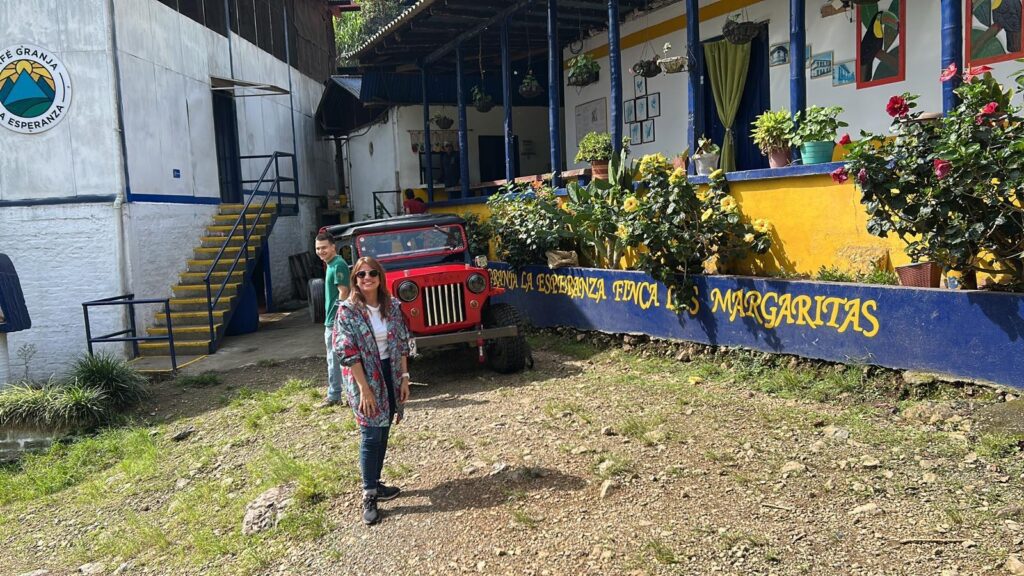
Through all the different roles I executed the last 10 years, from writer, to business owner, Cup of Excellence technical team and competitor, I learned so much about my country, I connected more deeply with my roots, with the coffee produced in Colombia, with the way producers live life through coffee and thanks to all this experience and job opportunities as I continued writing, my knowledge expanded through other origin trips in Brazil, El Salvador and Panama.
And as I visualised it in the very beginning, I wanted to understand everything behind a cup of coffee. But being an ambitious person and thirsty for knowledge, somehow, because of the high stress I got myself into, plus some wrong choices to achieve what I wanted, I got caught by a health condition that put me for about 8 years in one of the most vulnerable positions I’ve ever been. Even though, through the pain of going through illness for so long, coffee has been my companion, has been the way to see life in a simple way, and has helped me to build the life I want.
Due to this big bump in the road, I decided to quit my own business and prioritise myself by leaving Colombia to pursue a new path, still in coffee but with only my experience and knowledge in my head. I had to start from scratch, build a new version of myself, in coffee and on the personal side and what a great decision I made. I can’t say it was easy; totally the opposite. I was back in Paris, in the city that opened the doors for me the first time, and then a second time, where I worked for a year as a coffee trainer and later on I joined the Tanat Coffee team.
Tell us a bit about the place you work at. What is your role there?
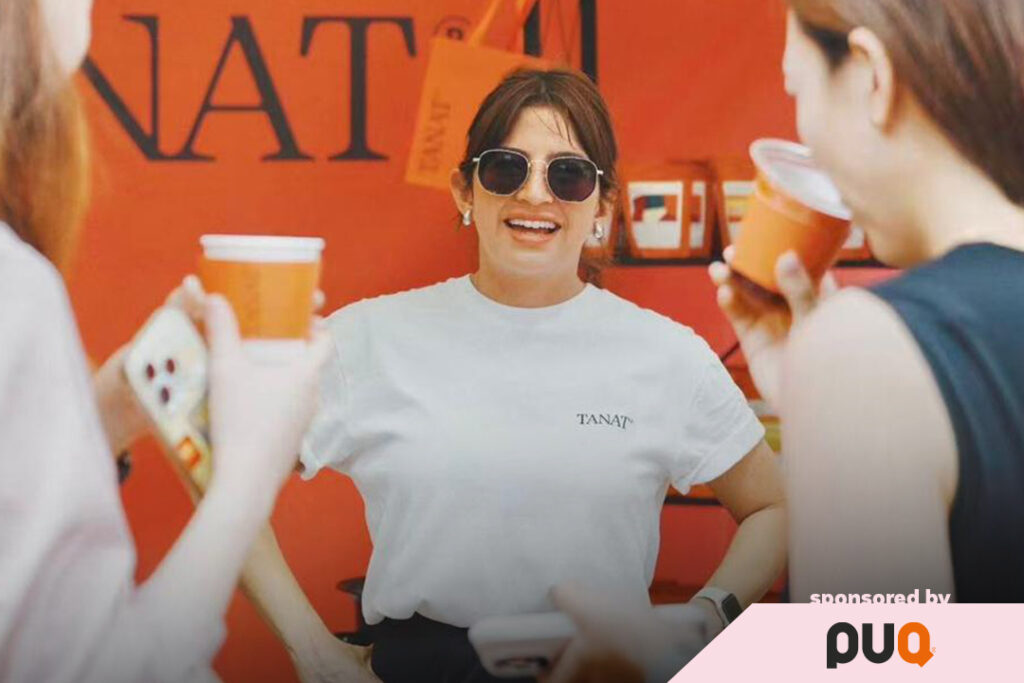
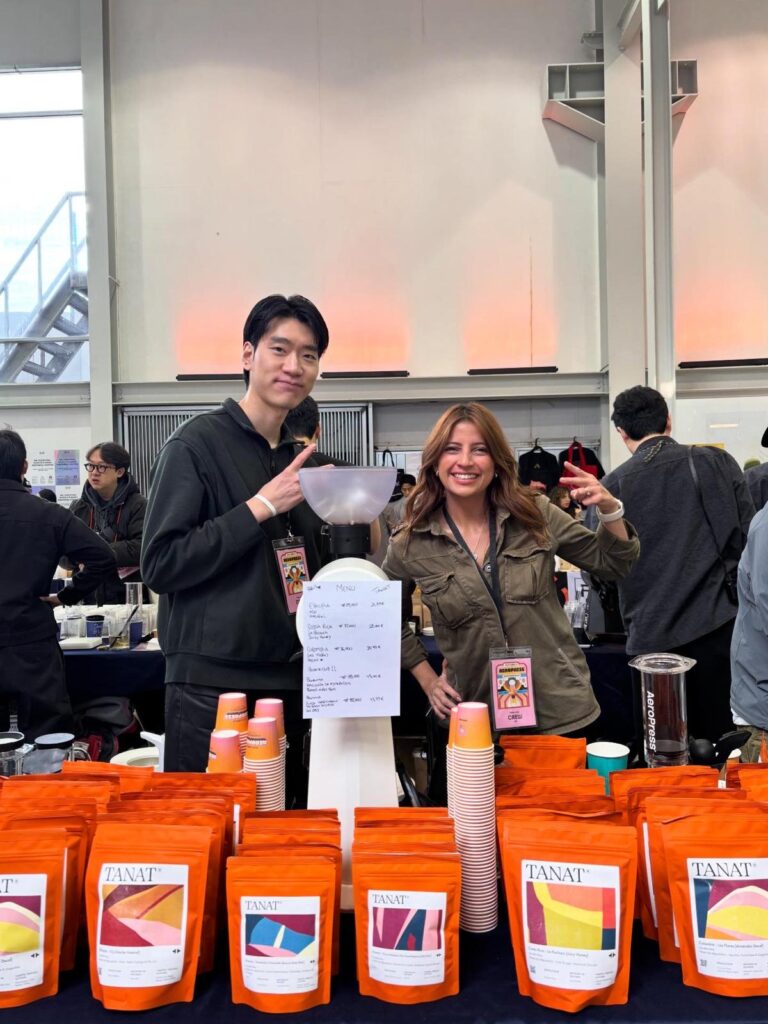
I’ve been part of the international sales team at Tanat Coffee since 2024. My role started at the roastery in Paris; I was doing both account management and QC. A year later, I moved to Hong Kong, and my role changed to having more presence in Asian countries with the brand, assisting with different festivals and bar takeovers in China, Thailand and South Korea, as well as taking care of our international accounts working from home.
What kind of experience do you want people to have when they try your coffee?
To embrace either the origin, variety or processing method decided for that specific coffee. To feel at home, to feel like they can learn something about the beans they have in front of them through enjoying their flavours.
What is your favourite part of the day at work, and why?
While I don’t work behind the bar, I really enjoy when I get to try our new coffees at home, being able to discuss their quality with my colleagues and getting excited to share them or talk about them with our clients.
How do you stay motivated and inspired to keep improving your coffee-making skills?
Competing! This is the best thing to keep challenging my brewing theories and concepts.
What are some common misconceptions about our industry that you’ve encountered, and how do you address them?
Thinking that middlemen take a big (monetary) part in the coffee sourcing business. I worked for several years in Colombia supporting buyers from abroad and connecting them with producers. And the number of people I could support, from roasters and competitors to producers moving more into the specialty business, was huge, especially in Colombia, such a big country with different challenges related to quality, transparency and exports.
The role of an on- site person who can support both sides is crucial. Back in the day, I managed to establish a business model that allowed me to build full transparency along the value chain from the farm to the roastery abroad, and it worked very well. While it takes time to build that credibility and trust, I think it is worth it, but still today some people in the value chain think the person serving as the connector and facilitator should not exist, which I think is wrong.
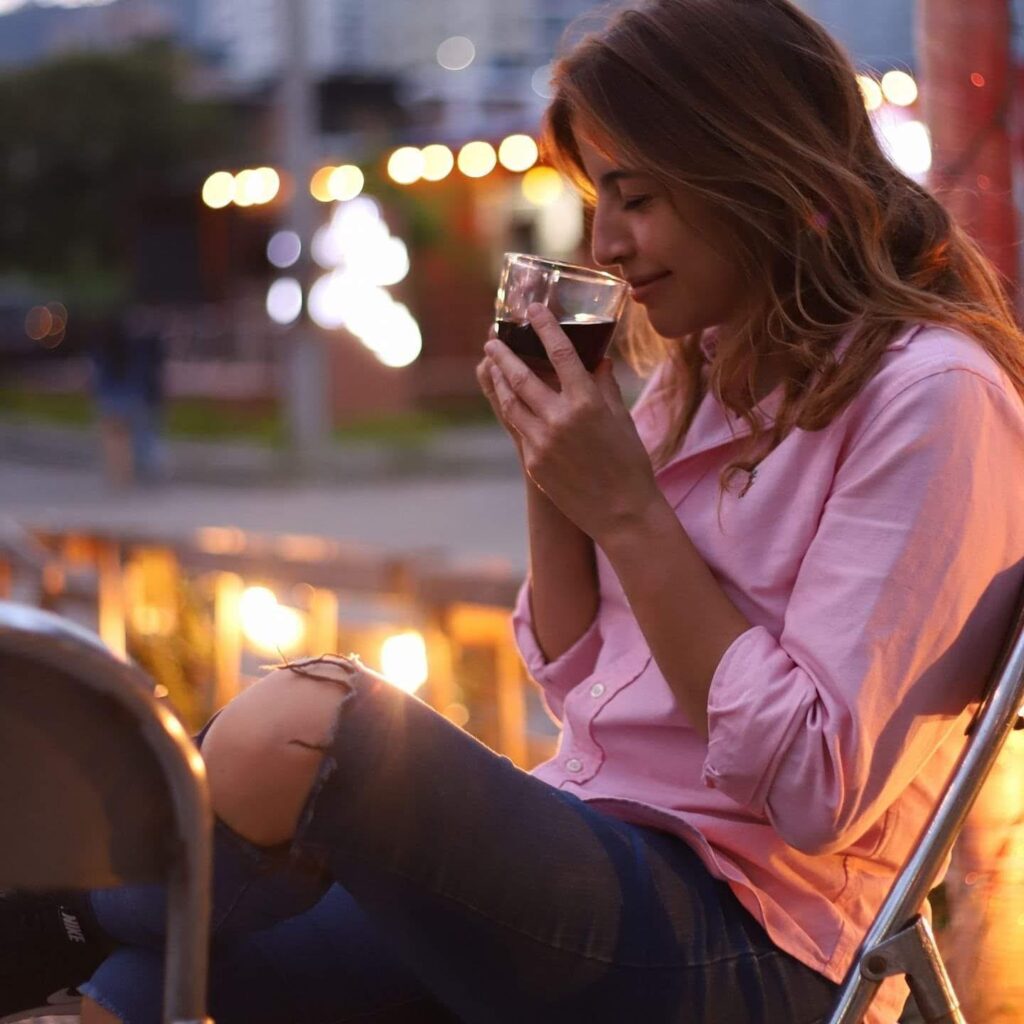
depending on where you are in your journey as a brewer – and it can still taste great.”
– Angie. Photo by Paula Molina.
You have some amazing achievements in championships. Can you tell us more about them?
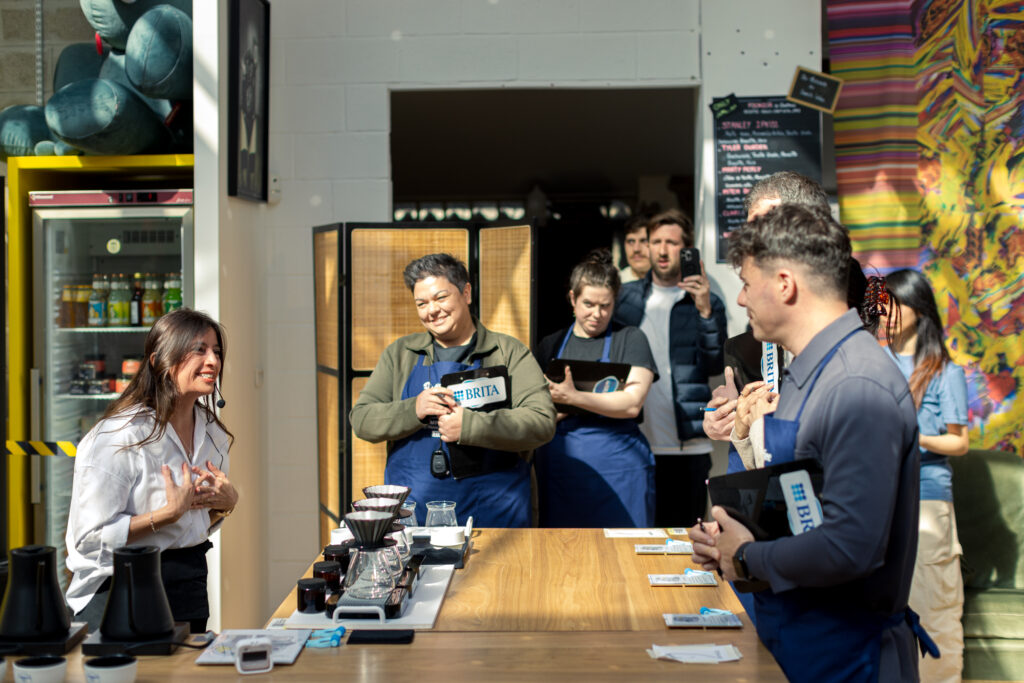
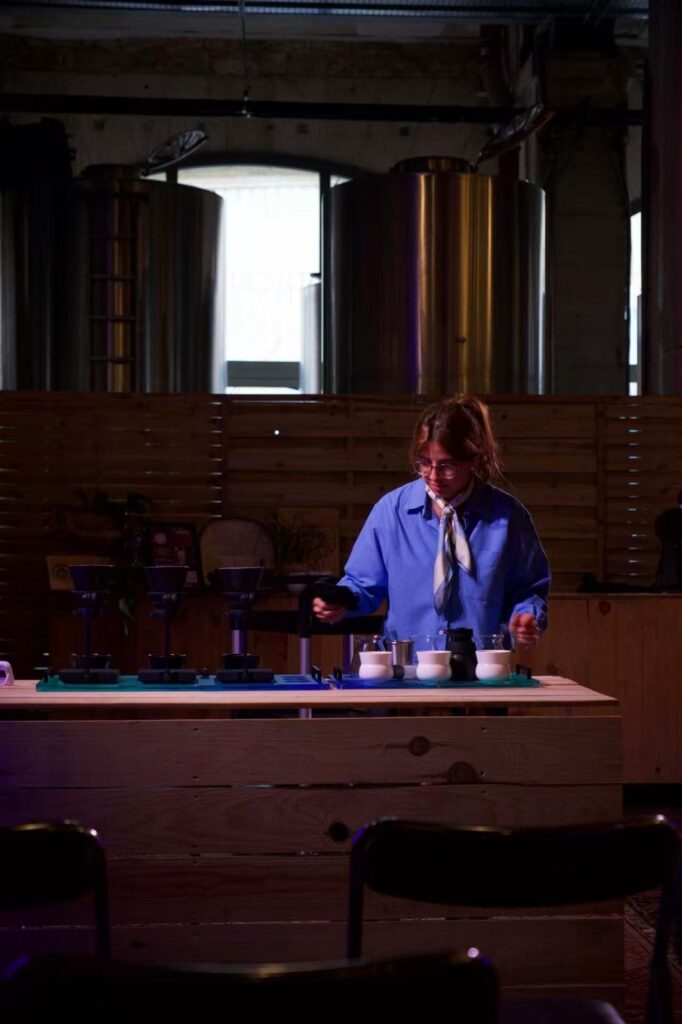
I’m the 2026 France Brewers Cup Champion and a top-6 finalist at the World Brewers Cup in Brussels this year. After competing several times in Colombia, being 3 times in finals and finally winning in France on my 3rd time competing, I think this long competition journey prepared me for this year’s Worlds. It was especially challenging since only 6 people could make it to the finals. Having achieved that, it paid off; this was a goal I had for the longest time.
How did it feel to compete on the World Stage? And how does it feel to be one of the top 6 Brewers in the World?
I knew I had a big team around me and, with it, high expectations. Nevertheless, I didn’t let this put any pressure on me and just trusted myself about what I wanted to deliver. While relying on my team during this path, I had to let go of some decisions that I usually make by myself because it was all at the end about sharing ideas together, letting objective opinions shape what I wanted to deliver without losing my essence. And it worked; it was wonderful. Being named a finalist with the other 5 brewers from a group of over 45 incredible coffee pros felt like a great achievement.
What was the main message you wanted to convey on stage?
The message: Making a cup of coffee can be as simple or as complex as you want it to be, depending on where you are in your journey as a brewer, and it can still taste great.
This year I built my concept around three simple parameters to make great coffee, and to share what I live with daily as a brewer who travels the world, exchanging high-end coffees across different environments, tools and cultures. I focused my brewing technique on 3 essentials: the water recipe, the paper filter and the coffee density that I can control no matter where I am in the world. These three essentials resulted from talking in real life with passionate brewers who would ask me questions about my recipes during the festivals and bar takeovers.
During these conversations, I noticed many were giving more attention to sophisticated tools, but some were underestimating simple parameters that I decided to introduce in my presentation because, in the end, they were proof of how much people were enjoying my brews by just controlling them. For me, they work in synergy and help me embrace and deliver the best of every coffee.

What, in your opinion, is the most important thing to have in mind when you start to compete in coffee championships?
Two things: the first, believing in something that you truly want the world to know about. Whether it is a new coffee variety, brewing technique or your coffee philosophy. You have to believe in it, but you have to be open enough to change it or improve it. And the second is to be able to understand the scoresheet and adapt your concept and your coffee around it.
What are the next championships you’d like to compete in?
I think I want to go again to the Brewers Cup; there is something that still needs to be done there!
Where in your city do you find your best inspiration?
The amazing panoramic view of Victoria Harbour from the M+ Museum in Hong Kong!
What coffee challenges are you looking forward to? Any new projects or collaborations?
I look forward to travelling more to origin countries. I want to connect again directly with the producers.

Quick Fire Questions for Angie:
Filter coffee or espresso-based?
Filter coffee.
Milk coffee or black coffee?
Depends on my mood.
The most underrated coffee drink?
Espresso Tonic.
The most underrated coffee brewer?
Origami with flat-bottom filter paper.
How do you make coffee at home?
Flat-bottom dripper
Favourite piece of barista equipment?
A good hand/electric portable grinder
What’s your favourite city to have a specialty coffee tour outside of “your city”, why?
Paris – many of this city’s coffee shops have a high standard for specialty coffee.